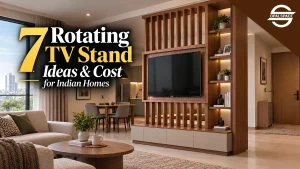
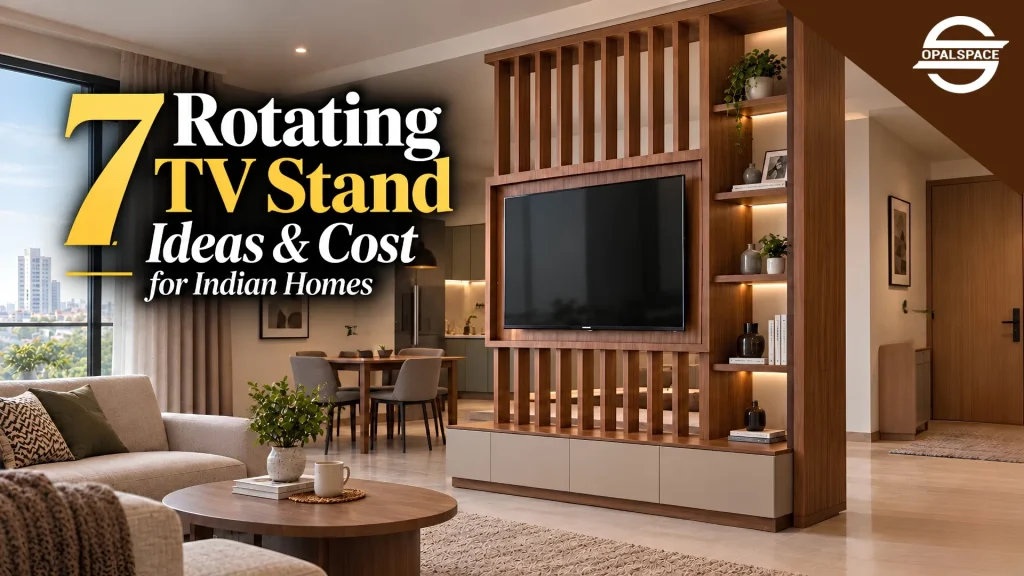
This blog covers rotating TV stand ideas for Indian homes, including 180° and 360° designs, storage units, and room dividers. It also explains how to pick the right setup based on your room size, seating, storage needs, and viewing angles.
Table of Contents
Look for three things in a good rotating TV stand: smooth movement, sturdy build, and storage that fits your living room. A compact unit works for a small flat, a 360° stand suits an open-plan hall, and an LED rotating stand gives the whole setup a sharper look. Get the design right, and it changes how the room works for you every single day.
Rotating TV units are becoming more common in modern Indian homes for a simple reason. They are useful, and they look good too.
What is a Rotating TV Stand?
Build this as a floor-standing unit, a wall TV stand, or a panel fitted with a swivel bracket. Room size, TV weight, seating layout, and storage needs decide which option fits your home.
7 Rotating TV Stand Ideas for Indian Homes
Each home has a different room layout, so the same TV stand may not work everywhere. Here are seven rotating TV stand ideas for different room sizes, seating layouts, and storage needs.
1. 180° Rotating TV Stand for Living and Dining Areas
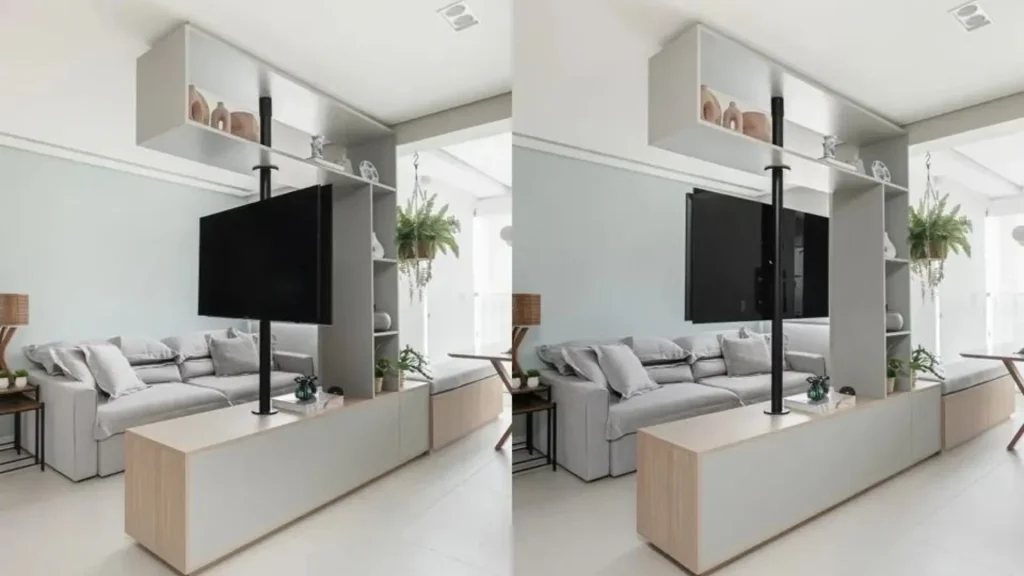
A 180° rotation of the TV is great for a living room that opens right into the dining area. For movie nights, point it towards the sofa, and for meals, point it at the dining table. In apartments, this works best as your living and dining areas may be in the same large room. Also, a thin panel mount keeps the TV out of the way, which in turn gives you more space in the seating area.
2. 360° Rotating TV Stand for Open-Plan Homes
A 360° rotating TV stand, which gives the screen a full range of motion, is what you’ll want for larger rooms that have furniture in various directions. Open-plan homes, studio apartments, and large family rooms do very well with this. The TV will swing to face the sofa, the dining area, or yet another seating nook. Also, a central TV unit that is split can act as a separator between areas. In an open-plan living room that gives you a visual break between different zones yet still makes the room feel like one space.
3. Rotating TV Stand with Storage
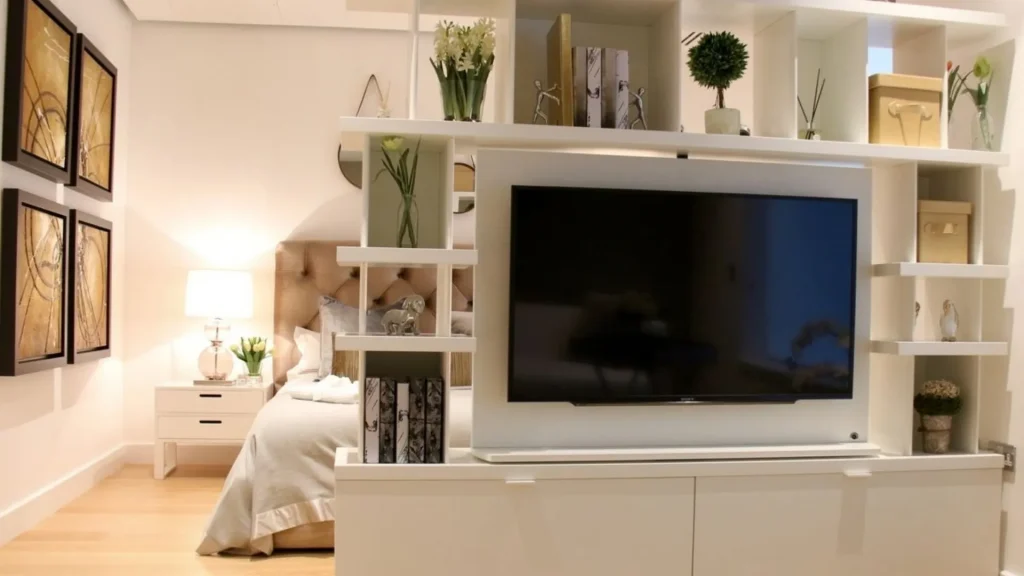
A TV that rotates performs two functions at once. It serves to put the TV away and to separate the living room from the dining room. One side of the panel goes towards the sofa, the other towards the dining area. Also, it is advised to add open shelves around this piece to give a partition between spaces that doesn’t break up the light. In apartments, this type of room separator works very well, as a permanent wall would make the space appear smaller.
4. Wall-Mounted Rotating TV Stand
A wall-mounted rotating TV stand works well in small rooms where floor space is limited. The TV is fixed on a swivel bracket, so you can turn it towards different seating areas. A small shelf or cabinet below can hold the set-top box, speakers, and other devices. Before fixing it, check the wall strength and TV weight. Leave enough space around the screen so it can turn freely. Pair it with a simple TV unit design if you want a clean TV area with less furniture.
5. Rotating TV Panel as a Room Divider
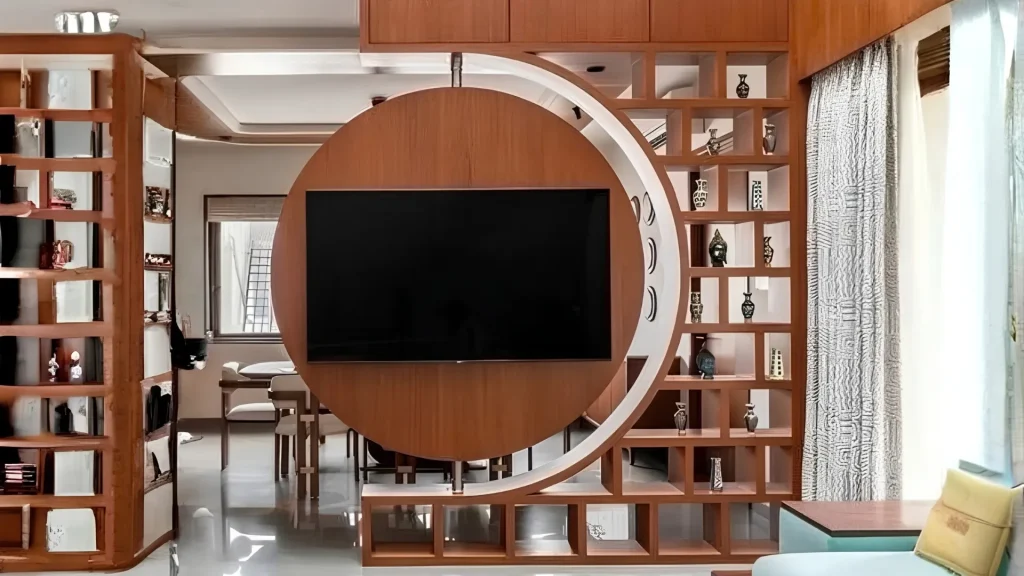
A TV that rotates performs two functions at once. It serves to put the TV away and to separate the living room from the dining room. One side of the panel goes towards the sofa, the other towards the dining area. Also, it is advised to add open shelves around this piece to give a partition between spaces that doesn’t break up the light. In apartments, this type of room separator works very well, as a permanent wall would make the space appear smaller.
6. Swivel TV Stand for Compact Living Rooms
7. Rotating TV Stand with a Full TV Unit
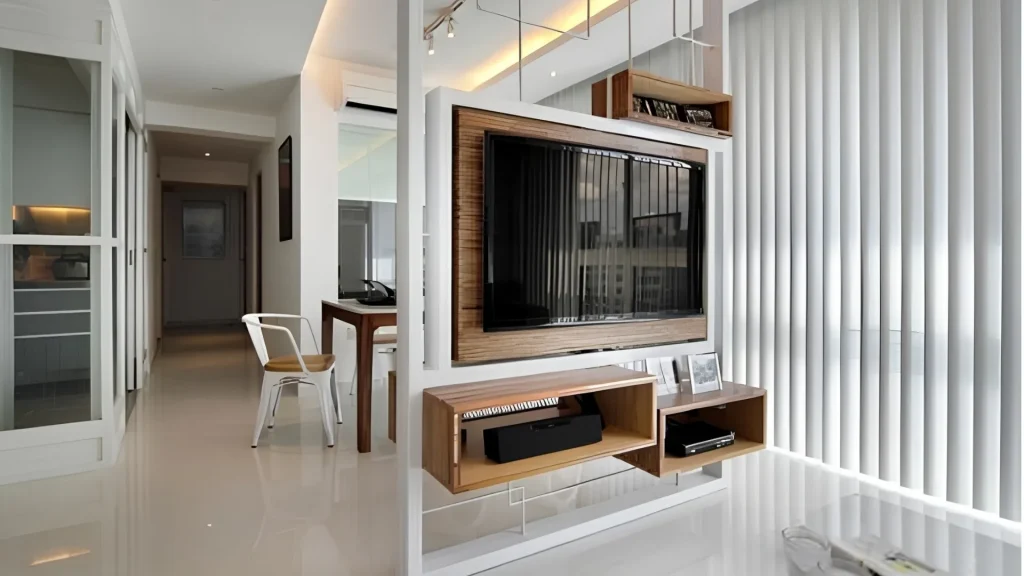
A rotating mechanism also fits a larger TV unit design. Picture a central panel holding the TV, with storage cabinets on either side. The centre section moves, the rest of the unit stays fixed in place. This gives you the storage of a full TV unit and keeps the viewing angle flexible. It suits larger living rooms that need more furniture along the TV wall.
Which Rotating TV Stand Do You Need: 180° or 360°?
Not every home needs a screen that spins all the way around. The right choice comes down to how your seating areas are placed and how many directions people actually watch TV from.
The rotation you need depends on your room layout.
| Factor | 180° Rotating TV Stand | 360° Rotating TV Stand |
|---|---|---|
| Movement Range | Living room + dining area, opposite-facing seating | Open-plan homes, studio apartments |
| Ideal Room Type | Two fixed directions | One large multi-use space |
| Installation Cost | Lower | Higher (more hardware, wider clearance) |
| Furniture Flexibility | Works with a fixed seating layout | Suits homes that rearrange furniture frequently |
If you don’t want full rotation, you can remove it. Measure your viewing areas first, then decide how far the screen has to turn.
How Much Does a Rotating TV Unit Cost?
| TV Unit Type | Approx. Cost in India |
|---|---|
| Basic TV unit | ₹20,000–₹40,000 |
| Standard TV unit with storage | ₹40,000–₹80,000 |
| Rotating TV unit with basic storage | ₹50,000–₹90,000 |
| 180° rotating TV unit | ₹60,000–₹1 lakh |
| 360° rotating TV unit | ₹75,000–₹1.5 lakh+ |
Note: The final cost depends on the TV size, material, storage, finish, and type of rotating mechanism. A 360° unit can cost more than a 180° design because it needs more movement space and suitable hardware.

What Should You Check Before Installing a Rotating TV Stand?
- TV Size & Weight: The swivel mechanism has to support the television safely.
- Mounting System: Check the TV’s VESA mounting pattern against the hardware you’re using.
- Rotating Range: Measure the areas where people actually watch TV.
- Clearance: Give the screen, panel and furniture enough room to turn.
- Cable Length: Power and HDMI cables need slack for movement.
- Socket Position: Place electrical points close to the TV and connected equipment.
- Wall Strength: A wall-mounted setup needs solid structural support.
- Storage: Decide where the set-top box, gaming console, router and remotes will sit.
- Viewing height: Centre the screen at a comfortable height for the main seating area.
Where Can You Use a Rotating TV Stand?
A rotating TV Stand can work well in different parts of your home. It is useful when one TV needs to serve more than one area.
- Living room: Turn the TV towards different seating when family members sit in different spots.
- Open-plan home: Use the TV unit to separate the living and dining areas while keeping the screen easy to view.
- Studio apartment: One TV can serve the bed, sofa, or dining corner without needing a second screen.
- Bedroom: A rotating panel lets you watch TV from the bed or a nearby chair.
- Family room: Everyone can get a clear view of the screen, even when they sit in different parts of the room.
Are Rotating TV Stands Suitable for Modern Homes?
If you are planning stylish TV units, tuck the rotating mechanism behind a finished panel, so the technology doesn’t take over the room. From the main seating area, the result looks like a regular TV unit, with the added benefits of a screen that moves with you.
Plan Your TV Stand with Opalspace
Opalspace provides full home interior services along with TV units, including furniture placement, electrical points, storage, and movement around the room. This helps the rotating TV stand fit naturally into the overall layout instead of looking like an extra piece added later.