What if your home could feel more Indian without looking overly traditional? Every room can carry a touch of Indian culture through natural materials, handcrafted details, colours, and timeless patterns. Traditional Indian interior design brings these elements together to create spaces that feel warm, rooted, and personal.
Table of Contents
Ask five homeowners what Indian Interior design means, and you get five different answers. One picture has carved wood and brass lamps. Another pictures a plain white living room with one terracotta vase on a shelf. A third picture shows her grandmother’s veranda swinging next to a modular kitchen. All three are right. Indian interior design spans traditional, contemporary, and modern approaches, and most homes end up pulling from all three across different rooms.
The confusion starts because homeowners collect photos before they pick a direction. A living room gets a Warli-painted wall, the bedroom next to it gets a minimal grey headboard, and the kitchen gets stainless steel with no Indian elements at all. Nothing in the home talks to anything else. This guide breaks down Indian home interior design into three approaches, then walks through each room, so you can pick a direction before you pick a photo.
What is Indian Home Interior Design?
Indian Interior Design is the use of Indian craft, material, and symbols to shape a home’s layout and decor. It is used to bring culture and daily ritual into a home that would otherwise look generic.
Indian interior design does not only fill a room with Indian objects. It follows three distinct approaches. The three approaches are traditional, contemporary, and modern.
- It ties room placement to Vastu principles, not just decor.
- It uses material, not just colour, to carry the Indian identity through a room.
- It lets one room run fully traditional while the next runs fully modern.
- It follows the homeowner’s daily use of the room, not a fixed formula.
What are the Defining Features of Traditional Indian Interior Design?
Traditional Indian design is a reflection of culture, craftsmanship, and spiritual balance. We see this style, which creates warm, inviting spaces that are very much at home in Indian identity. This is not only about following trends but rather paying tribute to heritage and meaningful design.
- Wooden Furniture: Artisans present to us finely carved wood furniture, which immediately gives a space character. Homeowners select ornate doors, carved headboards, low furniture, wardrobe and cabinetry to add depth and personality.
- Natural Materials: Each piece is a story in its pattern and craft. Also, we see a great use of natural materials like stone, marble, terracotta, teak, and sheesham. These elements bring durability, texture, and a deep, earthy richness to the interior.
- Courtyards: Traditional homes generally include courtyards as the central feature. Families come together in spaces that have open plans, which in turn allow sunlight and fresh air to fill the home freely. Courtyards are used to enhance ventilation and to achieve a tranquil, open atmosphere.
- Vastu Principles: Also, into the design of many homes go the Vastu Principles, which homeowners pay great attention to as they determine the placement of rooms, entries, and furniture to bring in that which is positive, balanced, and prosperous into the home.
- Textured Textiles: How can Indians skip rich, textured textiles? People use silk, cotton, Ikat, Kalamkari, and block prints in curtains, cushions, rugs, and upholstery. These fabrics introduce bold colours, intricate motifs, and regional artistry.

What are the Best Indian Interior Design Ideas, Room by Room?
Indian interior design ideas work best when each room uses a style that suits its purpose. Combine traditional elements, modern finishes, natural materials, and Indian patterns to create a cohesive home without structural changes.
1. Traditional Interior Design
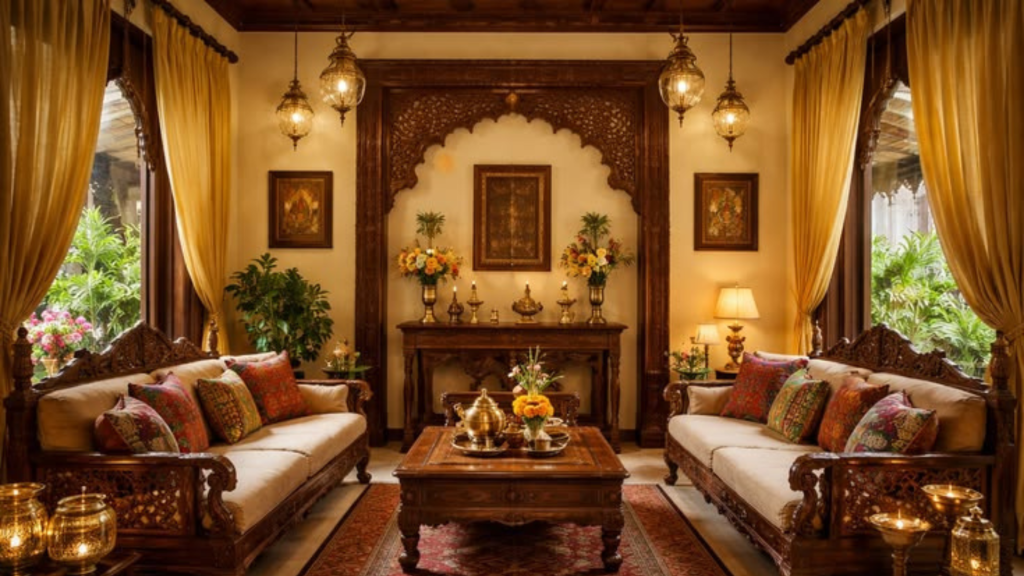
Best for a pooja room, living room, or a homeowner chasing full heritage character. Hand-carved wood, brass, and natural stone carry the whole look. It works well in independent houses and larger NCR plots with room to spare.
2. Contemporary Indian Interior Design
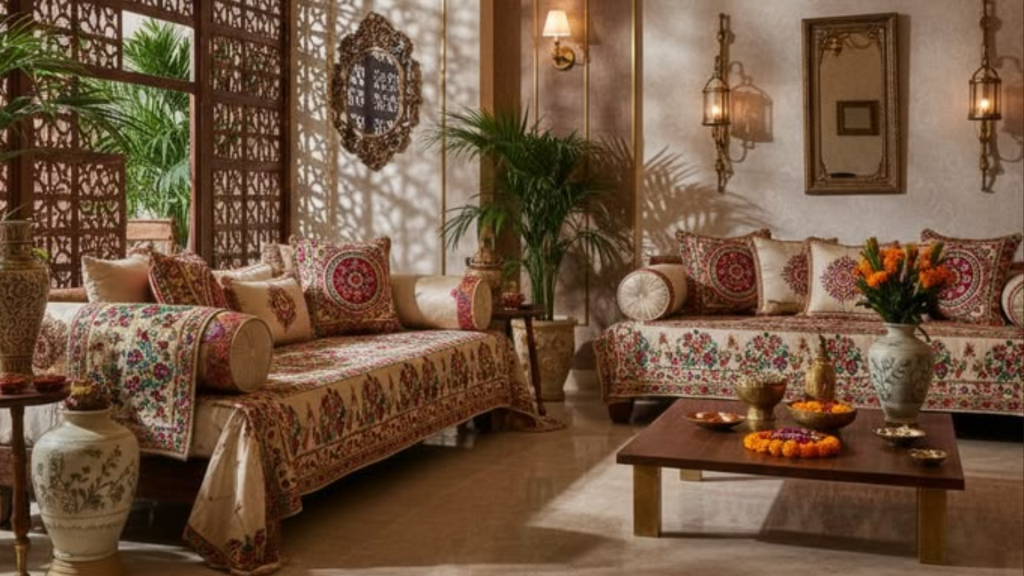
Fits a home that wants Indian materials without the ornamentation. A carved console or a jaali panel stays, but the walls around it stay bare. It suits Noida and Gurugram apartments where a fully traditional room reads as heavy.
3. Modern Indian Interior Design
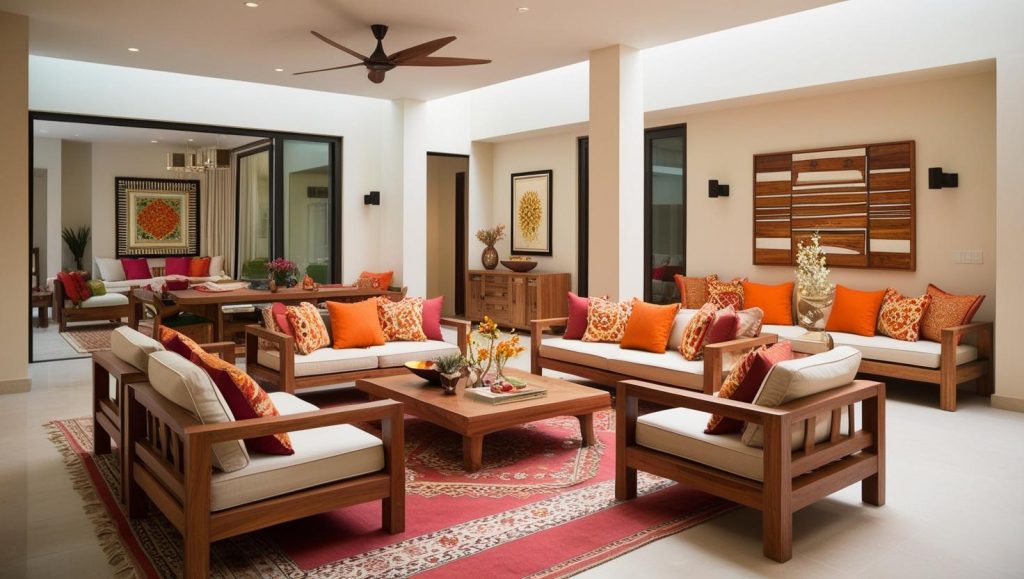
Strips a room down to clean lines, then adds one Indian accent. A single brass diya stand, or one Madhubani print, carries the identity. This modern Indian Interior design is for those homeowners who want an Indian home interior without covering every wall.
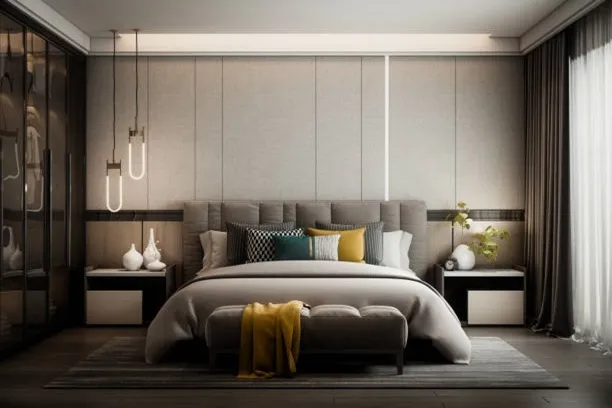
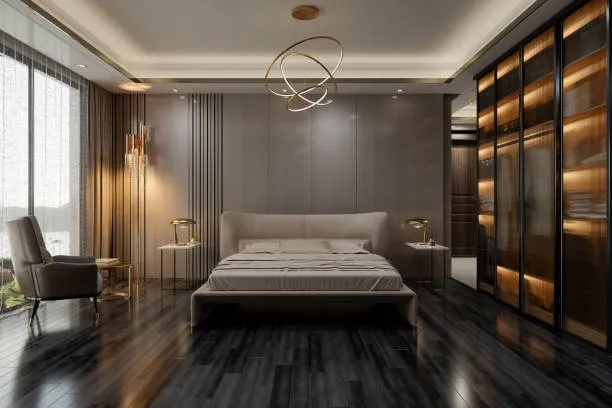
4. Bedroom Decoration Indian Style
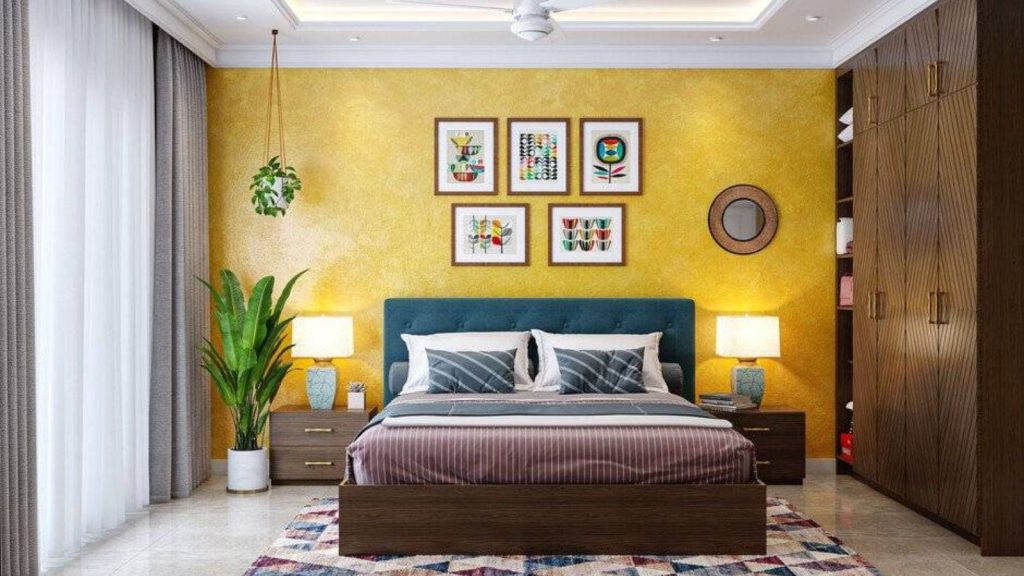
For a cozy Indian themed bedroom you don’t need to go all out with bold colors. Deep red, royal blue, or mustard for the walls are great choices to set the tone without over doing it. Add in a hand carved headboard or a vintage wood chest to create a natural focus. For lighting use brass lamps on each side which will complement the wall color and also give off a softer light than bright overhead lights. To not have the room look too put together, pair back to basics bedding with a patterned throw for a more relaxed, layered look.
5. Indian Kitchen Interior Design
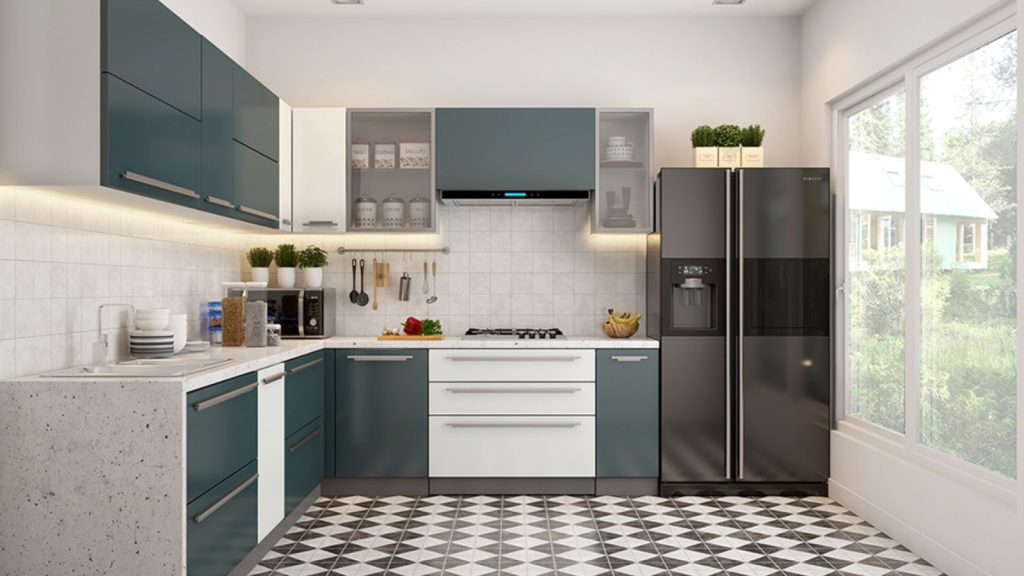
Warm cabinetry tones and coloured tiles look good together. Parallel and L-shaped layouts remain the most workable formats for compact NCR kitchens, and this is where Indian style kitchen interior design earns its keep.
#Read Must: 13 Smart Open Kitchen Layouts for Small Apartments
6. Indian Dining Hall Interior Design
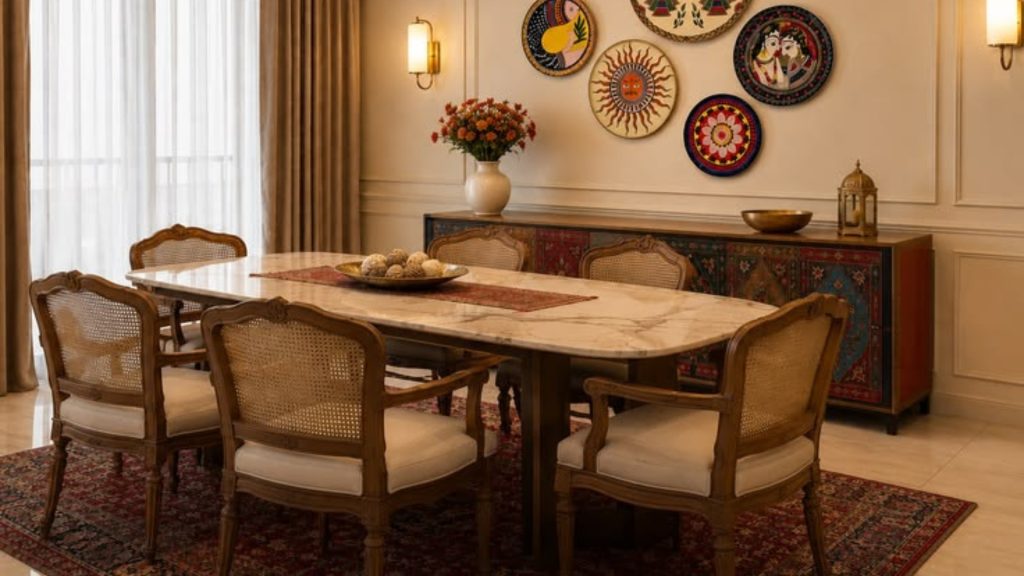
A solid wood table with carved legs sets the tone for the whole hall. Brass or terracotta serve ware on an open shelf double as decor between meals.
7. Interior Design for Living Room
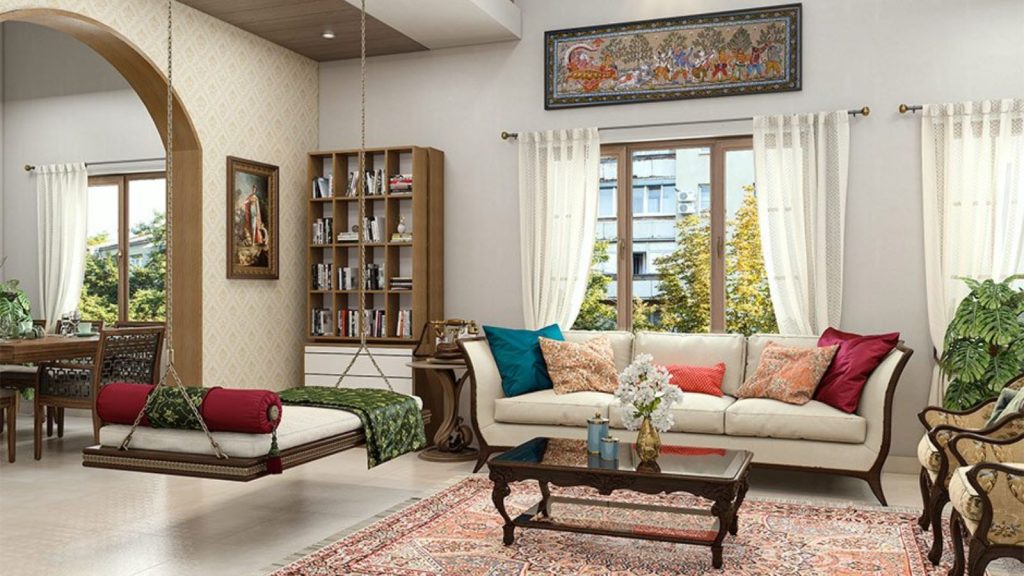
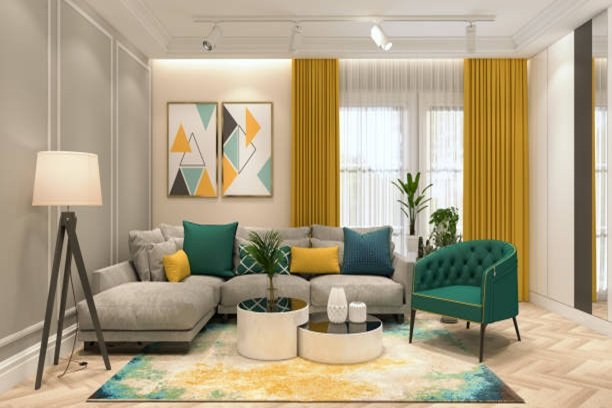
In a living room, you can bring in Indian character through a few carefully chosen pieces. Solid wood seating with carved detailing, such as a diwan, carved chairs, or a low coffee table, can anchor the space. Add kadi or silk cushions and curtains to bring in texture without replacing all the furniture. For the walls, Madhubani or Warli art can add an Indian touch without the need for a mural. Jaali screens can also work as room dividers or window treatments, allowing light to pass through while defining different areas.
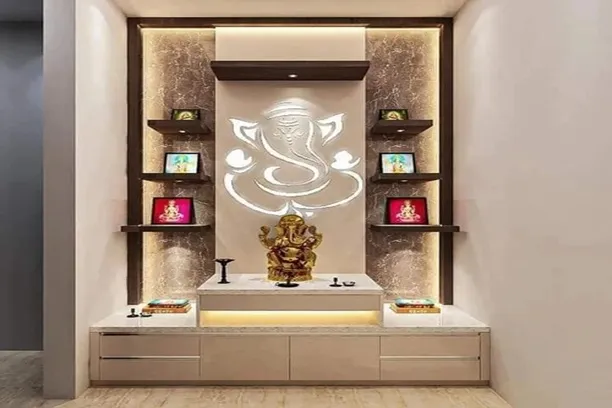
8. Pooja Room Design
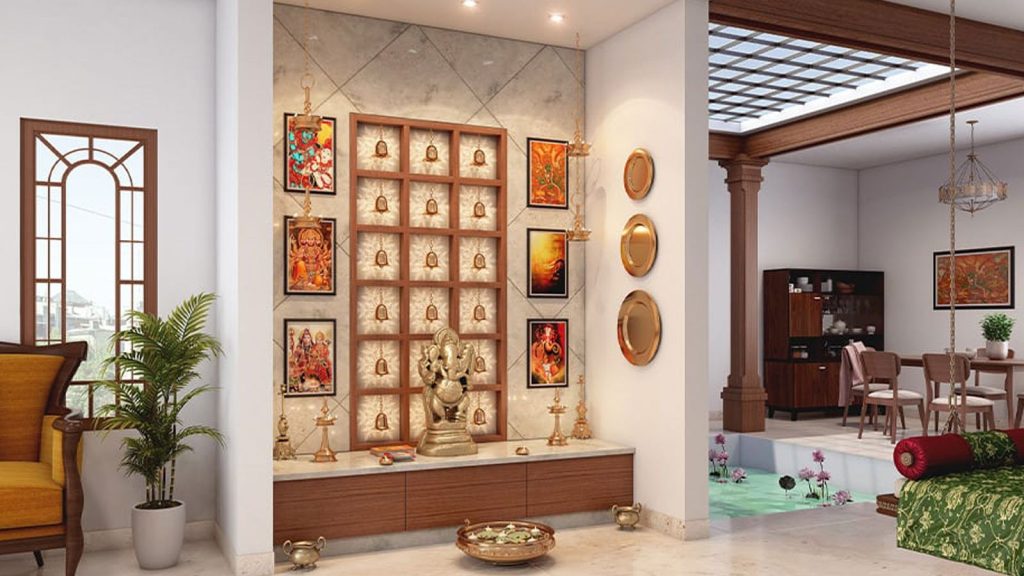
For a traditional yet practical room, natural wood works well for the mandir frame. If you add jaali screens to the doors, it keeps the space ventilated while bringing in a familiar Indian detail. The combination feels warm, detailed, and connected to traditional Indian interiors.
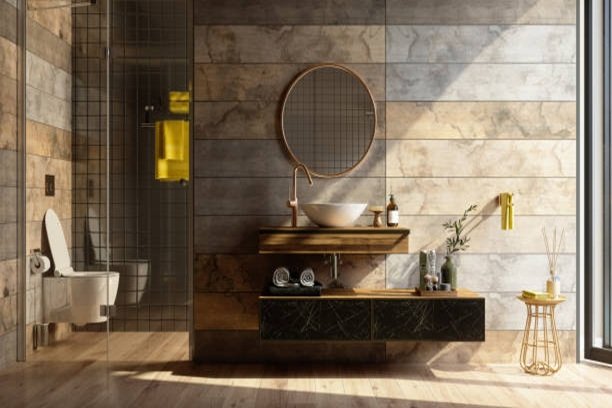
9. Bathroom Design
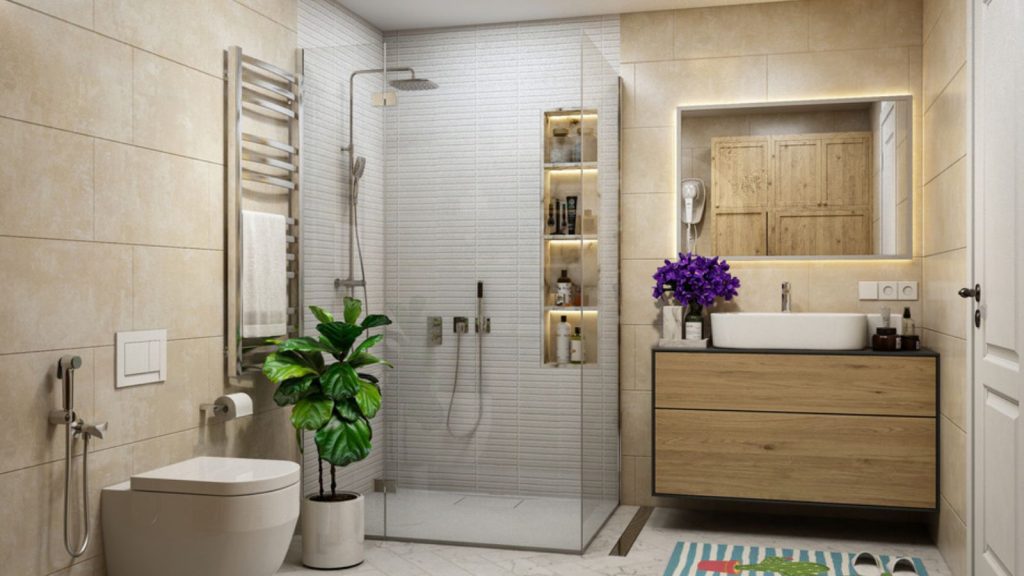
You can bring Indian character into a bathroom without covering every surface in patterns. Paisley or mandala tiles on one accent wall add visual interest without making the space feel busy. Brass fixtures can then tie the look together with a warm, traditional finish.
10. Kids’ Room Design
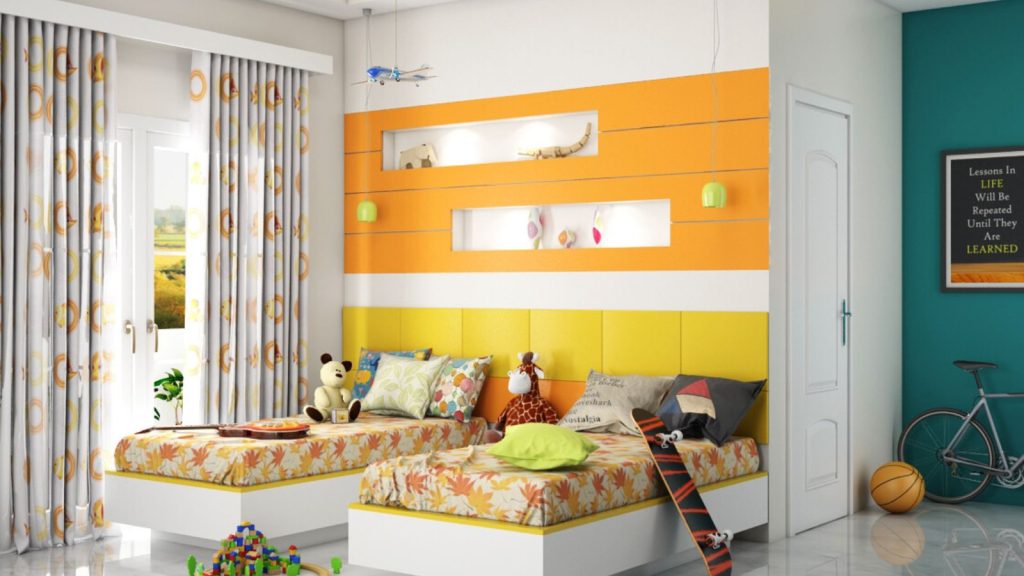
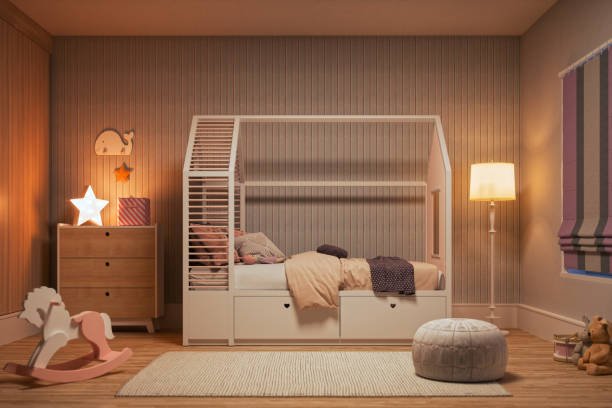
An Indian-inspired kid’s room does not need a full mural to feel distinctive. Framed prints inspired by Indian folklore can add colour and character to the wall. Block-printed cotton bedding brings in traditional patterns. Together, these details introduce Indian culture in a playful and easy-to-update way.
11. Balcony Design
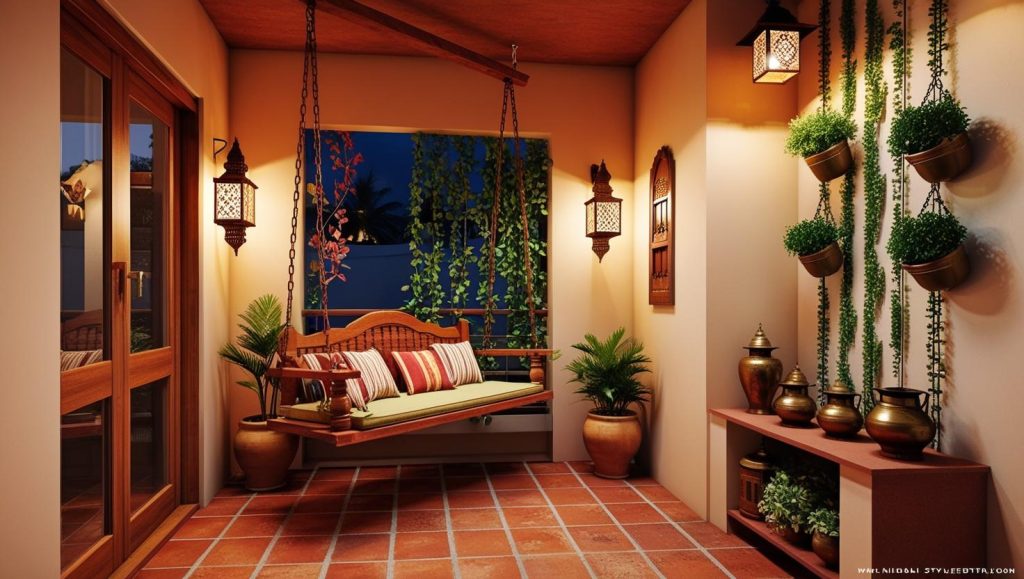
A wooden swing is a simple way to give a balcony a distinctly Indian feel. Pair it with terracotta tiles or a vertical garden to bring in natural textures and greenery. These elements create a relaxed corner without taking up too much space.
#Read Also: Modular Interiors for Indian Homes
What are Indian Interior Design Ideas for Small Homes?
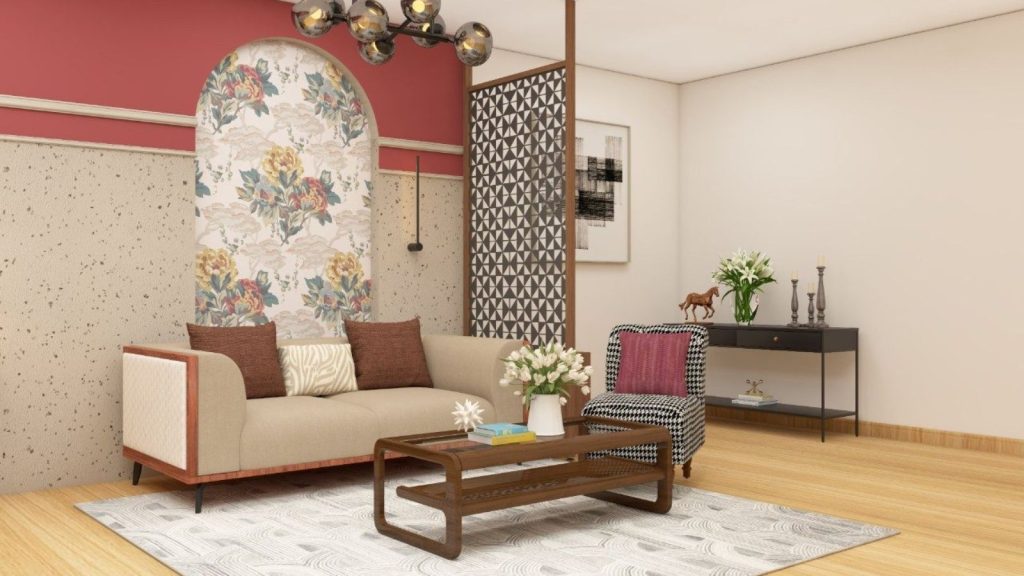
In Delhi NCR apartment designs, you hardly find room for a traditional layout, instead, we have to make the design work in a small space. One large statement piece such as a carved console or a bold art piece is what you need in a small space to make it feel complete. We use small niches or recesses for shelves, which display antique pieces without taking up floor space. We put in large windows or go for ceiling-high ones which brighten up a small room and make the Indian colours appear lighter. Also, we use light, see-through curtains which let in more light than heavy traditional drapes. For a small home, we go for multifunctional furniture which keeps the decor from getting too heavy. Mirrors in the right spots will make a small Indian home feel larger than it is.
What are the Colour Palettes in Indian Interior Design?
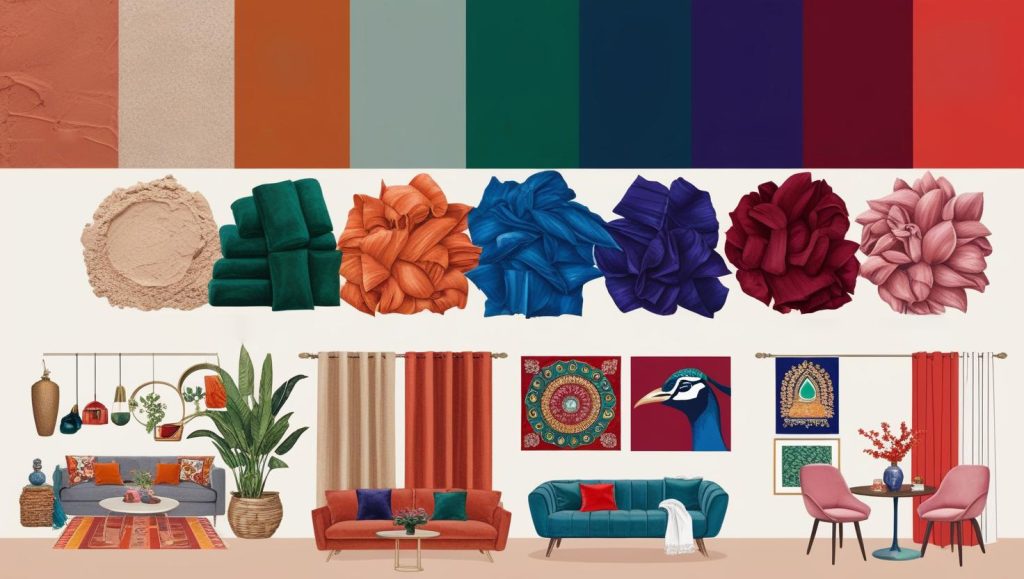
Indian interiors use warm, earthy colours with rich accents to make a welcoming look. The key is to balance bold shades with neutral tones so the space feels vibrant.
- Earthy base: Beige, terracotta, sand, and clay work as a wall or flooring base across every room. These shades create a warm and grounded look. If you pair them with natural wood, cane, or stone finishes it will give you a more traditional feel.
- Regal accents: Emerald, sapphire, ruby, and amethyst work on one accent wall or on upholstery, not across a full room. These rich colours bring depth and a luxurious Indian touch. Use them through cushions, curtains, rugs, or a statement chair.
- Energetic tones: Red and orange in the living room or kitchen keep those spaces active through the day. Use these shades in accent walls, artwork, cushions,or kitchen details.
- Peacock blues and greens: Best reserved for one statement wall or one furniture piece. These colours work best in living rooms, bedrooms and pooja rooms.
- Soft pink: Works as a bedroom or kids’ room accent when paired with a neutral base. It brings warmth to the room. Combine it with cream, beige, light wood, or wood, or muted gold finishes.
What is the Best Indian Style Furniture Design For Home?
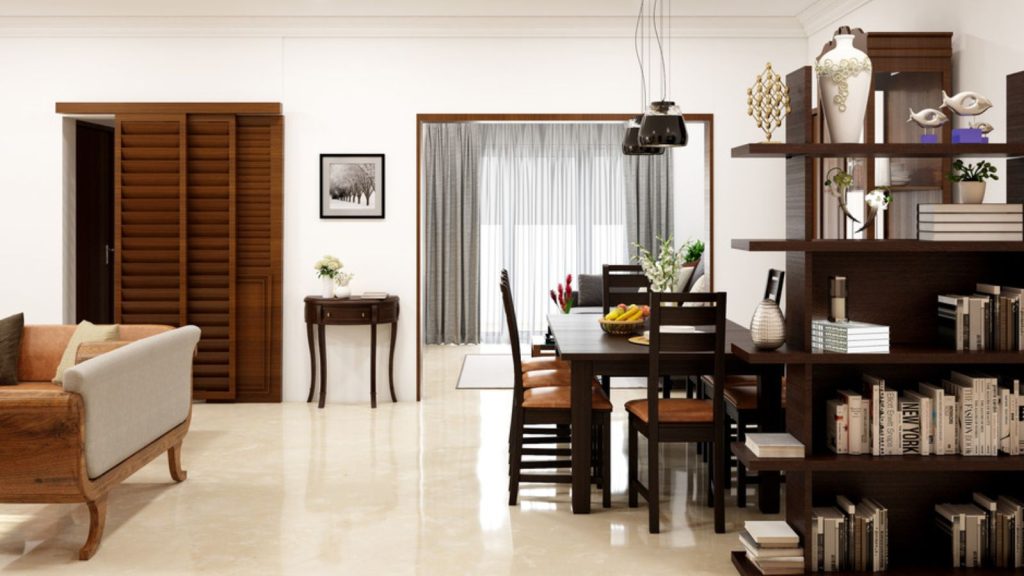
Divans, charpais, and low-slung seating bring an Indian sitting posture into a modern living room. Teak, sheesham, and rosewood hold up across decades of daily use, which is why Indian furniture still outlasts most modern alternatives. Reclaimed wood furniture is gaining ground in Delhi NCR projects for homeowners who want the craft without new timber. One traditional wood piece in an otherwise modern room reads as intentional, not out of place.
What are the Vastu Principles for Indian Interior Design?
Vastu views the home as a single entity, so attention should be put to how rooms are placed as much as to what you put in each room. The northeast corner of the home gives the best results for a pooja room. The kitchen does best in the southeast corner, which is also where the fire element is at play. The main bedroom does best in the southwest corner of the layout. Entry doors and staircases should not face each other directly. Treat Vastu guidance as one input among structural and design requirements, not a replacement for them. A structural plan always comes first.
Why Choose Opalspace for Indian Interior Design?
Your home’s Indian interior design is more than a set of decor pieces. It is a plan that has to work with your layout, your budget, and the way you actually use each room. Opalspace delivers exactly this kind of room-wise Indian interior design planning, along with modular interior design services built for real use within your home. Because a home that reads as one connected space changes how it feels to live in, not just how one room looks, we plan those choices to make every room work with the one next to it.