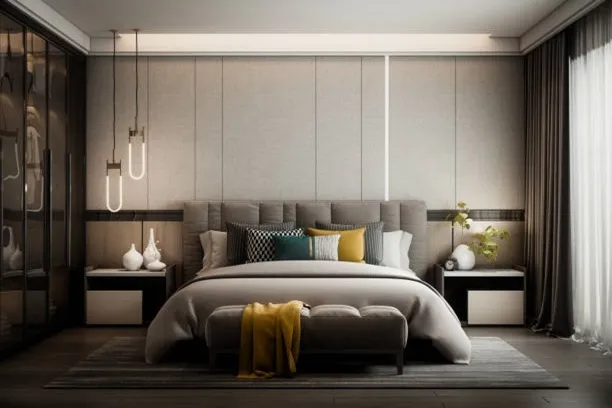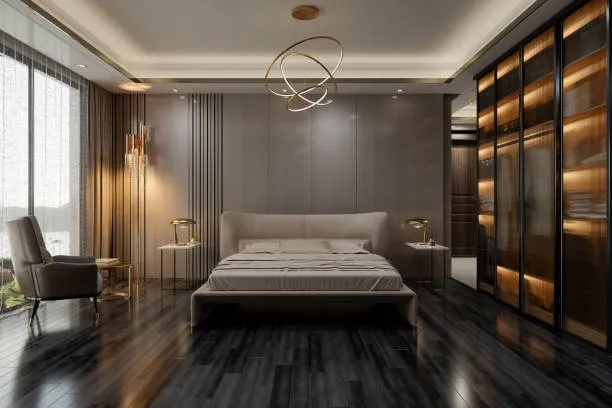
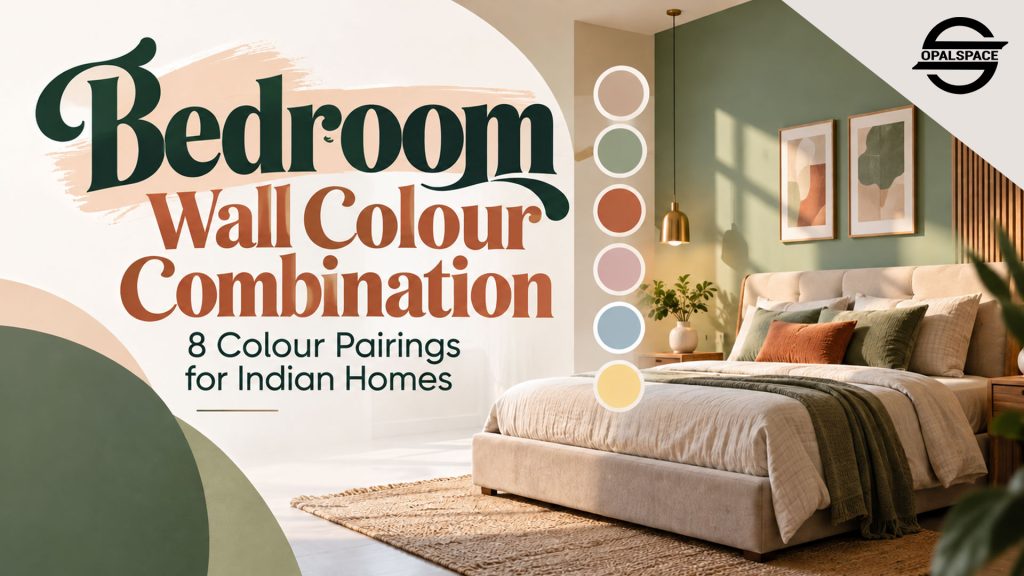
This blog covers eight bedroom wall colour combinations for Indian homes, with options for small, bright, warm and modern bedrooms. It also explains how to match wall colours with natural light, furniture, wardrobes and flooring.
Table of Contents
Most people pick a bedroom wall colour combination from a photo online, then paint it, and find it doesn’t look the same in their own room. A shade that looks airy on a phone screen can look dull under a north-facing window. A pairing that suited a white wardrobe can clash with the walnut one already sitting in the room.
If you want a light bedroom, pale blue and white or peach and white are simple options. These bedroom design ideas can help you pick a colour combination that works with the furniture, lighting and size of your room. For a warmer room, brown and cream work well. Beige and sage green suit bedrooms with wooden furniture and natural materials. The blog covers eight bedroom wall colour combinations and explains where each combination fits best.
What is the Best Bedroom Wall Colour Combination?
The best bedroom wall colour combination is the one that matches your room’s size and light, not a fixed pair of colours.
- Small room: Pale blue and white, or peach and white. Light colours make a small room look bigger.
- Room with little sunlight: Brown and cream. Brown warms up a room that stays dull most of the day.
- Room with a balcony or big window: Beige and sage green. This pair looks good even in strong daylight.
- If you want one bold wall: Teal and grey, or indigo and white. Paint only the wall behind your bed.
- If you like purple tones: Lavender and off-white.
- Room that feels dark all day: Sunny yellow and sage green. Yellow brightens up a dull room.
Simple rule to note. Paint three walls in the lighter colour. Paint one wall behind your bed in a darker colour. Don’t use the dark colour on two walls in a small room. It will make the room look tighter, not better.
#Read Also: Bedroom Wall Designs to Make Your Love Grow
8 Bedroom Wall Colour Combinations for Indian Homes
Your bedroom’s size and daylight decide which combination works, not trend or personal taste alone. Pick a pairing below based on your room, then keep the darker shade to one wall usually behind the bed.
1. Beige and Sage Green for a Calm Bedroom
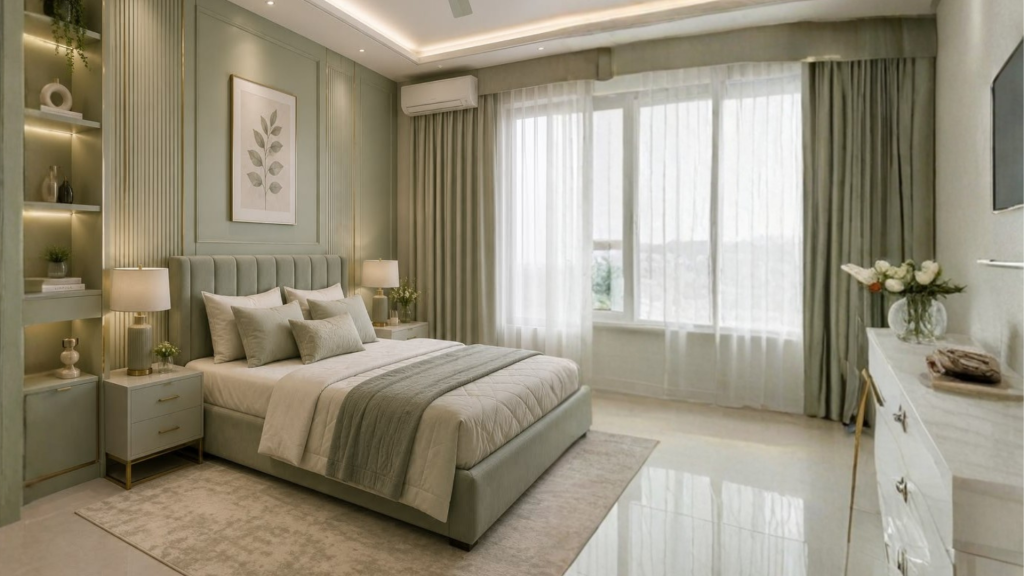
Beige and sage green make a soft bedroom wall colour combination. Beige keeps the room light, and sage green brings a muted green tone to the walls. Use beige on three walls and green behind the bed. The pair suits wooden furniture, cane details and white wardrobes. For a small bedroom, keep beige as the main wall colour. Use sage green on one wall so the room gets enough light.
2. Brown and Cream for a Warm Bedroom
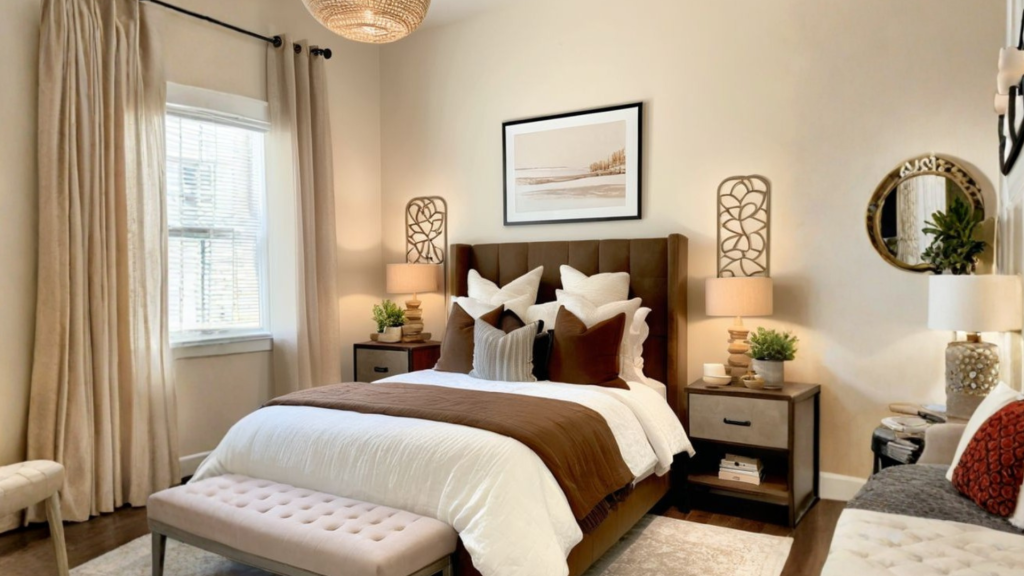
Brown and cream suit bedrooms that need deeper, warmer colours. Cream keeps the room bright, while brown adds depth. Use chocolate or walnut brown behind the bed and cream on the other walls. If your bedroom gets little daylight, pick a lighter brown. Deep brown can make a dark room look smaller.
3. Peach and White for a Soft, Bright Room
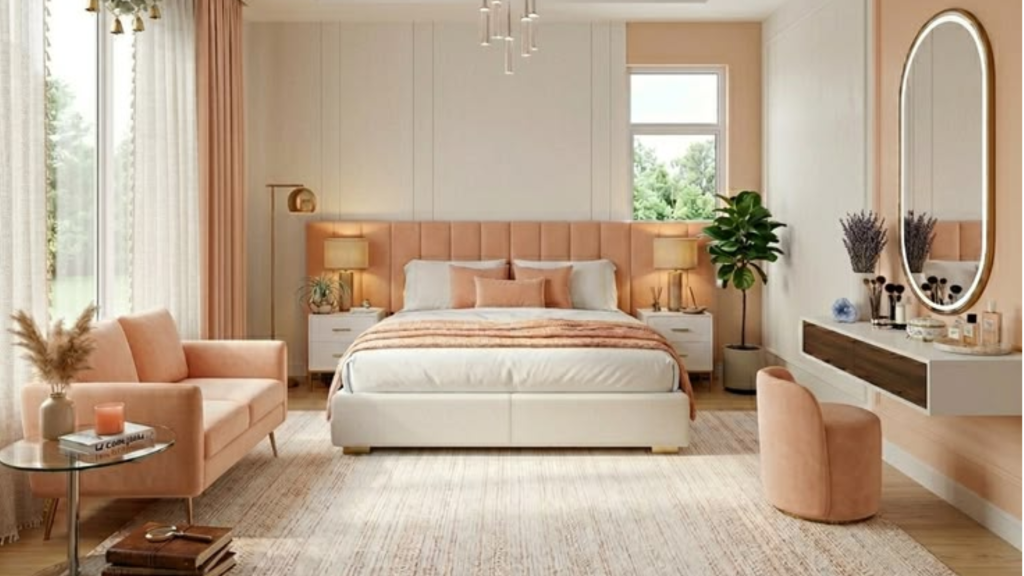
Peach behind the bed and white on the rest keeps the room soft without going stark. It pairs well with white curtains, light wood furniture and simple bedding. Dusty pink and white work as a softer, less saturated version of the same pairing, for anyone who wants pink without it reading loud on the wall.
4. Teal and Grey for a Modern Bedroom
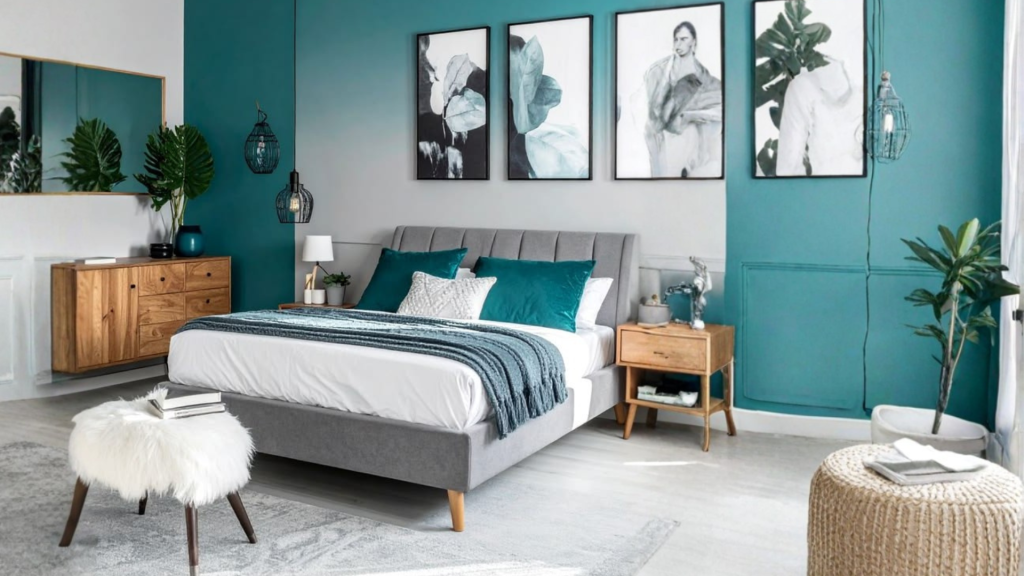
Teal and grey suit bedrooms where you want a deeper wall colour. Teal gives the room a strong shade, and light grey keeps the palette balanced. Use teal behind the bed and light grey on the walls. White bedding, wooden desk furniture and metal details pair nicely with these colours. For a small bedroom, keep the grey light. Deep teal and dark grey can make the room look darker when daylight is limited.
5. Pale Blue and White for a Light Bedroom
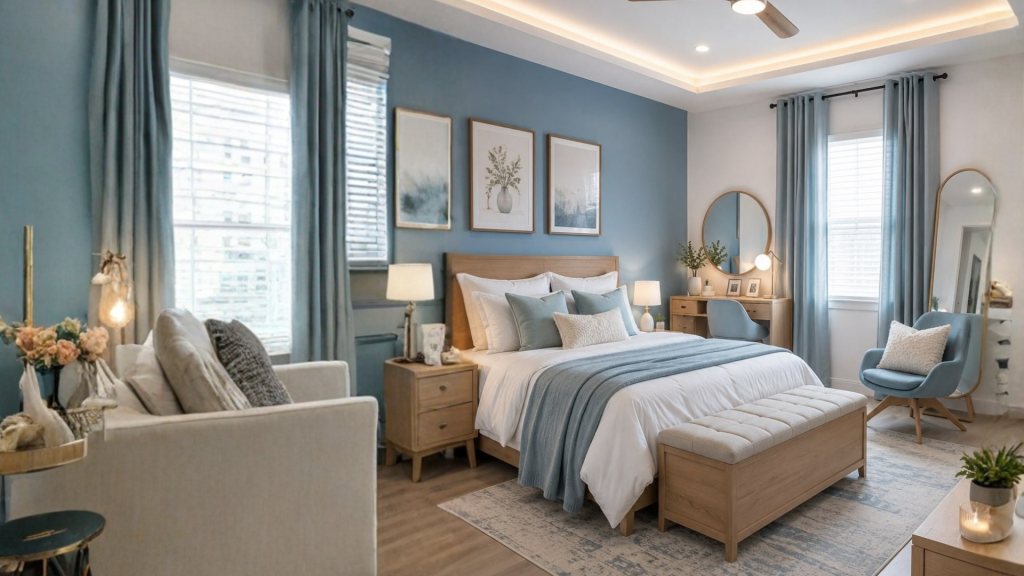
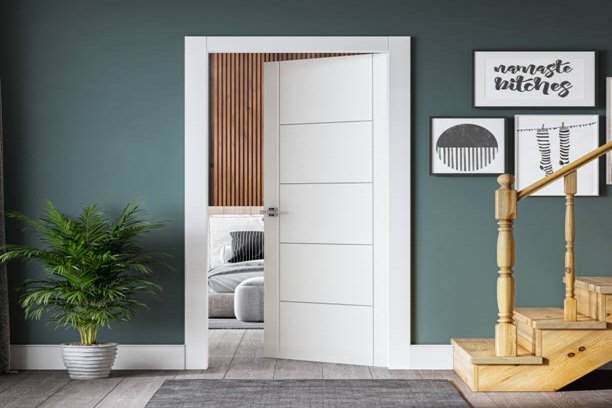
Pale blue and white are a simple light colour combination for bedroom walls. Pale blue suits compact bedrooms. Use pale blue behind the bed and white across the remaining walls. Light wood furniture, white wardrobes and soft grey furnishings suit this bedroom light colour combination.
6. Lavender and Off-White for a Soft Bedroom
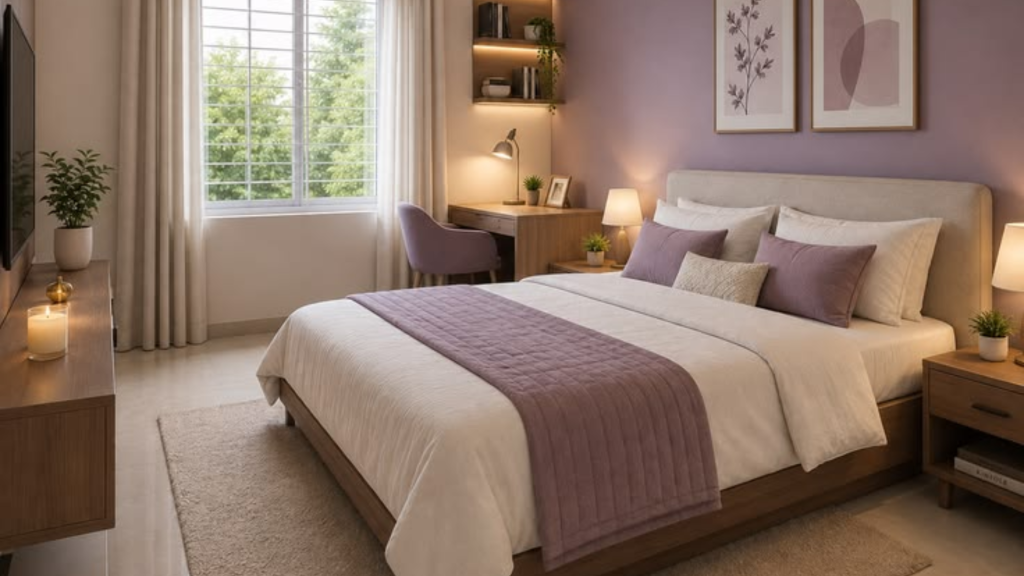
Lavender and off-white give the bedroom a gentle colour palette. Lavender brings a muted purple tone, and off-white keeps the room light. This purple colour combination for bedroom walls suits homeowners who want a softer purple shade. Try lavender behind the bed and off-white on the other walls. Light wood, white furniture and warm bedside lighting suit this combination. Dusty lavender is another option if you want a more muted purple bedroom colour combination.
7. Indigo and White for a Deep Accent Wall
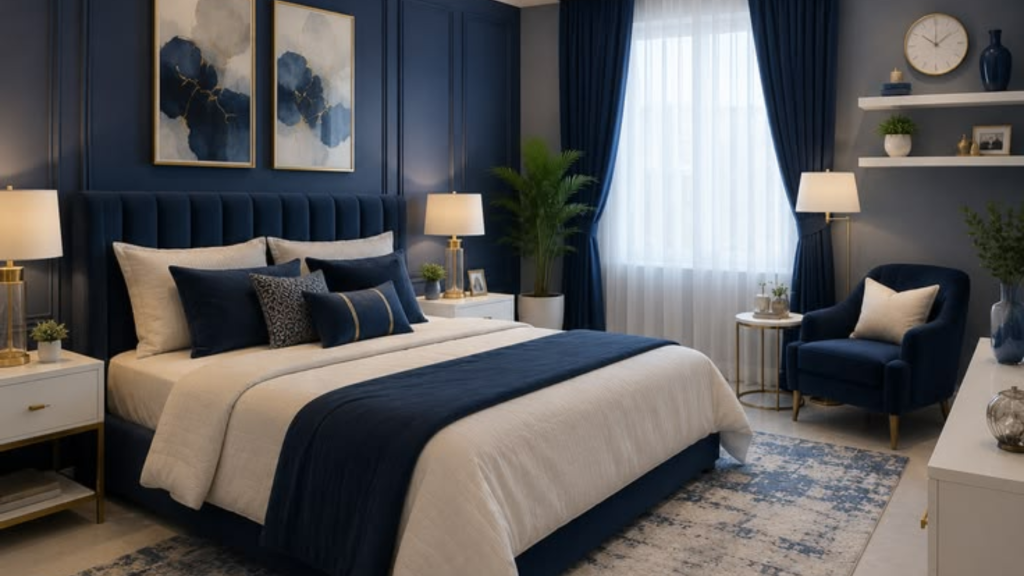
Indigo works as a single accent wall behind the bed, with white on the rest to stop the room from going dark by evening. It pairs well with white furniture, wooden flooring and brass or gold fittings. In a small bedroom, keep indigo to that one wall cover more than that and the room looks smaller, not richer.
8. Sunny Yellow and Sage Green for a Fresh Bedroom
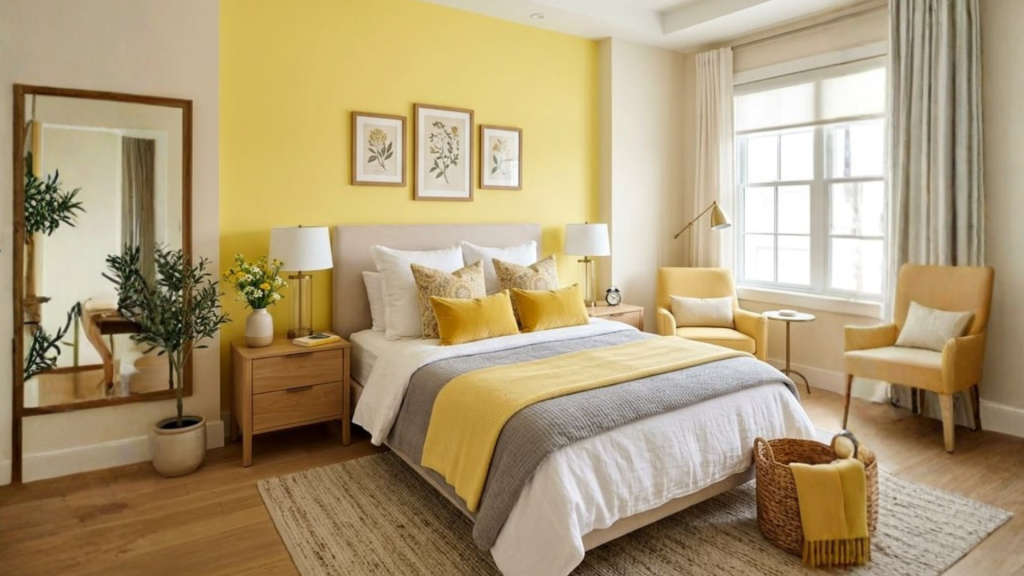
Sunny yellow and sage green suit bedrooms with wooden furniture and a few indoor plants. Paint the headboard wall in a muted, mustard-leaning yellow, a primary shade looks flat under tube lighting. Add sage green on one adjacent wall and keep the rest off-white. This pairing needs strong daylight. In a low-light room, the yellow looks washed out instead of bright.
How Do You Select the Right Bedroom Colour Combination?
Wall colour is an important part of bedroom interior design. Test the shade in your room before deciding. Paint looks different under a bulb than in daylight.
- Bulb type: Warm white bulbs push yellow and orange tones forward; cool white bulbs flatten warm colours like brown and peach.
- Flooring tone: Dark wood flooring absorbs light, paired with a lighter wall base, not a deep one.
- Test patch: Paint a small patch and check it in the morning, afternoon, and under your night lighting before painting the full wall.
If your room is both small and low-light, prioritise light. Skip the accent wall and paint all four walls in the lighter shade.
#Read Also: Bedroom PVC Wall Panels Modern Designs
How Should Bedroom Wall Colours Work with Furniture and Wardrobes?
Wall colour should work with the rest of your bedroom interior, especially the wardrobe, furniture and flooring. Match the wall colour to the wardrobe finish, not the other way around.
Wooden wardrobes pair better with beige, cream or pale blue. Dark wood furniture needs lighter walls pale blue, off-white, or cream or the room reads heavy. In a compact bedroom, keep the wardrobe wall and the largest wall light. Save the deeper shade for one wall behind the bed only.
Which Two-Colour Combination Is Best for Bedroom Walls?
The best wall colour combination for a bedroom matches the result you want, calm, warm, bright or bold. For a calm look, pick beige and sage green. For a bold look, pick teal and grey with one accent wall.
- For a light bedroom: Pale blue and white or peach and white.
- For a warm bedroom: Brown and cream.
- For a natural bedroom: Beige and sage green.
- For a deeper accent wall: Teal and grey or indigo and white.
- For a purple bedroom: Lavender and off-white.
- For a brighter bedroom: Sunny yellow and sage green.
If you are unsure, start with a lighter main wall colour and use the deeper shade behind the bed. It is easier to balance furniture, wardrobes and lighting this way.
How Can You Plan Your Bedroom Wall Colour Combination with Opalspace?
A bedroom’s wall colour shouldn’t be decided in isolation, after the wardrobe’s already ordered and the flooring’s already down. Opalspace plans it alongside the rest of your bedroom. From the first site visit the wall colour, the wardrobe finish, where the light falls through the day, and how the two accent walls sit against each other.
We’ve worked across Noida, Ghaziabad, and Greater Noida long enough to know a pairing. That looks right in one flat can go flat in another, depending on which way the room faces and how much daylight actually reaches the headboard wall. That’s the first thing our team checks before any shade gets finalized. From there, we handle the wardrobe finish, the furniture layout, and the paint execution, so you’re not the one testing patches on your own wall at 11 pm trying to guess how it’ll look by morning.