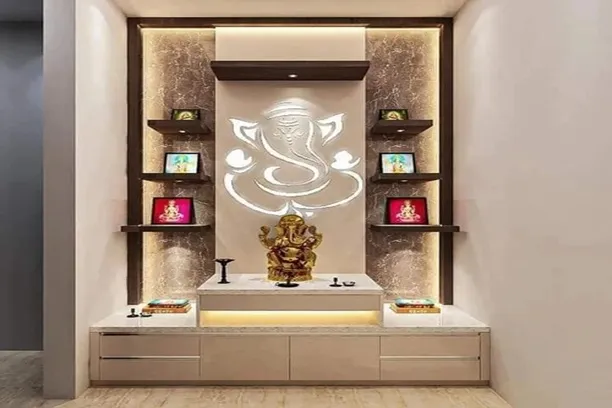
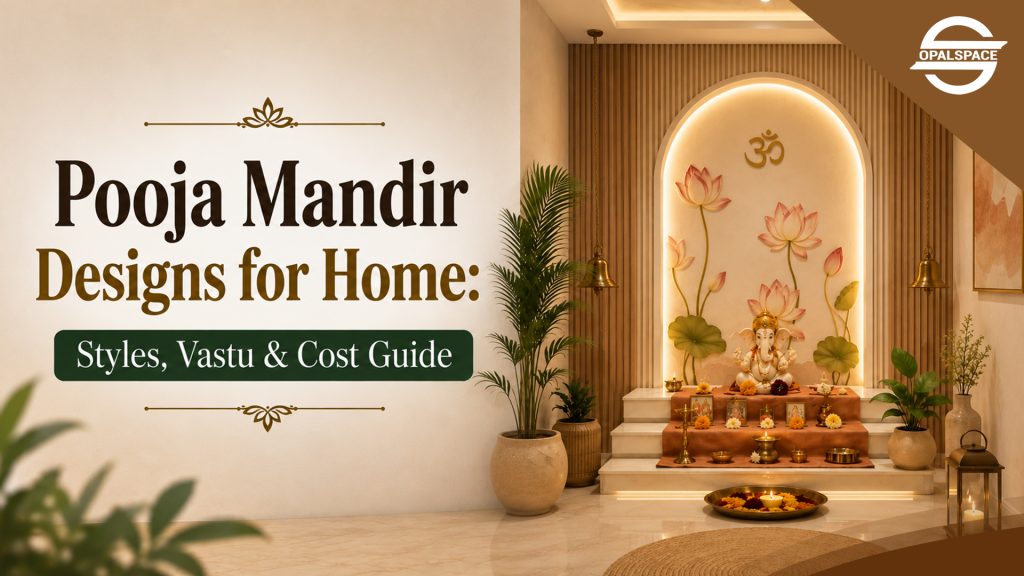
A true Pooja Mandir Design has a natural tendency to lend a sense of order, intentionality, and inwardness to one’s living environment. A mandir for the home serves as a metaphysical guide to positivity and mental peace.
Table of Contents
A mandir design for home connects daily life to tradition, but most homeowners get stuck on three questions. Which material to pick, which design fits the space, and where Vastu allows it. People search for this as Pooja Mandir for Home, temple design for home, or house temple design.
This blog covers materials, design types, room placement, cost, and pooja room direction as per Vastu, so you can plan a pooja room design that fits your home and budget.
How Much Does a Pooja Mandir Cost?
Budget is mainly the first question homeowners ask before starting a mandir project. The cost of a Pooja Mandir does not have to be expensive. It depends on its size, material, and design. A simple pre-fabricated mandir starts at around ₹5,000, making it a budget-friendly option. Custom designs with premium materials like marble or CNC-cut wood, along with smart lighting, can cost ₹50,000–₹2,00,000 or more.
What are the Latest Mandir Designs by Room?
Gone are the days of standard wooden pooja units. Modern kitchen mandir designs now blend aesthetics with functionality, effortlessly becoming a focal point of the space.
1. Mandir Position in Living Room
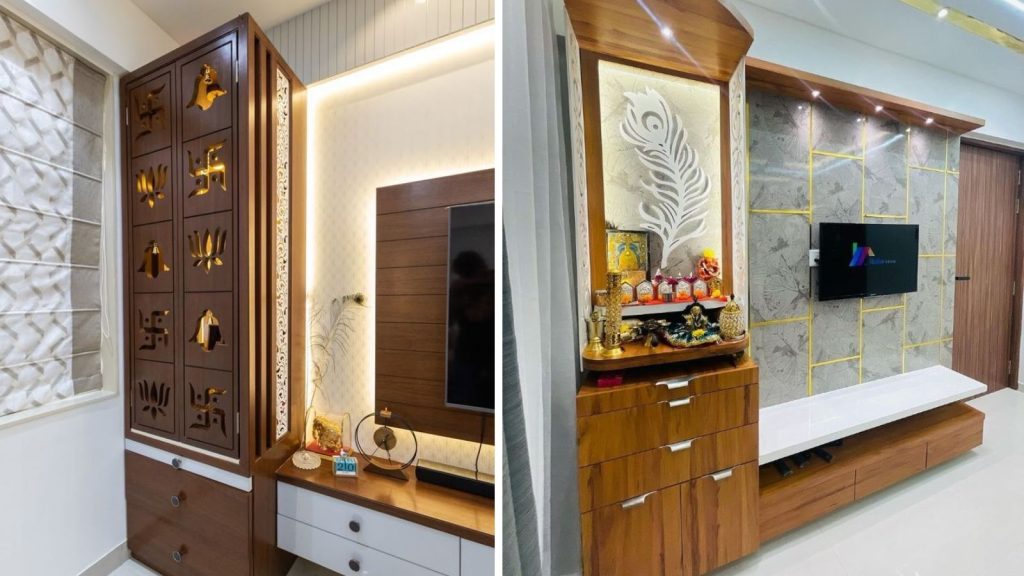
According to Vastu, the best place for a mandir in the living room is the northeast. As for the direction of the idol, it should be West or east, which also determines your prayer direction to be East or North. The mandir should be on a platform at chest height (2-3 feet) off the floor. Also leave a space of 6 to 12 inches around it for easy cleaning and to keep the area uncluttered.
2. Pooja Unit in Bedroom
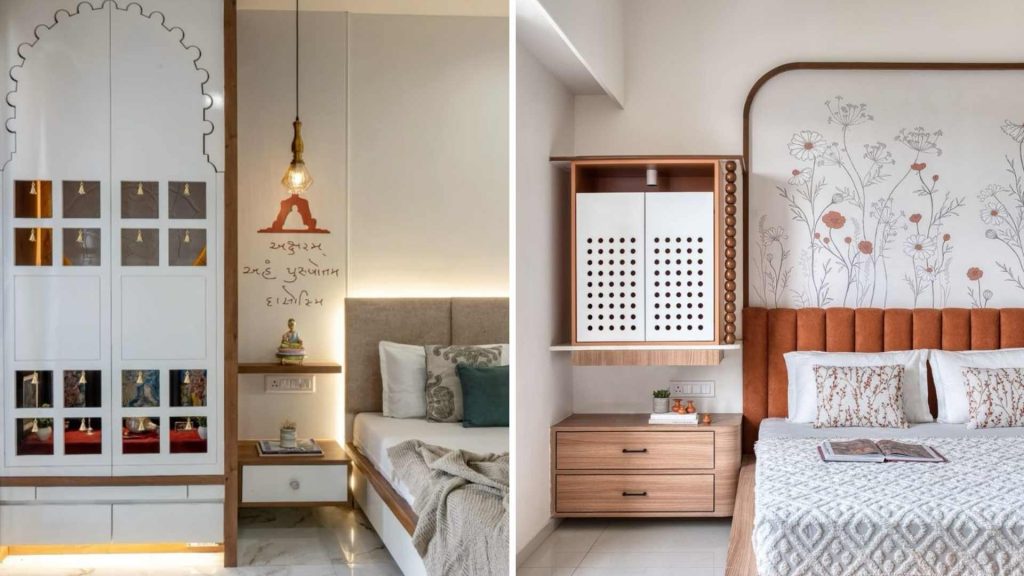
A bedroom mandir works best in a quiet corner, on the northeast or east wall. Pale yellow or soft blue backdrops with gentle backlighting suit a bedroom better than bright LEDs. You can add a bottom cabinet or hidden drawer for incense and prayer books so the room stays tidy. For placement, angle idols to face east or west, and keep the bed from pointing directly at the mandir.
3. Kitchen Mandir Design
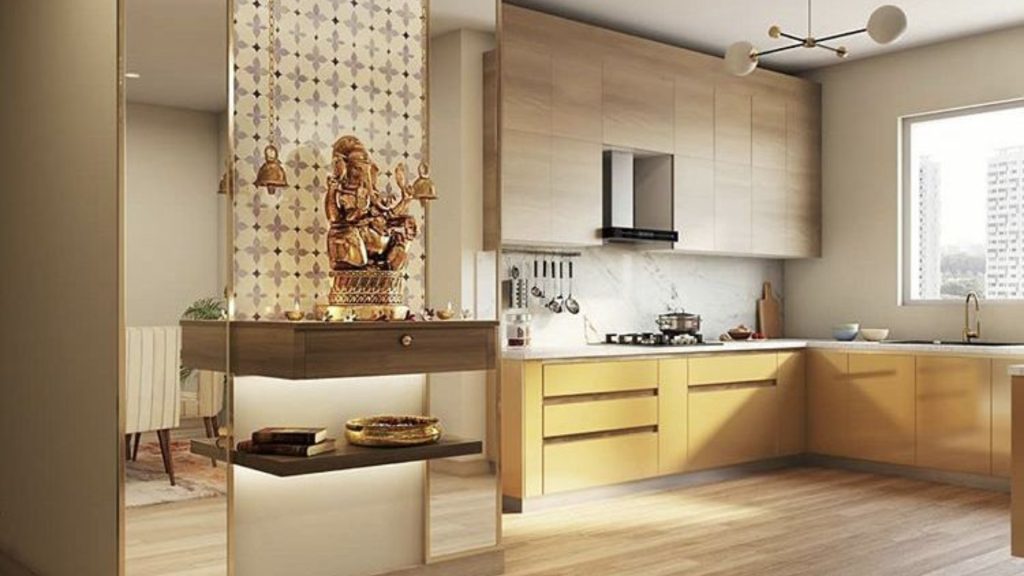
Many Indian homes still keep a mandir in the kitchen for daily ritual before cooking. A compact wall-mounted unit above the platform or in a door keeps the idols free of steam and cooking smoke. Laminate or acrylic finishes clean up faster than raw wood in a kitchen setting. Keep the unit away from the stove and sink, and pick a north or east-facing wall where the layout allows it.
4. Pooja Unit Under the Staircase
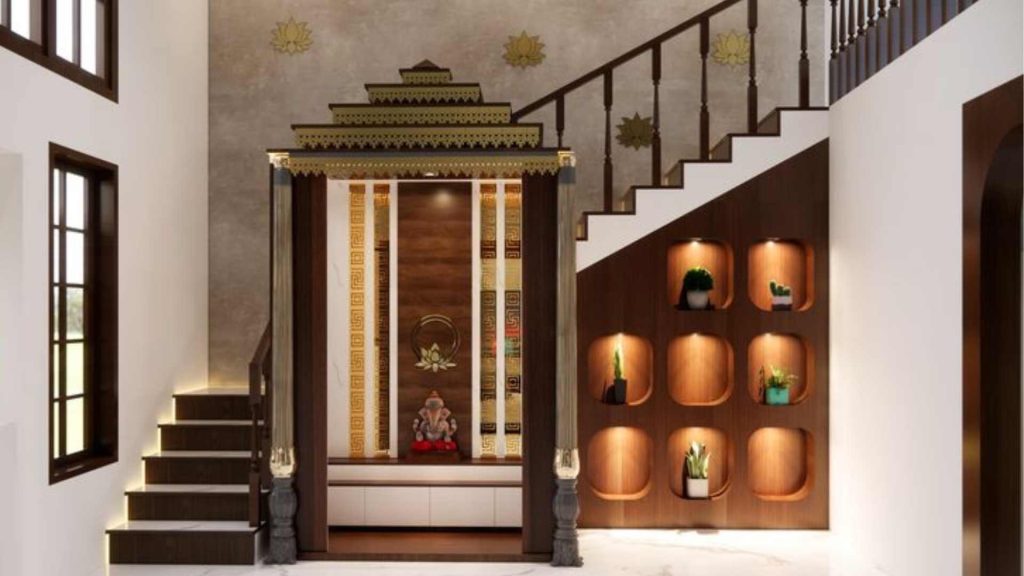
The space under a staircase usually remains unused, but it can work well as a pooja unit. If the entrance faces north or east, you can design a custom mandir that follows the slope of the stairs. Choose wood or marble and add a platform for idols and diyas. LED strips under the shelves can provide enough light in this usually dark space. Add drawers below to store incense, prayer books, and diya plates. Keep the area clean, dust-free, and well-ventilated for a peaceful pooja space.
5. Small Pooja Rooms for Flats and Apartments
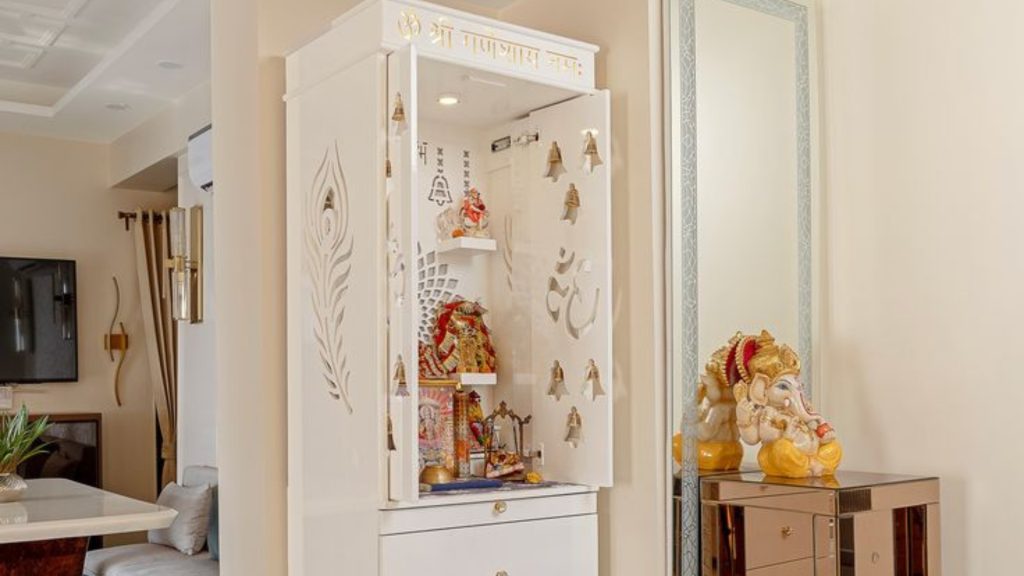
In a rented flat or a compact apartment, a full pooja room isn’t always possible. A wall-mounted or corner unit does the job instead. An L-shaped or triangular corner unit turns an unused corner into a pooja nook without taking up floor space. Mirrors behind the mandir and a light palette (white, cream, pastel) make the corner look bigger than it is. Sliding or foldable doors, including jali or frosted glass, give privacy without needing swing clearance.
What Are the Different Types of Mandir Designs for Home?
Beyond room placement, the mandir’s structure and finish shape how it fits your home. From wall-mounted units to standing cabinets, each style suits a different space.
1. Wall-Mounted Pooja Mandir Design with Doors
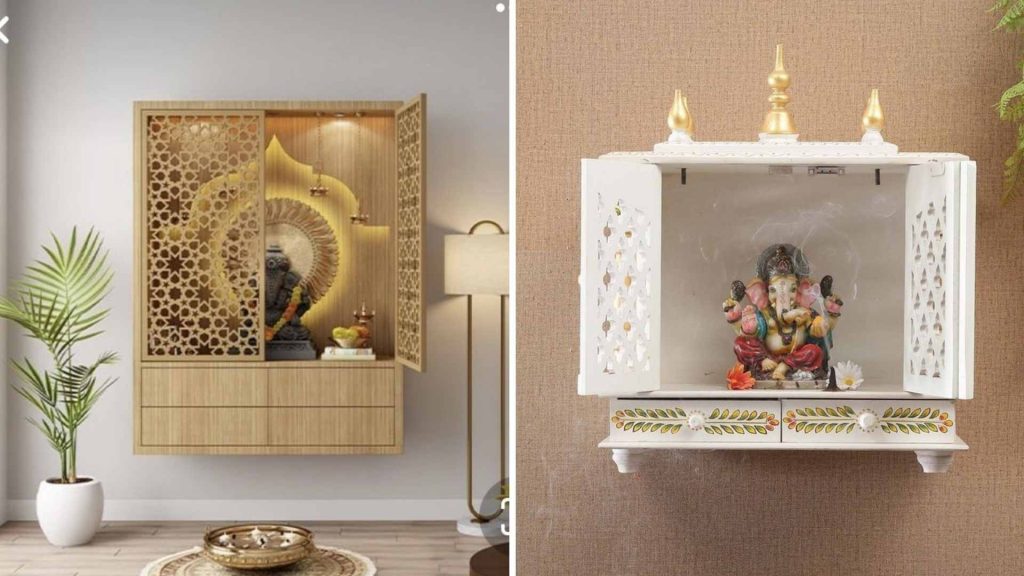
Wall-Mounted mandirs save floor space and work well in open-layout homes. Doors keep the idols closed off and dust-free when the mandir isn’t in use, useful for homes near main roads or in dense localities. Options range from wooden jali doors to MDF panels with LED lighting. Since these units mount on the wall, they are easy to align with Vastu directions without worrying about floor space.
2. Corner Mandir Design
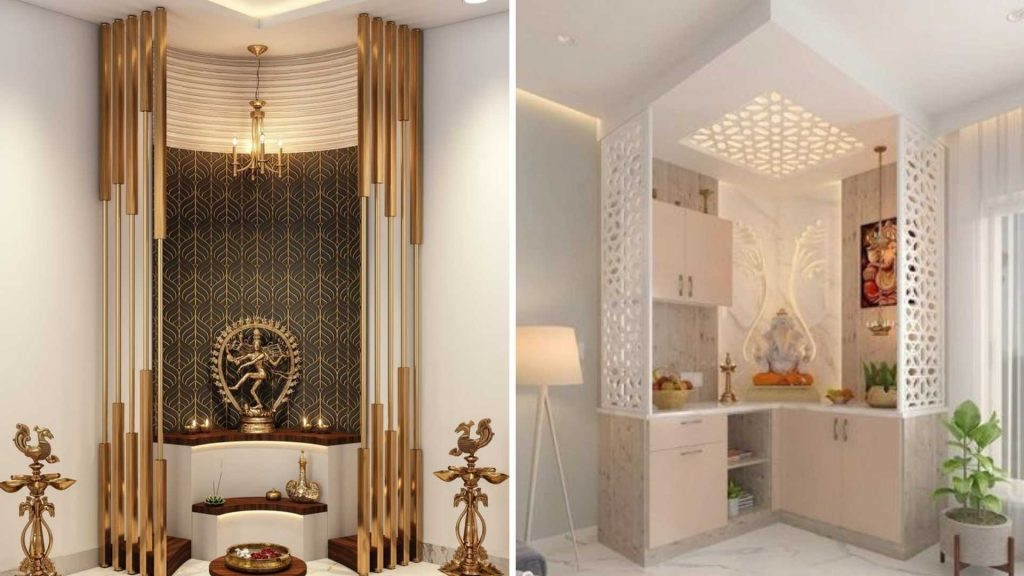
A corner mandir fits into an L-shaped or triangular layout. It turns an unused corner in the living room, hallway, or bedroom into a pooja zone. Incense, matchboxes, and diyas remain in reach because of base cabinets or floating drawers. Corner Mandir Design Works well for rented flats where a separate pooja room isn’t an option. It stays just as auspicious as a full temple space when aligned to the northeast or east.
3. Standing Pooja Unit
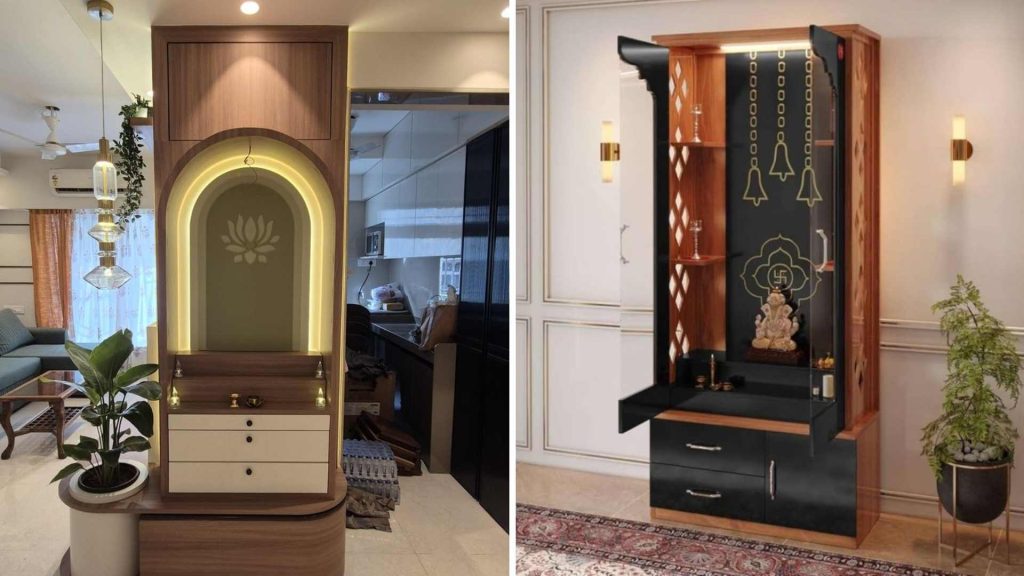
A standing pooja unit is a self-contained vertical cabinet that gives a home-temple feel without needing a spare room. It is suitable for 2BHK flats and studios where a dedicated pooja room isn’t practical. Most standing units come with base storage for oil bottles, thalis, and prayer books, and many include doors or jali panels to close off the space after rituals.
4. Portable and Movable Pooja Unit
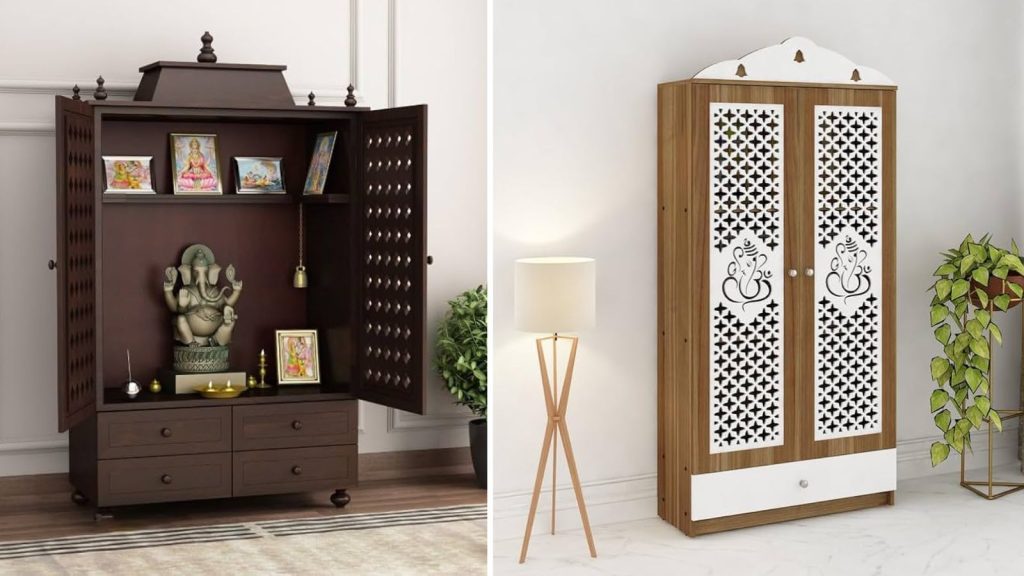
A portable pooja unit is light enough to move between rooms or pack away during a shift or a festival. Teak, sheesham, fiber, and marble are common materials for traditional or a minimal interior. Built-in drawers hold diya wick and camphor, and foldable designs tuck away when not in use.
5. Modular Mandir Design for Home
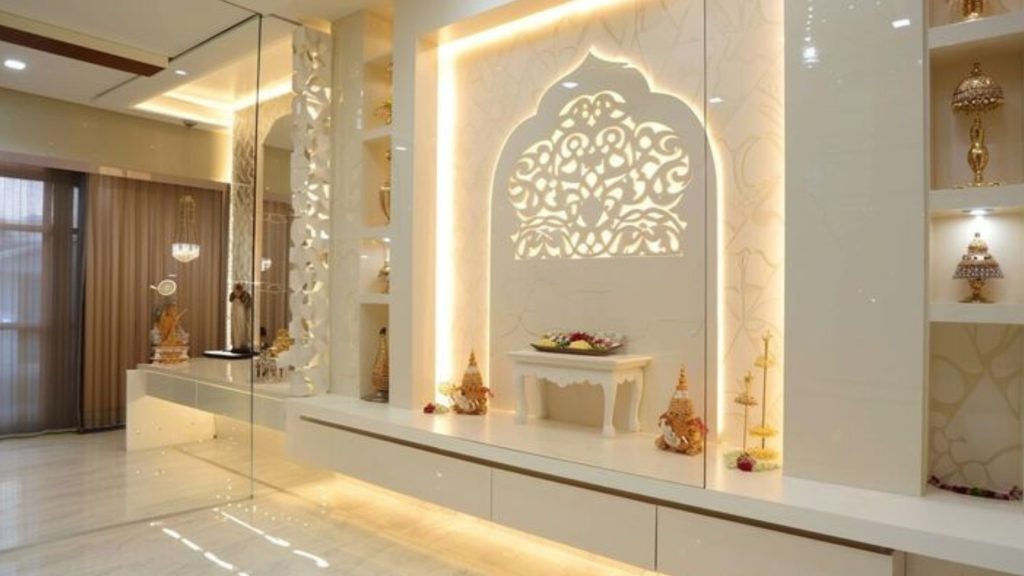
A modular mandir design uses separate parts, such as a base cabinet, idol shelf, and jali or glass panels. You can add or remove these parts based on the space available. This design works well when planning your mandir with a modular kitchen or wardrobe, as the same materials and carpenter can be used for all three.
6. Floating Pooja Mandir
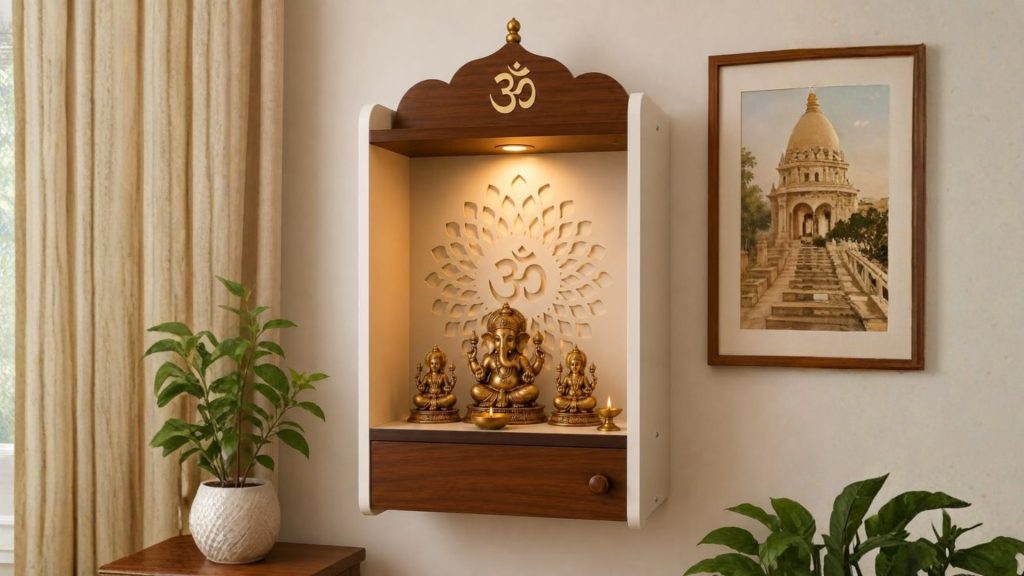
A floating mandir is fixed to the wall, so it keeps the floor clear and makes cleaning easier. It also lets you pray while standing without bending too much. You can choose wood, marble, or MDF for the design. Hidden brackets keep the support out of sight and give the mandir a clean, modern look.
7. Pyramid Pooja Mandir
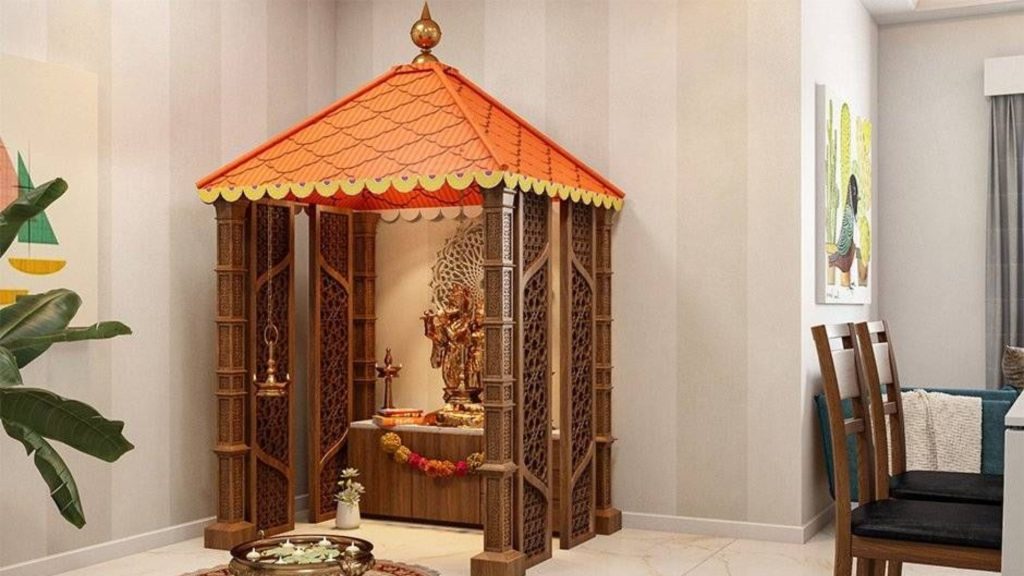
A pyramid-shaped roof above the mandir or pooja room ceiling is considered a Vastu-friendly design. It is believed to help direct positive energy towards the idols. You can use this design in both standing mandirs and built-in pooja rooms. Wood or lightweight materials can be shaped into the pyramid form for a simple and elegant look.
8. Jali Mandir Design
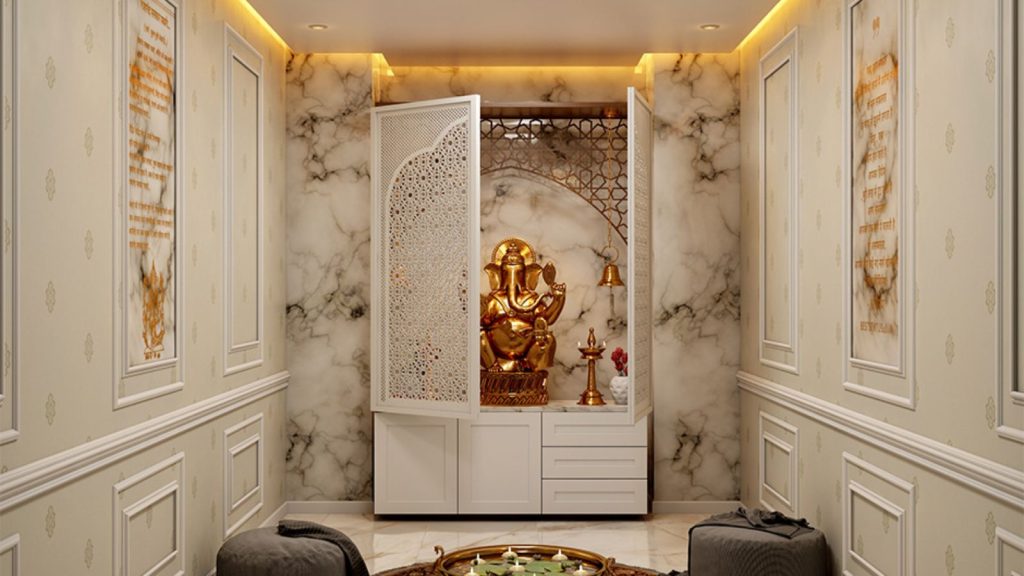
Jali screens that let in light and air and at the same time keep the pooja area neat are what we have. We may choose from wood, MDF, marble, brass, steel, acrylic, or PVC for these jali panels. Floral themes give a soft look to the space, and the geometric, Shree Yantra, OM, and Swastik designs bring in a touch of tradition. Jali panels also reduce glare and allow better natural ventilation.
9. Multipurpose Pooja Stand
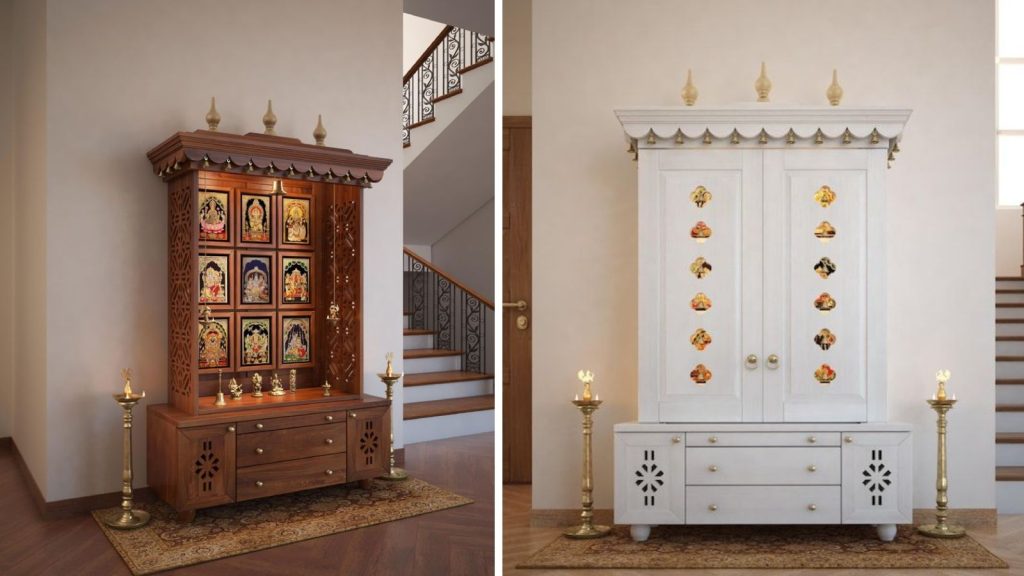
A multipurpose puja stand is designed as a blend of a prayer area and storage solution. They may have drawers and hooks for incense, bells, and diyas. Also available in many design options, which you may rotate at will to put on your balconies or terraces during festivals like Navratri and Diwali.
10. Compact Pooja Unit Designs
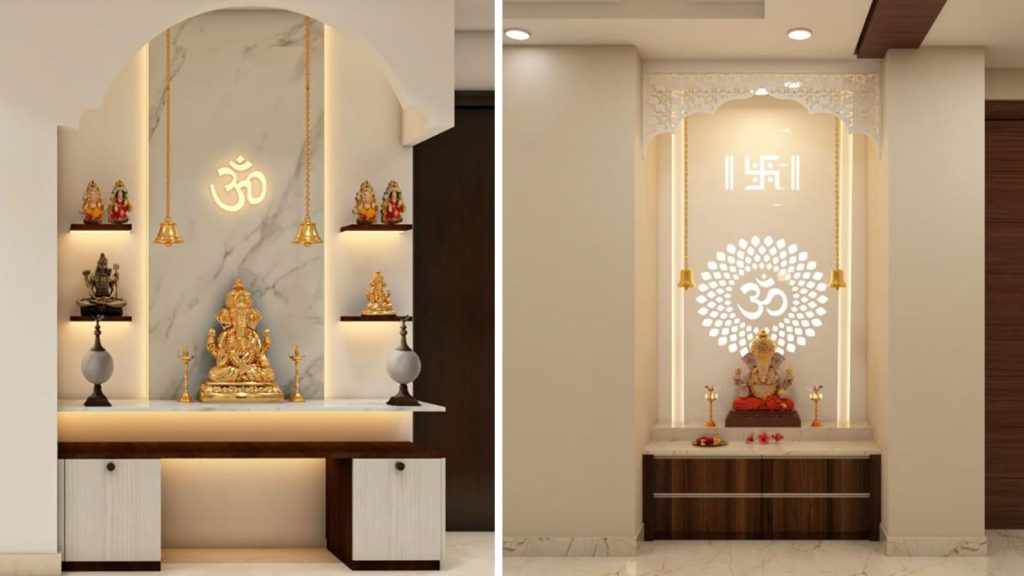
Compact pooja units are ideal for small homes because they can turn an unused corner into a peaceful pooja space. A floating shelf or small cabinet is enough, so you do not need a separate room. Add a backlit panel, textured wallpaper, or LED strip to highlight the area. Foldable or sliding doors provide privacy, while a mirror backdrop makes the space look bigger.
11. Mandir Unit with Storage
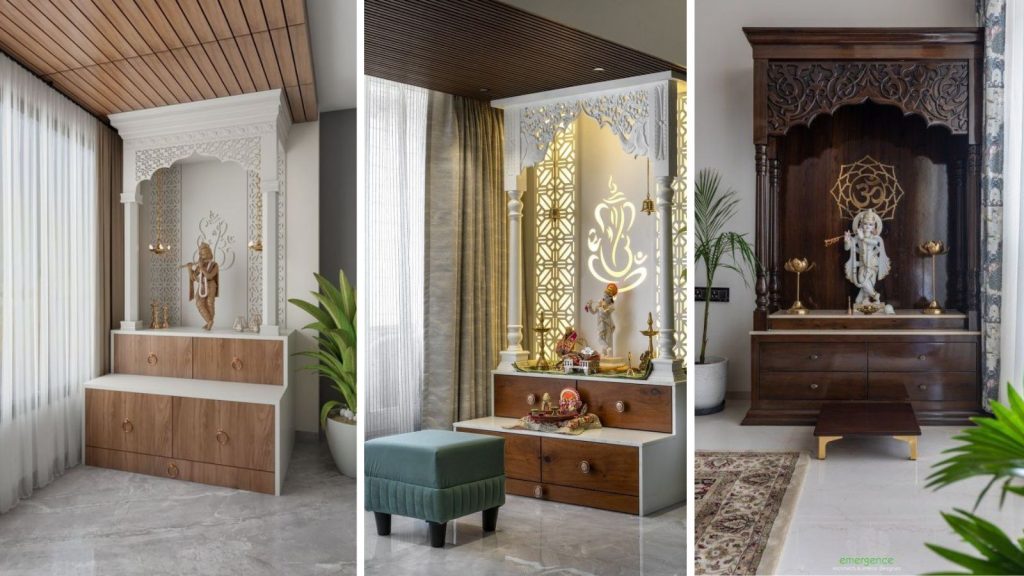
A storage-first mandir keeps incense, prayer books, and diya wicks in drawers or cabinets built into the base. Multi-level storage, upper shelf for idols, mid drawers for daily items, bottom cabinet for bulk supplies, keeps the whole setup organised. Glass-front cabinets show off the idols while keeping dust out.
Mandir Design by Materials
Material choice shapes how the mandir looks, how long it lasts, and how much upkeep it needs. Wood, marble, and tiles each bring a different feel to the space.
1. Wooden Mandir Design for Home
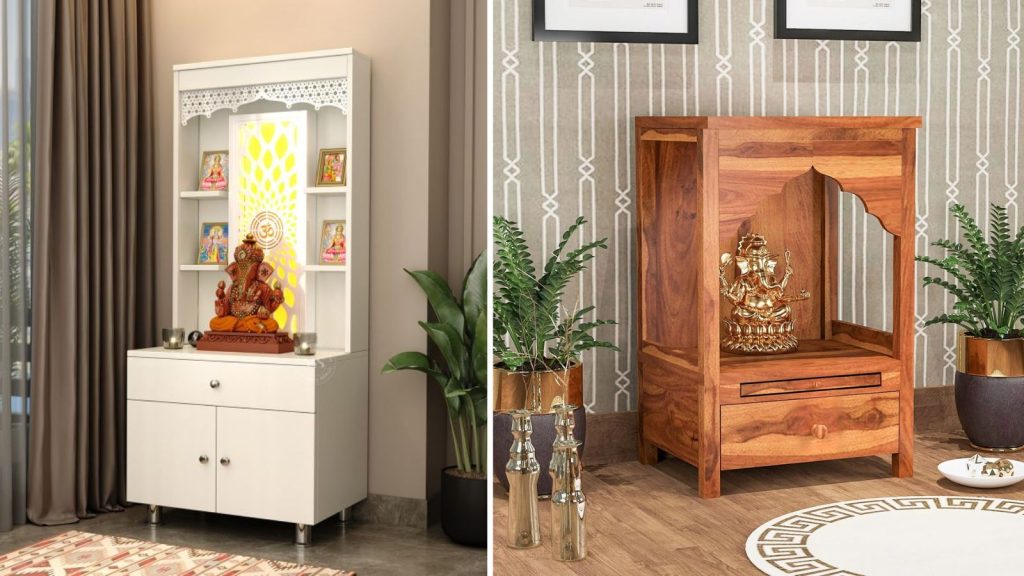
Teak, rosewood, and sheesham are the standard picks for a wooden mandir, often carved with domed roofs drawn from temple architecture. Integrated LED lighting under shelves lifts up corners that don’t get natural light. Floating wooden mandirs at eye level save floor space and make standing prayer easier, and glass or acrylic doors on a wooden frame suit a modern interior.
2. Pooja Mandir Glass Door Design
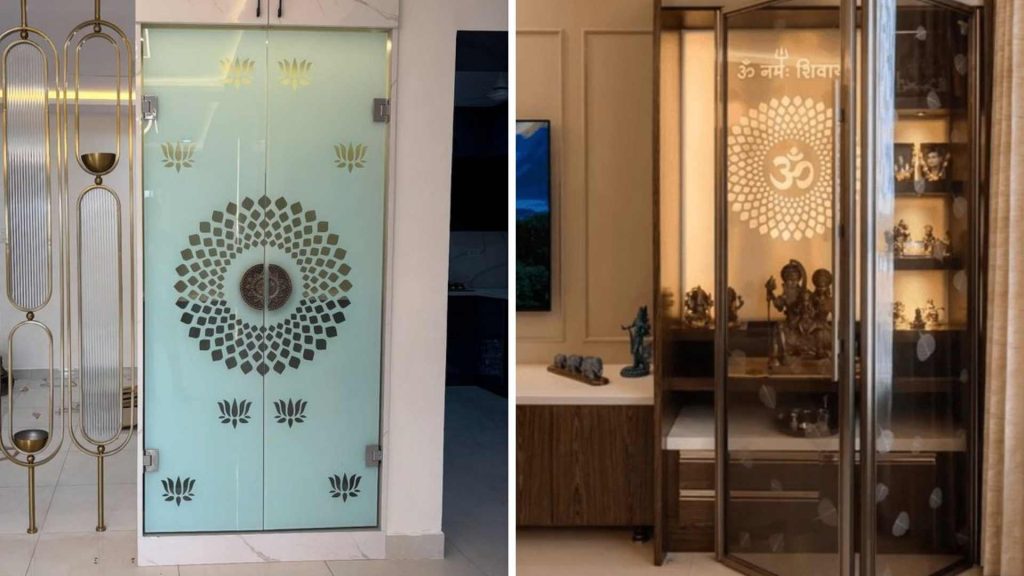
Glass doors that open up the view of the idols at the same time let in soft light into the Pooja area. Frosted and etched glass with lotus and Sanskrit designs introduces privacy, which at the same time does not block out the light. For small spaces, sliding or foldable glass doors are best as they don’t require extra space to open. Wood or metal frames may be added to these doors, which in turn will strengthen them and also give the mandir a very stylish look.
3. Marble Temple Mandir Design for Home
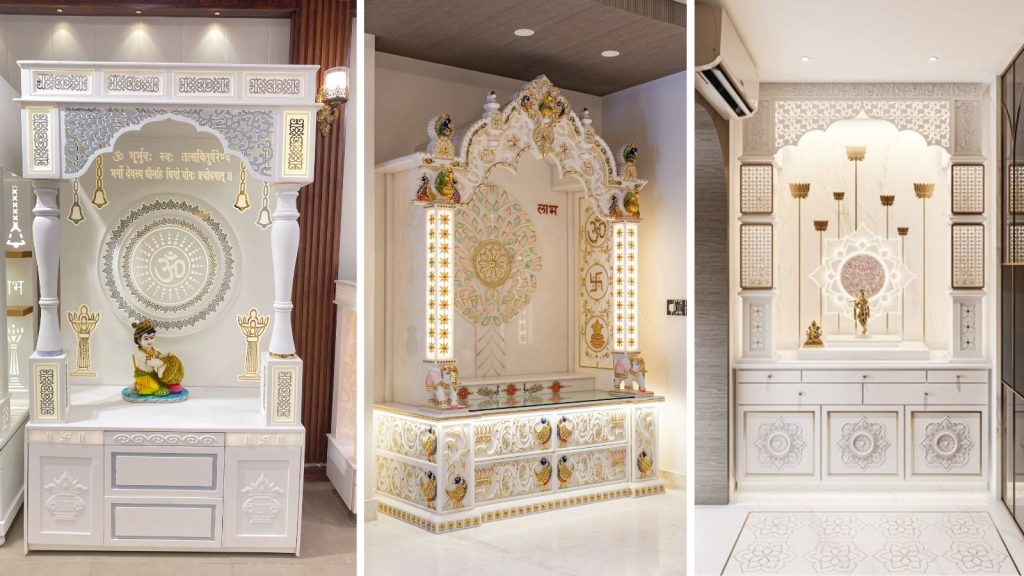
Marble is an excellent material for home mandirs as it resists scratches, heat, and stains. It is easy to care for with just regular cleaning and the occasional seal. You may go for a minimalistic marble mandir design or include carved pillars, inlays and jali work for a more traditional look. A backlit marble mandir also has a very calming effect which is great for evening prayers.
4. Pooja Room Tiles
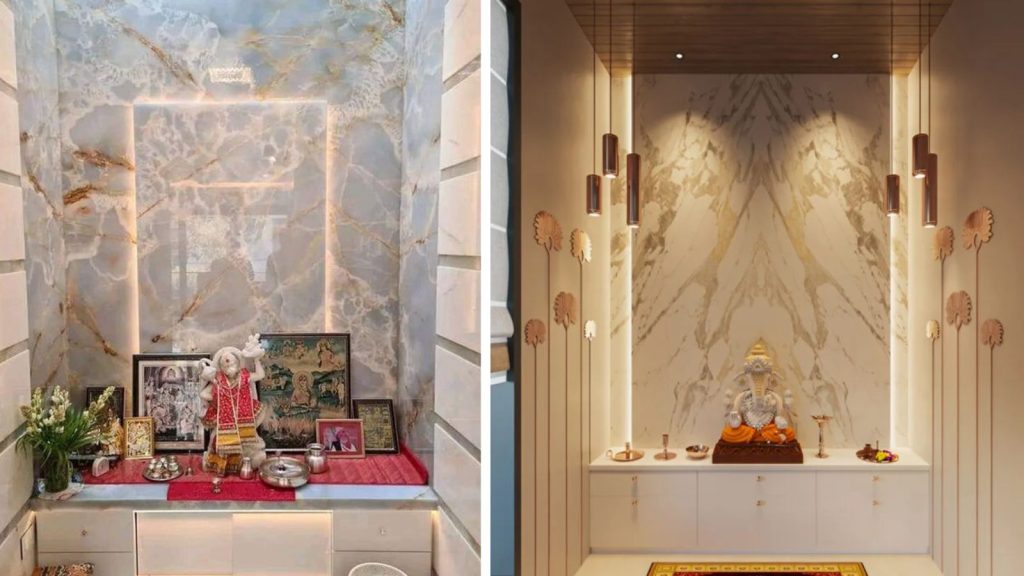
Ceramic tiles that feature lotus, mandala, Om, or Swastik designs bring in that traditional element and also are a budget-friendly choice. We see that marble or marble-effect tiles in white or cream, which we use in the pooja area, give it a very clean and peaceful look also, these are easy to clean. For a rustic look, natural stone tiles like slate, granite and limestone work great. If you want the wood look without the high maintenance, we have wood-look vitrified tiles.
What is the Cost of Pooja Mandir Interior?
| Types | Approximate Cost |
|---|---|
| Pre-fabricated wall-mounted or corner unit | ₹5,000–₹15,000 |
| Standard wooden mandir | ₹5,000–₹20,000 |
| Custom wooden mandir | ₹5,000–₹50,000 |
| Marble mandir | ₹13,000–₹1,00,000 |
| Marble mandir with inlay work and backlighting | ₹10,000–₹70,000+ |
| Glass-door or acrylic mandir unit | ₹5,000–₹40,000 |
| Under-staircase custom pooja unit | ₹10,000–₹60,000 |

How Can Opalspace Help You Design Your Mandir?
Opalspace designs Pooja Mandirs as part of full home interiors across Delhi NCR, including Noida, Greater Noida, Gurugram, and Faridabad. We first plan the mandir according to your home’s layout. Then, we choose the right material, storage, and lighting based on your budget and Vastu needs. Whether you want a simple corner mandir or a full marble temple, our team manages the design, materials, and installation together.