This blog covers 5 dressing table designs for modern Indian bedrooms, including compact, floating, smart, built-in and simple options. It also explains how to pick the right material, storage, placement and size based on your room.
Table of Contents
Most bedrooms in Delhi NCR are small, so there is no separate space for a big dressing table. But this is not really about a small space, it’s about poor planning. Even in a small bedroom, a dressing table can fit if you choose the right design as per your room size. In this blog, I will show you 5 dressing table designs that actually work in Indian homes, and how to decide which one is right for your bedroom interior.
What is a Dressing Table?
A dressing table is just a proper place with a mirror and some storage to keep your makeup, skincare, jewellery and grooming things. If you don’t have one, these things get scattered everywhere. On the bed, in the almirah, or on the bathroom counter. This wastes your time in the morning and makes your room look messy even when it is clean. A good dressing table also saves your other furniture.
A normal dressing table takes about 2.5 to 3.5 feet of wall space and needs an extra 18-24 inches in front for a stool and to sit comfortably. Many people overlook this space before buying. That’s why a table that looks perfect in the showroom ends up blocking your door or your almirah gate at home.
5 Dressing Table Designs for Your Bedroom
The right dressing table depends on three things. How big your bedroom is, how much storage you need, and how you will actually use it.
1. Modern Dressing Table for Small Bedroom
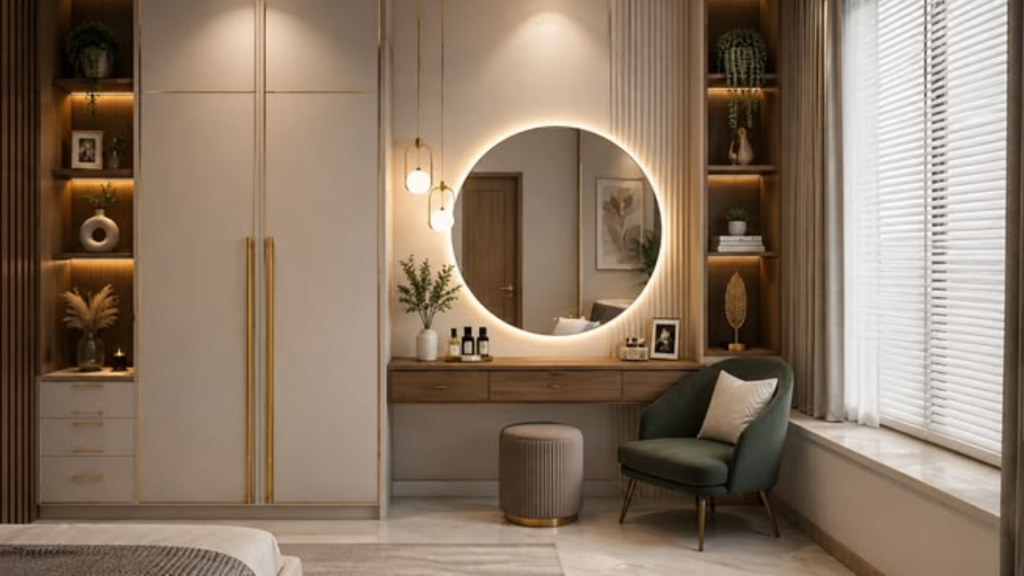
A modern dressing table is a simple, stylish and space-saving table with a mirror and smart storage, made for today’s small Indian bedrooms. Unlike the old big, bulky wooden tables with heavy carving and a large frame mirror, a modern one has a clean and minimal design, a slim size of just 2.5 to 3.5 feet, light colours, and shallow drawers to keep makeup, jewellery and daily essentials organised. It usually comes with a wall-mounted mirror, generally with LED lights, and a small stool that slides inside the table so it doesn’t block space, and it can easily fit in a corner or beside your wardrobe without making the room look crowded.
2. Floating Dressing Table for Space Saving
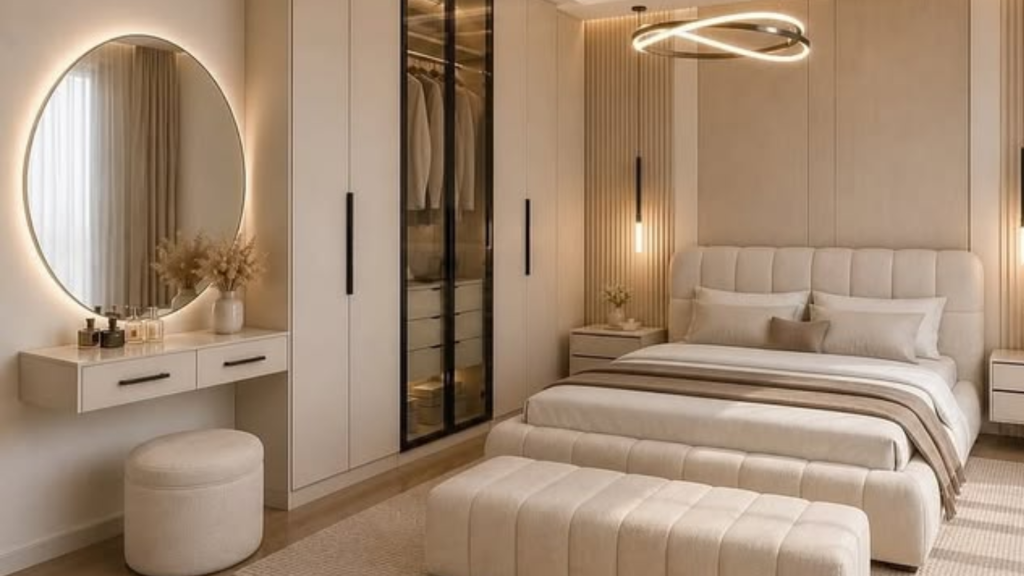
A floating dressing table is a dressing table that is fixed directly on the wall and does not touch the floor. Because its legs don’t take up any floor space, the area below it stays empty, which makes your room look bigger, makes it easy to clean underneath, and gives you more space to walk around. It is usually just a simple wall-mounted plank or countertop with one or two small drawers and a mirror fixed above it, and a small stool that you can slide underneath when not in use. This design is perfect for small or narrow bedrooms in Indian homes where a full-size, bulky dressing table would make the room feel congested and block the passage.
3. Smart Dressing Table with Mirror
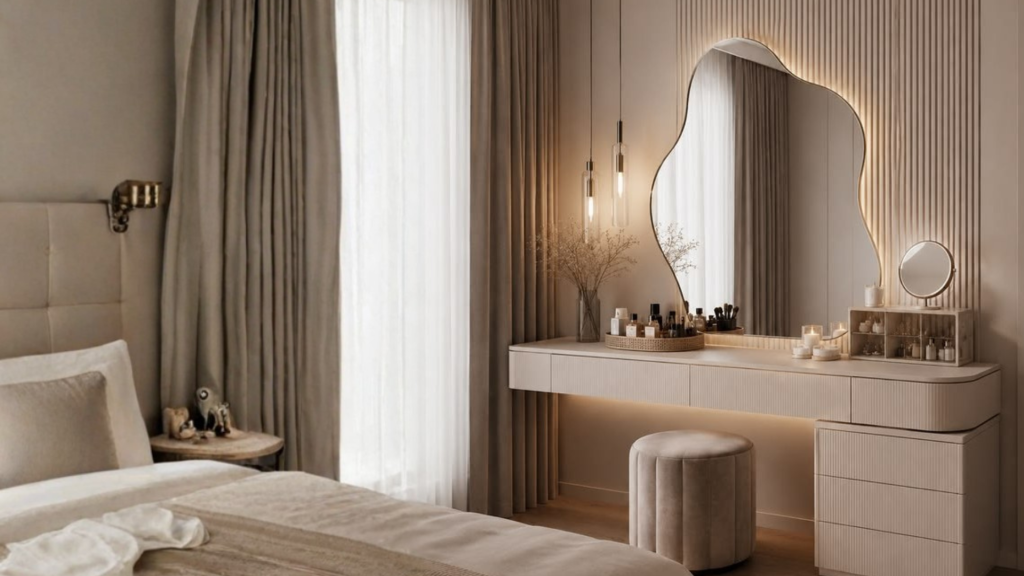
A smart dressing table with a mirror is a normal dressing table but with some useful modern features added to make getting ready easier. The main feature is its mirror, which has built-in LED lights around it that give clear, bright light on your face. Some even have touch sensors to change the light colour and brightness. It also has built-in power sockets or USB points right in the table or mirror, so you can easily plug in your hair dryer, straightener or phone charger without searching for a plug point. Inside, it has smartly divided storage with small sections for jewellery and makeup and deeper drawers for bigger tools. In short, it’s a stylish, all-in-one vanity that saves your time and makes your routine more convenient.
4. Modern Built-in Dressing Table
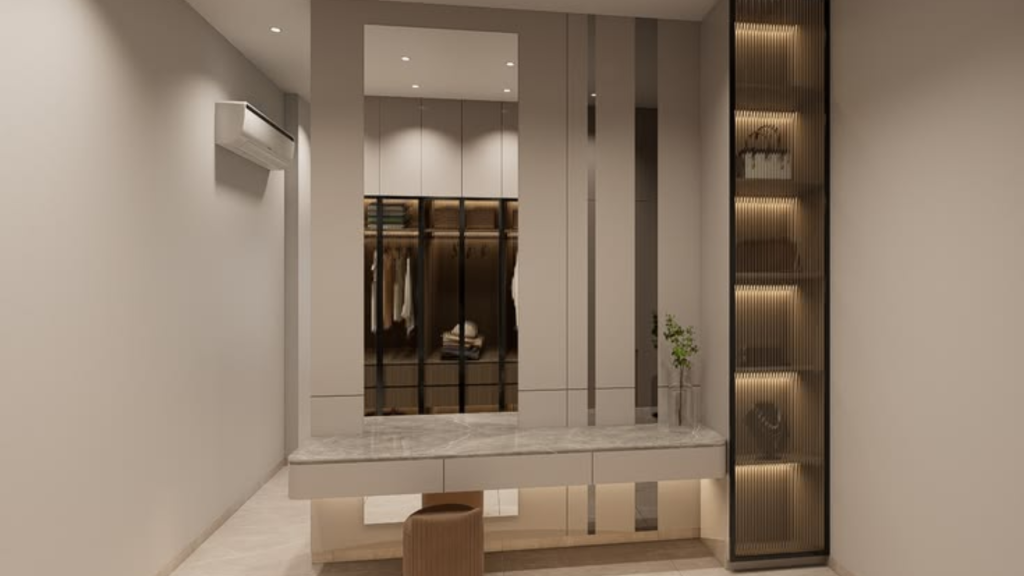
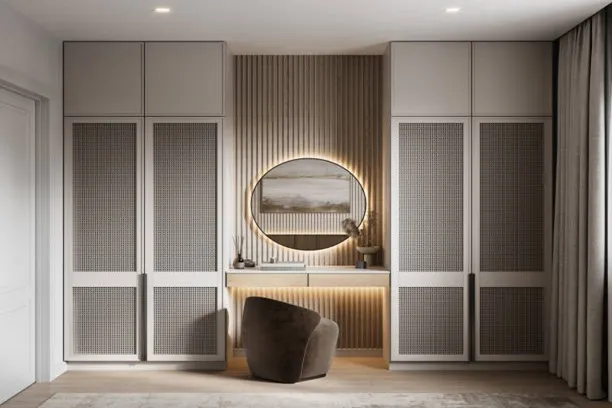
A modern built-in dressing table is a dressing table that is not bought separately but is made as a fixed part of your wardrobe or bedroom wall, like one complete furniture unit. It is usually designed with wardrobes on both sides and the dressing area in the middle with a countertop, drawers, a mirror, and some overhead cabinets for extra storage. Because it is built together with your wardrobe, its colour, material and finish match perfectly, which gives your whole wall a neat, seamless and premium look and uses the wall space very efficiently without wasting any corner. This type of design needs a bit more wall length, so it works best in master bedrooms and when you are getting your full bedroom interior or modular furniture done from scratch.
5. Simple Dressing Table for Everyday Use
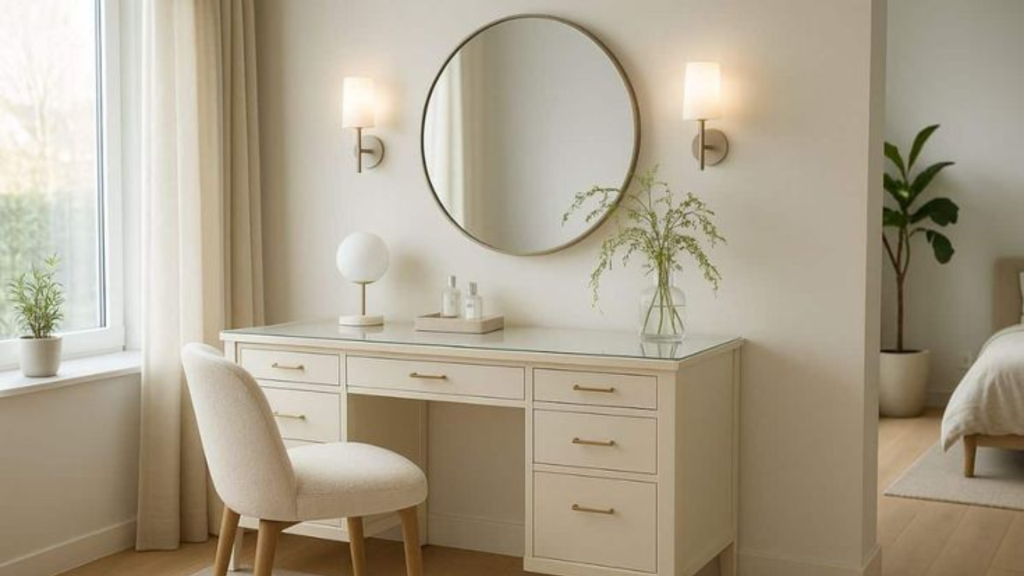
A simple dressing table is just a basic, no-fuss table made for your daily getting-ready needs without any fancy features or heavy design. It is usually just a small countertop with a normal mirror and one or two drawers to keep your everyday items like a comb, cream, makeup and jewellery. You keep only the things you use daily on top and store the rest inside the drawers, and it comes with a small stool that slides under the table when not in use. Because it is compact, low-budget and easy to place, it can fit in any bedroom corner or beside your wardrobe and is perfect for guest rooms, rented houses or for anyone who wants a practical and easy solution without spending too much.
Which Material Should You Choose for a Dressing Table ?
| Material | Durability | Maintenance | Approx. Cost Impact |
|---|---|---|---|
| Engineered wood (MDF/particle board) | Moderate, sensitive to prolonged moisture | Low, wipe it clean | Lowest |
| Plywood | High, better moisture resistance than MDF | Low | Moderate |
| Laminate finish | High surface durability | Very low | Adds 10–15% over base material |
| Glass/mirror panels | Fragile if unsupported | Needs regular cleaning to avoid smudging | Adds cost per panel |
How to Choose the Right Dressing Table Design for Your Bedroom?
The right design comes down to three things, how much wall space you actually have, how much you need to store, and what your wall can support. Here’s what to check before you pick one.
- Measure the wall width first and the clearance in front for a stool. Under 3 feet of usable wall generally rules out anything but a compact or floating design.
- Then count what’s actually being stored daily. If it’s just makeup and a few accessories, two drawers are enough.
- If hair tools, multiple jewellery sets, or skincare need separate space, a built-in unit with more compartments is worth the added cost.
- Check the wall type before selecting a floating design — partition walls in many NCR apartments aren’t rated for a wall-mounted unit with drawers loaded.
- And if lighting or power points are part of the plan, get that into the electrician’s scope before the false ceiling and wiring stage, not after.
#Read Also: Bedroom Wall Colour Combination
What are the Common Dressing Table Mistakes to Avoid in Bedroom Design?
Most dressing table problems start because of small mistakes made before you even buy it. If you catch them early, you won’t have to redo the work later.
- No space in front: You put the dressing table but there is no space left to pull the stool or open the drawers properly.
- Fixing it on a weak wall: You fix a wall-mounted dressing table on a wall that cannot take its weight.
- Forgetting plug points: You remember the switchboard after the wall is done, so the wires are left hanging outside.
- Wrong mirror size: You select the mirror as per the wall size, not as per whether you will use it while sitting or standing.
- Using wrong material: You use MDF in a room that gets damp or where the window stays open in the rainy season, so it starts swelling.
Plan Your Dressing Table Designs with Opalspace
We design dressing tables as part of the bedroom layout, not as an add-on ordered separately from the wardrobe. That means matching finishes, planning electrical points during the wiring stage, and sizing the table to the actual clearance in your room instead of a standard template. Explore our home interior design services and home interior design to plan a bedroom where the dressing area fits the space you actually have.