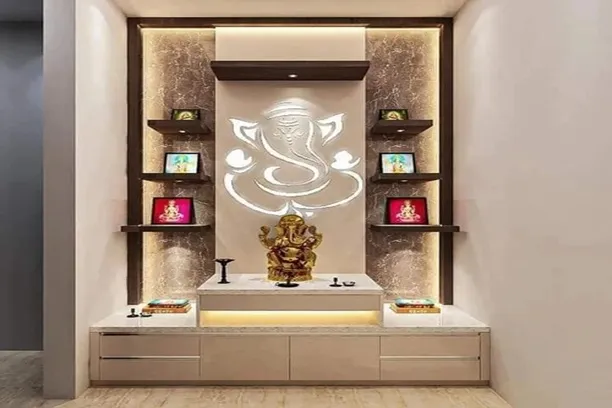
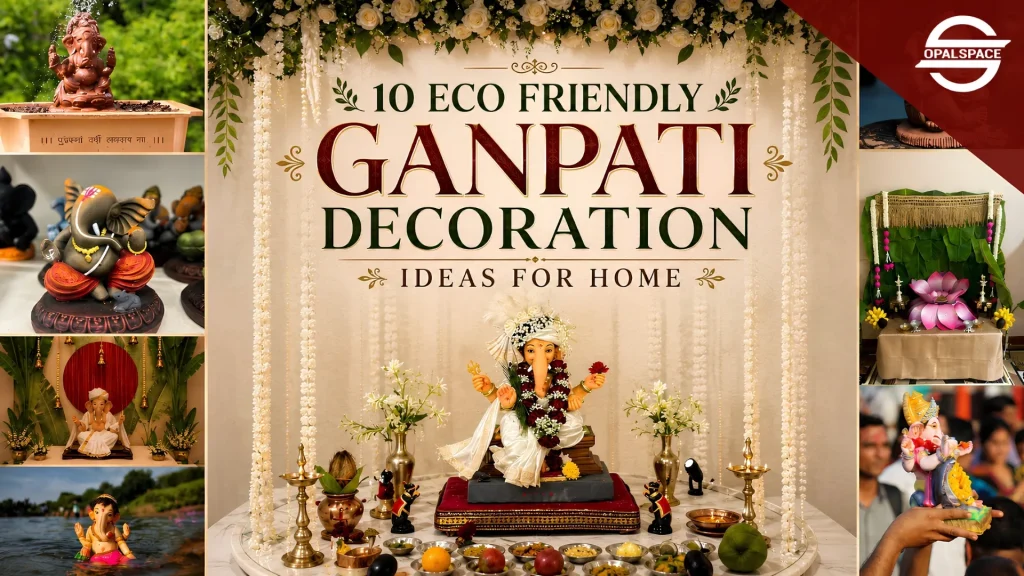
Eco-friendly Ganpati decoration is a necessity nowadays to protect the environment. This blog shares 10 Eco-friendly Ganpati decoration ideas for home, covering natural materials like clay and Shadu mitti idols, flower and cloth decor, theme-based setups, and sustainable invitation cards. It also offers tips on responsible visarjan practices and ways to involve kids and family in the celebration.
Table of Contents
Monsoon awakens the soil, and with it, something deeper within us. It brings a quiet anticipation of Ganesh Chaturthi. As seasons shift, our sensibilities shift along with them. The rain-soaked earth, the scent of clay, the softened light, all gently remind us of life’s natural rhythm. It is urging us to slow down and reconnect. In that pause, we begin preparing for one of India’s most beloved festivals, with devotion and reflection.
Over the years, Ganpati decoration has quietly evolved. We want to encourage people who always have eco-friendliness in mind to lean towards a sustainable style of celebrating Ganesh Chaturthi starting this year. These Ganpati home decoration ideas make it easy to bring a nature theme into every corner of the celebration.
In this blog, we’ll explore beautiful, creative, and eco-friendly decoration ideas for Ganesh Puja, using clay, traditional Shadu mitti for making eco-friendly Ganesha idols, and many other quick earthy decor ideas that are gentle on nature and close to tradition. Think of it as a complete guide to Ganpati natural decoration and eco-friendly Ganpati decoration ideas at home.
What Makes a Ganpati Decoration Eco-Friendly?
We all love decorating our homes during Ganesh Chaturthi. We string up flowers and mango leaves, light diyas, set up a pandal, and place the almighty Ganesha idol right in the heart of our celebration. But in recent years, a beautiful shift has begun, that is, more and more families are thinking not just about how the decor looks, but also about how it impacts our surroundings, our planet. So what exactly makes a Ganpati decoration eco-friendly?
1. Using Natural and Biodegradable Materials
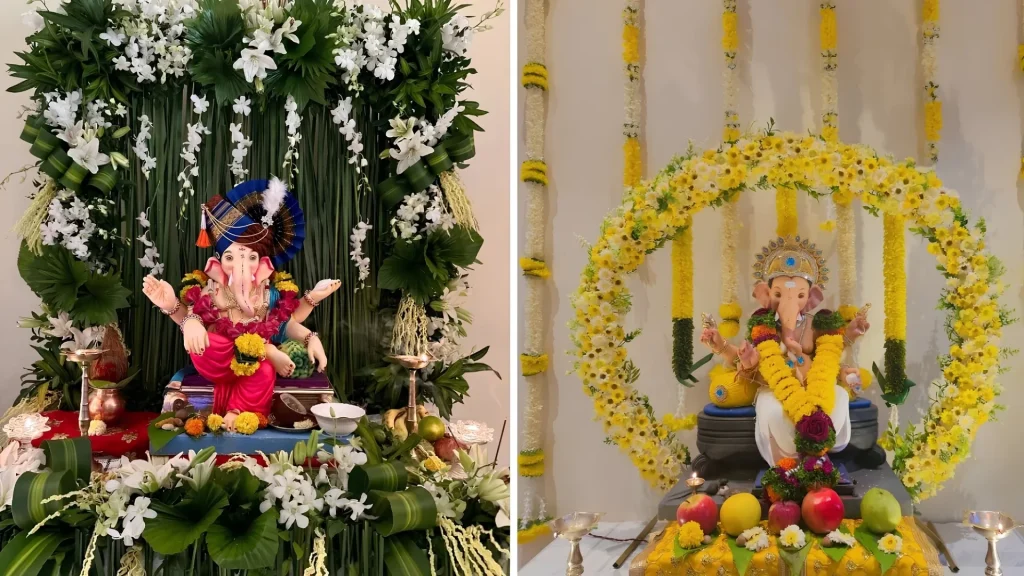
- Instead of POP (Plaster of Paris), you must use clay and Shadu mitti for naturally dissolvable and eco-friendly Ganesha idols.
- You must avoid plastic garlands, and use fresh or dried flowers instead.
- Instead of thermocol panels, use cotton or upcycled fabric.
- Other organic materials would be banana leaves, jute, bamboo, cane, and coconut husk.
These materials reduce pollution, and more importantly, they reconnect us with traditions rooted in nature. Culturally and for those who feel deeply connected to nature, there’s something profoundly grounding about using clay (mitti) in a festival to bring the earth element (Prithvi tattva) into your home.
Interesting Fact: Where Plaster of Paris takes years to break down and can severely pollute water bodies, Shadu mitti is river clay that dissolves easily in water during visarjan, and leaves no harmful residue behind.
2. Reusability and Low Waste Thinking
When you’re planning background decor for a Ganpati mandap, you can make use of old sarees or dupattas. You can light simple LED diyas that get used every year. Similarly, the frame that you’d use for a mandap frame, it can be easily stored and reused. This mindset shift accounts for the real change. Eventually, it cuts down the volume of post-festival waste that ends up in landfills after a few days of festivity. It keeps your Ganesh Chaturthi decoration simple and sustainable year after year.
3. Responsible Visarjan Practices
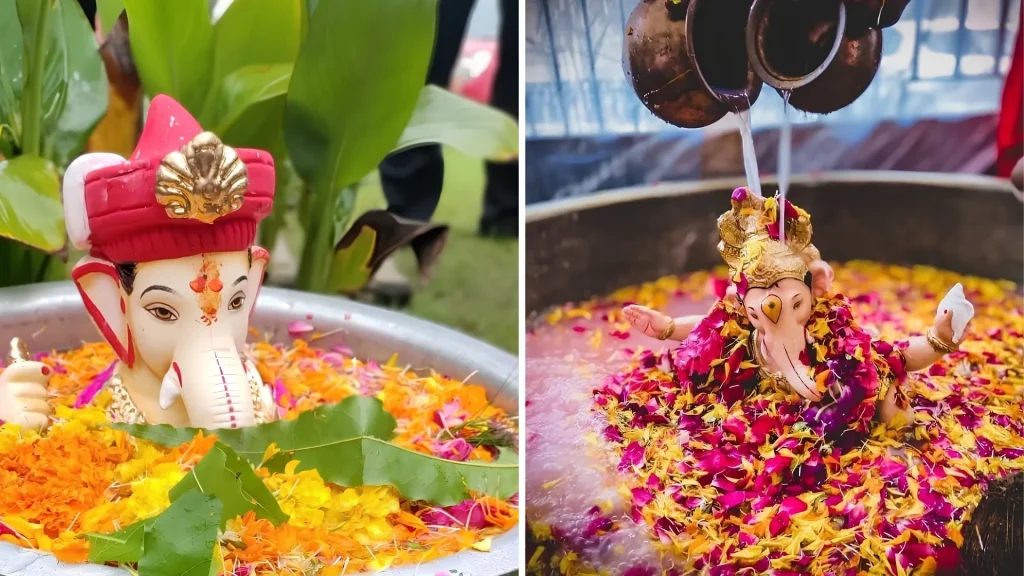
Eco-conscious visarjan practices honour both the tradition and the earth it draws from. An eco-friendly Ganpati decoration and celebration thinks about the end from the beginning.
- Clay made Ganesha idols dissolve naturally and do not harm marine life and ultimately our environment in any way.
- Many people now perform home visarjan in a tub or bucket, especially in apartments, and use the dissolved clay to nourish plants. You can do the same.
- If you’re doing visarjan in a public pond or lake, you must make sure that the local guidelines are followed and that it’s a designated eco-immersion zone.
How to Make Ganpati Decoration at Home?
1. Ganpati Murti Decoration (Clay Idols, Sea-based, Organic, Terracotta)
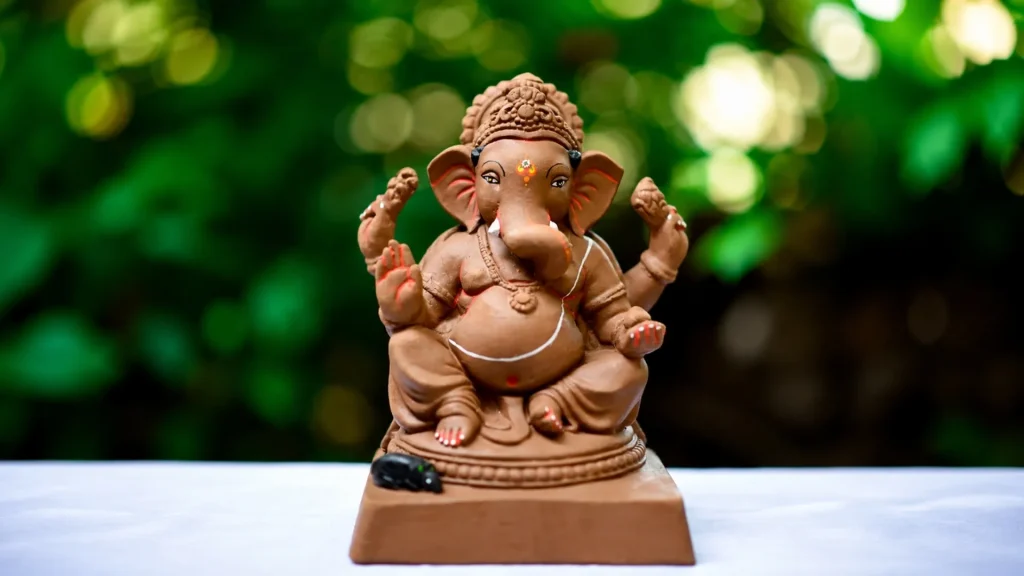
Clay Idols (Shadu Mitti)
Many people now prefer simple designs with serene expressions on Ganesha’s face. These idols are available in soft colours, unlike the ones that used to be covered in heavy glitter or paint.
Terracotta and Seed Idols
You can also try terracotta, red soil, or even seed-embedded idols. Because terracotta gives a natural, earthy look. Some idols even come with seeds inside them. After visarjan, you can plant them and grow a tree or plant as a memory.
Sea-Based Materials
Some eco-friendly idols are made using materials that dissolve safely in the sea. These are good for people living near coastal areas.
No Chemical Use
Always look for natural dyes and finishes, not chemical paints or glitter, to keep the ritual non-toxic and authentic.
2. 3D Ganpati Background Decoration
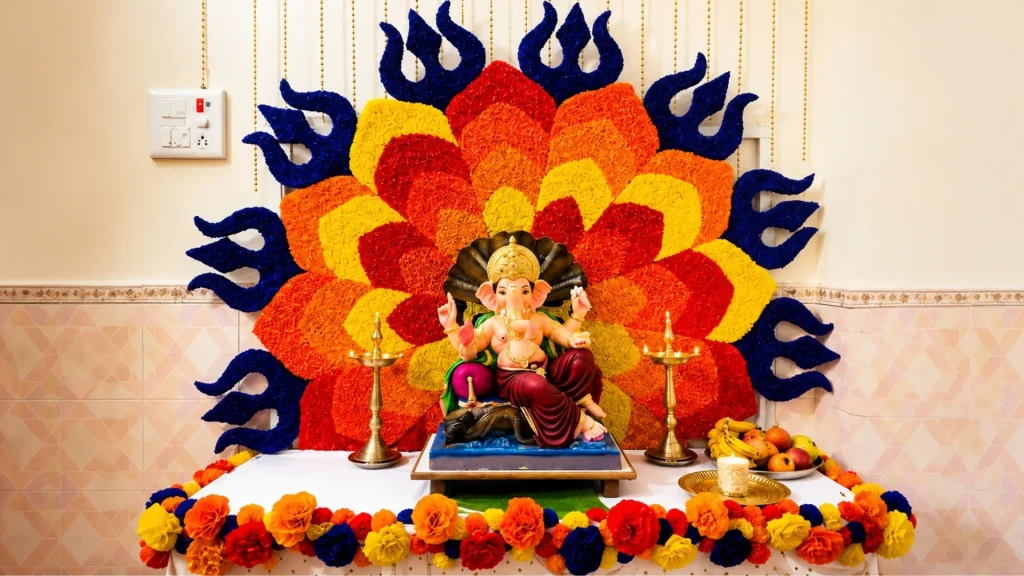
- Use bamboo, jute, recycled cardboard, and handmade paper in place of foam or plastic. Bamboo frames are lightweight, so they provide strength and can be reused.
- You can build actual 3D depth with layered cardboard shapes, such as circles, hexagons, and fans, which are painted in soft, natural tones and staggered to protrude at different depths to form shadow and relief.
- Paper fans that are clustered behind the idol form a halo-type look and impart a lively impression to your Ganpati background.
- You can add pressed leaves (banana, palm, ferns) or botanical prints on handmade paper for living textures to imitate the botanical-inspired setting.
3. Flower Decoration for Ganpati at Home
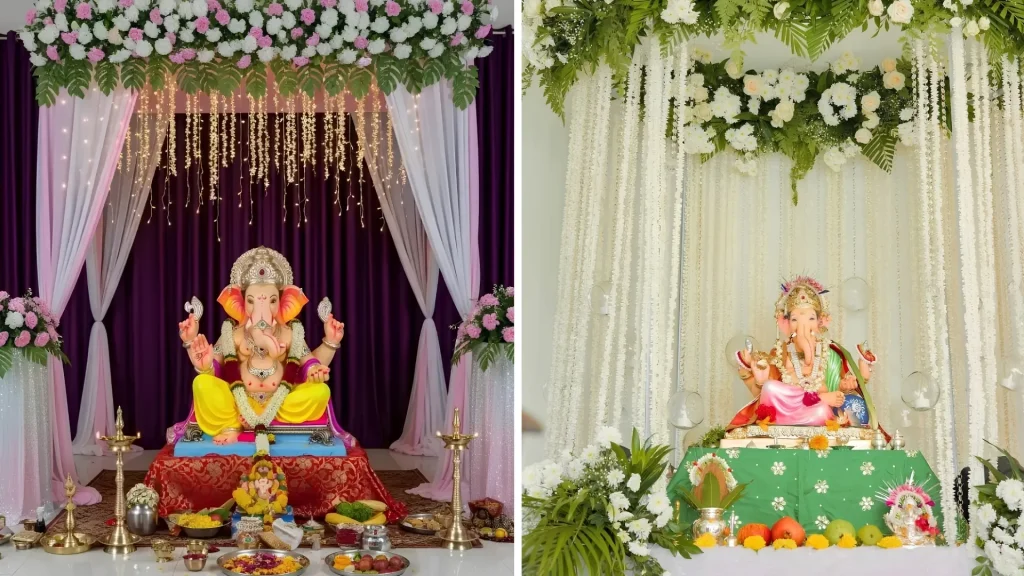
- You can use fresh marigolds, jasmine, hibiscus (beloved of Lord Ganesha), and roses. Because they bring fragrance and vibrancy. Very naturally, apart from using garlands around the idol, you can use them in the entrance, or make a natural floral backdrop.
- Flower rangoli is another eco-friendly method to make flower decoration for Ganesh utsav spiritual and sustainable. You can combine flowers along with organic colors, or rice-flower, turmeric powder, etc.
4. Cloth Decoration for Ganpati
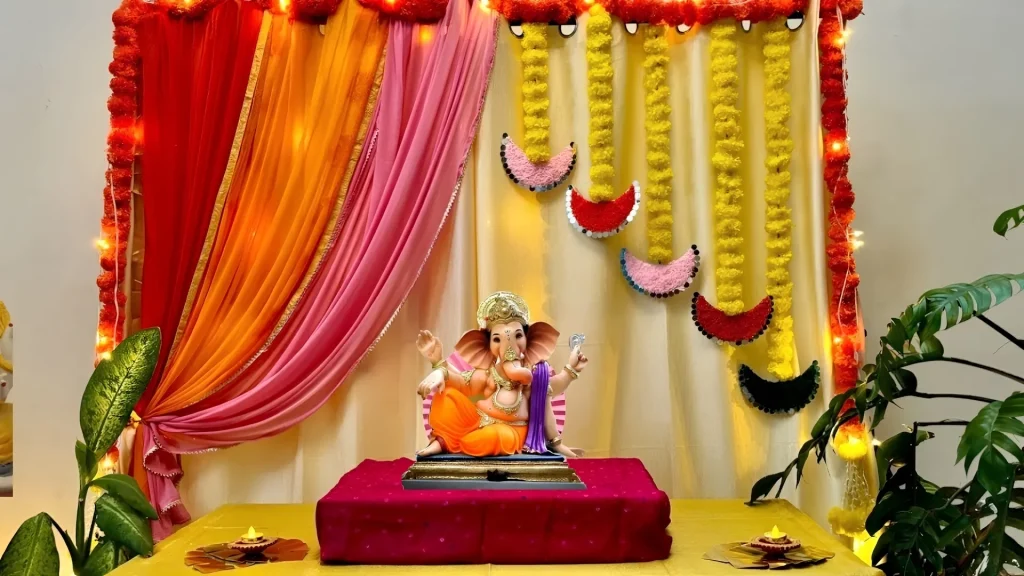
- Draping cotton sarees, dupattas, or upcycled fabrics behind or over the mandap renders textured backdrops. This way you do not have to dispose of them, and can be reused post-festival.
- Hanging fabric bunting or soft canopy drapes from the ceiling give a graceful impression to the mandap. They develop a sense of height and depth, and also bring a rhythmic movement when stirred by air. It has a divine appearance overall.
5. Theme-Based Ganesh Chaturthi Decor
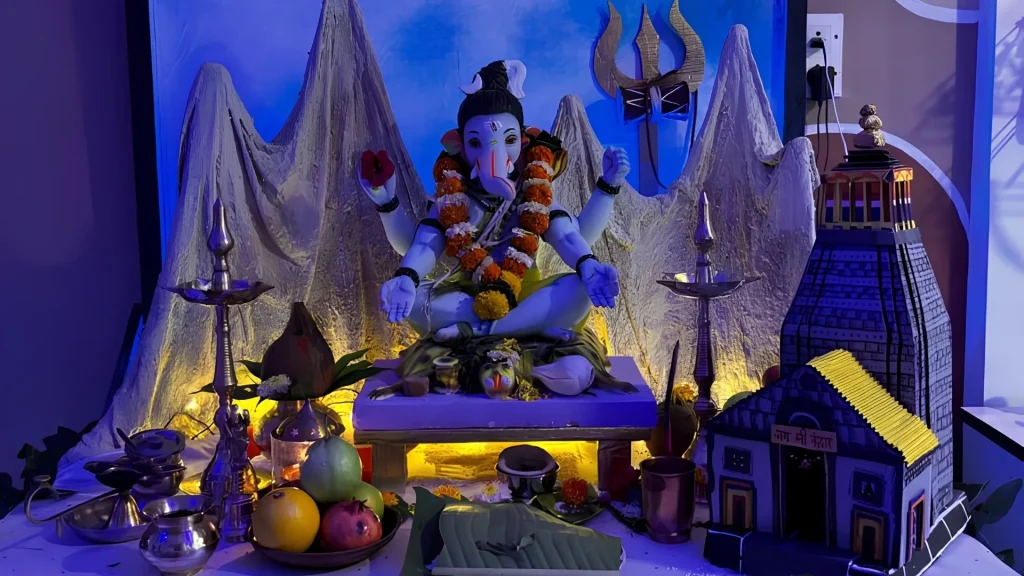
- Eco-themed approaches, like village hut style (mud pots, bamboo mats, straw), peacock-feather motifs, or lotus garden framing, tie the festival to cultural symbolism and nature.
- You can think of any theme idea you’d love to portray around the Ganpati mandap. It can be a palace-style with pillars, throne and chandeliers, or forest Ganpati with green vines, artificial trees, and wooden planks.
- Or traditional Maharashtrian village with cow-dung like flooring, hut roof and clay cookware, or temple setup with miniature temple built with thermocol-free craft boards or wood.
6. Paper Decor for Ganpati Celebration (Papier Mâché Ganpati)
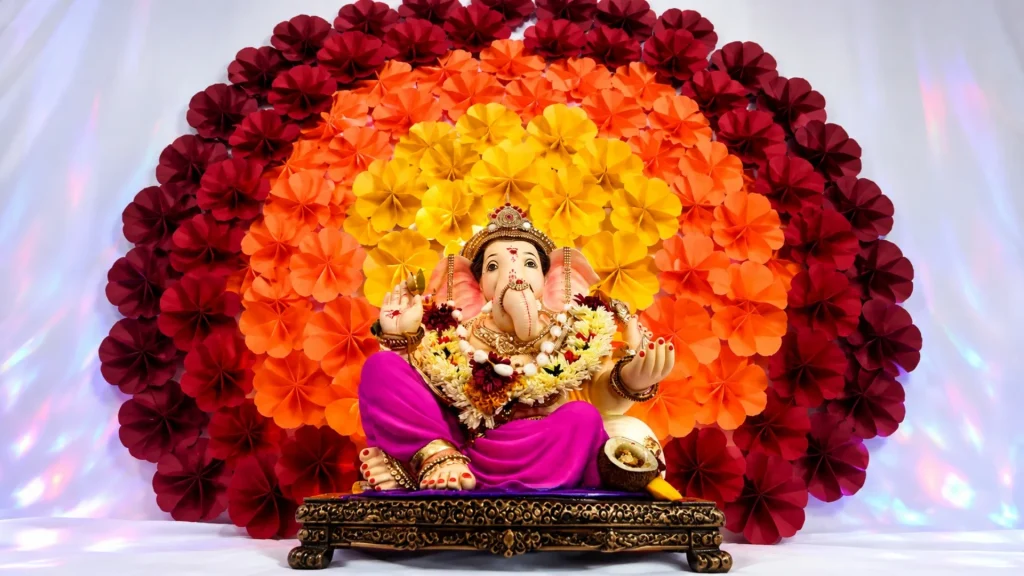
- You can use lightweight paper mâché Ganesha idols with embellished accessories, and ornaments painted with plant-based or water-soluble natural dyes to keep decor biodegradable.
- You can go for making hanging lanterns, garlands, and modak shapes using recycled paper and sustainable glue. These elements harmonize beautifully with clay idols and soft textures.
7. Use Curtains for Ganpati Decoration
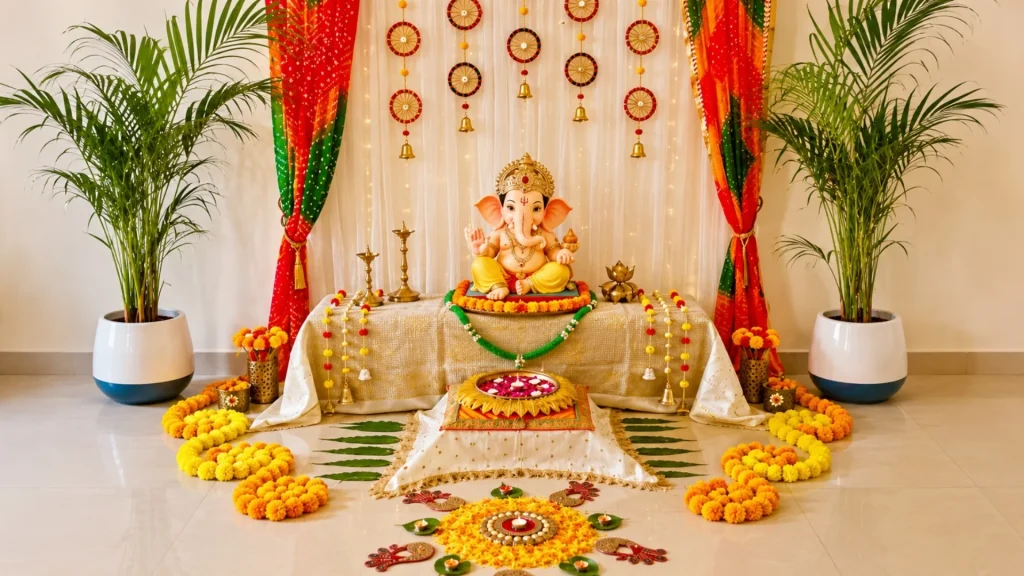
- You can hang full-length curtains made of cotton, khadi or jute behind the idol. This gives a soft, clean background and helps make the idol stand out. This is how you can avoid the use of one-material.
- Pair curtains with fairy LED strings, woven tassels or small flower garlands to enhance ambience sustainably.
8. Eco-Friendly Invitation Cards for Ganesh Chaturthi
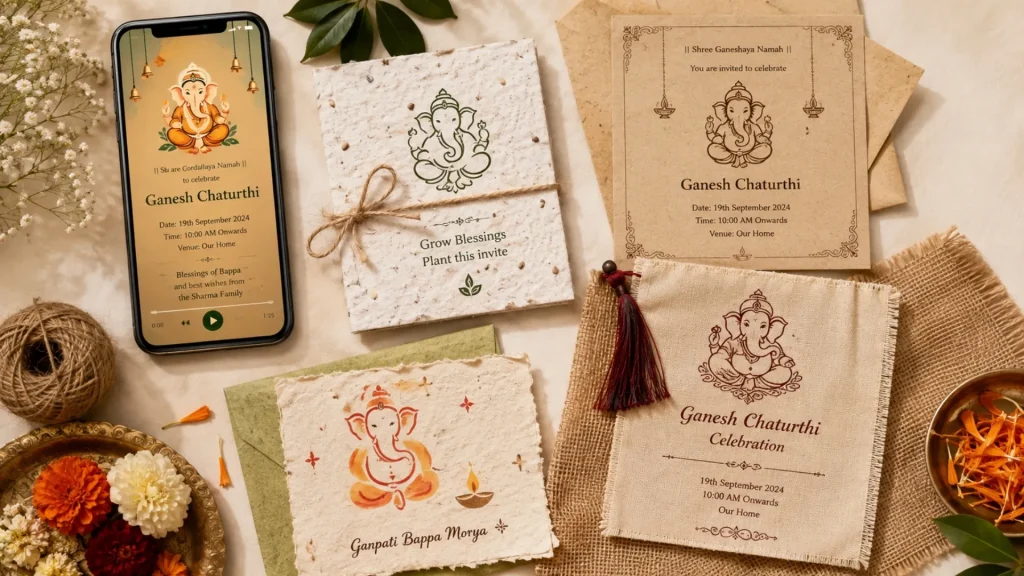
- You can send digital invitations or use handmade recycled paper cards. You will save paper this way. You can design an e-invite with Ganpati shlokas, animations, or voice notes from elders’ blessings. It’s fast and zero-waste.
- Seed paper invitations are a beautiful mix of the purpose you need them for and plant care as well. They are printed on handmade seed paper and can be planted after use.
- Make use of recycled handmade paper, and then you can add hand-drawn motifs of Ganpati Bappa, diyas, or modaks as you like them to be. You can also opt for soy-based or vegetable inks to avoid toxic dyes.
- There is an option of fabric and cloth cards too. Yes, exactly the monarch-style. A single piece of printed cotton, khadi, or jute with a screen-printed invitation imparts a rich, tactile experience. Plus, they can be reused by the guest as a bookmark, wall hanging, or keepsake.
9. Banana Leaf and Peacock Feather Ganpati Decor
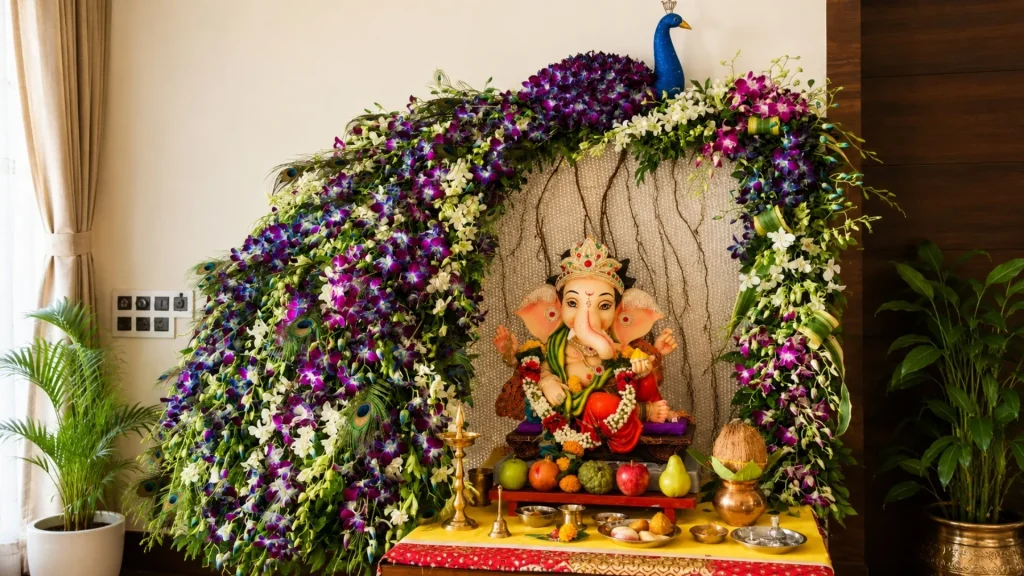
- This is a great option too. You can use fresh banana or palm leaves to decorate a simple mandap or a more elaborate Ganpati background decoration. They stay fresh for days and can be composted daily.
- This duo works wonderfully when you combine it with elements like natural flower garlands, terracotta pots, or hand-woven fabrics.
- As per the cultural grounds, banana leaves are anyway used as a base for the pooja platform, beneath your eco-friendly Ganesha idol.
- Peacock feathers carry deep cultural significance and are considered ideal for delivering a touch of richness. Peacock motifs or considerate use of strands (ethically sourced or synthetic) neatly combine spiritual themes with eco aesthetics.
- Ganpati is often associated with nature and birds. And hence, peacock feathers can be placed behind the idol to create a fan-style aura. They also make excellent detailing for Ganpati decoration items like curtain ties or torans.
10. Macramé & Bamboo Art Decor
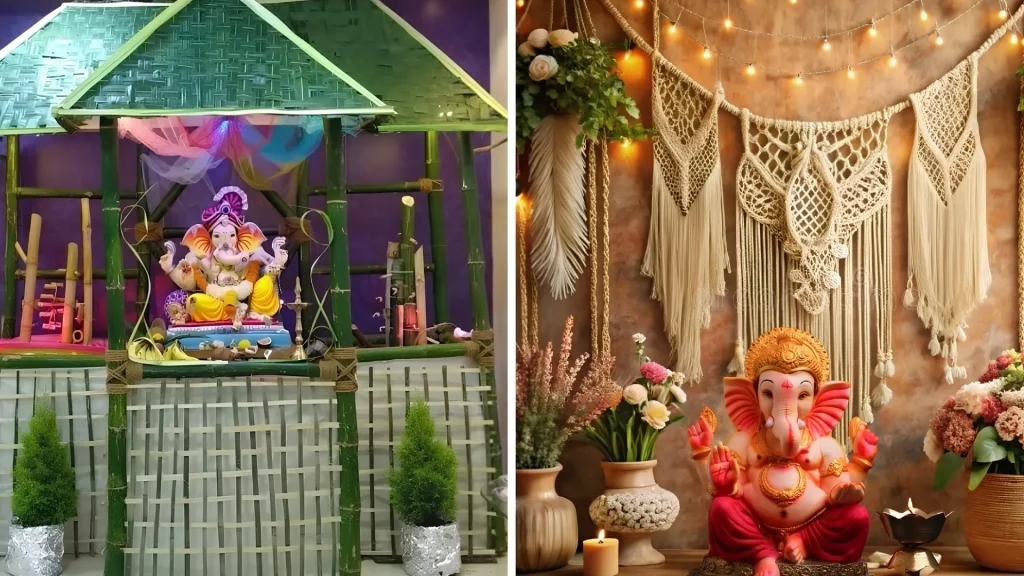
- You can install simple macramé hangings, bamboo frames, or jute rope elements. They look elegant, are totally reusable, and create tactile beauty. You can reuse them later for home decor too.
- Most bamboo and macrame decor can be reused for years. They’re a great fit for anyone wanting to keep things handmade and less wasteful. This is exactly what modern Ganpati decor should feel like.
- The best part about these materials is that they have a look and feel that easily blends into any modern or traditional decor style.
You Must Read: Monsoon Home Decor Ideas to Welcome the Rainy Season
How to Involve Kids and Family in Eco-Friendly Ganpati Decoration?
1. Encourage Clay Modelling with Kids
- Use natural clay or Shadu mitti. It’s non-toxic and safe for kids.
- You don’t have to aim for perfection. A small, handmade idol has more heart than a store-bought one.
- Involve elders too, grandparents can teach and help kids how to knead or shape the clay. It’d add a beautiful intergenerational value.
It’s a thoughtful way of spending family-time, and passing down tradition in the gentlest, most engaging way.
2. Try Paper Crafts and DIY Decor Together
- Children can make origami lotus flowers, paper modaks, or simple garlands from old magazines or newspapers.
- Try creating a backdrop of layered paper fans or cloud and sun motifs, especially if you’re working on a nature theme.
- You can even paint message boards with slogans like “Ganpati Bappa Morya!” or “Go Green with Ganesh Ji.”
3. Educate Through Practice
- Show them how you reuse old sarees, dupattas, or curtain scraps for decorating, and why you’re doing so.
- Let them help in making rangoli, and use natural colors, or natural materials.
- Share stories of why we avoid plastic or why immersing idols in lakes and rivers with paint is harmful. Make sure your tone is positive and hopeful.
When children take part in creating something from scratch, using things from home, it gives them a stronger sense of contribution, and that’s something they’ll carry for years.
4. Set Up a “Family Eco-Mandap” Ritual
- To make things flowy, assign roles. Someone paints, someone arranges flowers, and someone folds paper décor.
- Keep phones away, play aarti music in the background, and make it a time of collaboration and stories.
- You can also keep a small gratitude wall or wish corner where each family member writes what they’re praying for this year. This induces togetherness and strengthens faith.
5. Reinforce with Ritual + Reflection
Post-Ganpati visarjan, you should sit together as a family to talk about what you made and what you learnt.
- Ask the kids how they felt when their idol melted naturally in water.
- Praise their small crafts and ask what they’d like to make next year.
- Start a small Ganpati family scrapbook with photos of what you created each year and what you reused or recycled.
This simple practice helps build eco-consciousness as a lived value, and not just a bookish idea that’s only talked about.

Plan Your Home Interiors with Opalspace This Festive Season
We can design a serene corner for your mandir or plan full interiors that would scream your lifestyle. We handle it all, be it modular wardrobes, pooja units, painting and polishing, or even smart home integration. And if sustainability is close to your heart, we’re right there with you. Our team works with natural materials, thoughtful layouts, and custom solutions that feel responsible yet fancy. From Modular Interior Design for your everyday spaces to complete Home Interior Design and Luxury Interior Design projects, Opalspace brings that same eco-conscious spirit to every corner of your home.