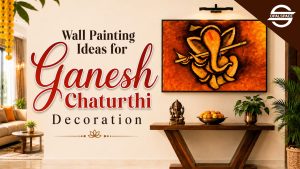
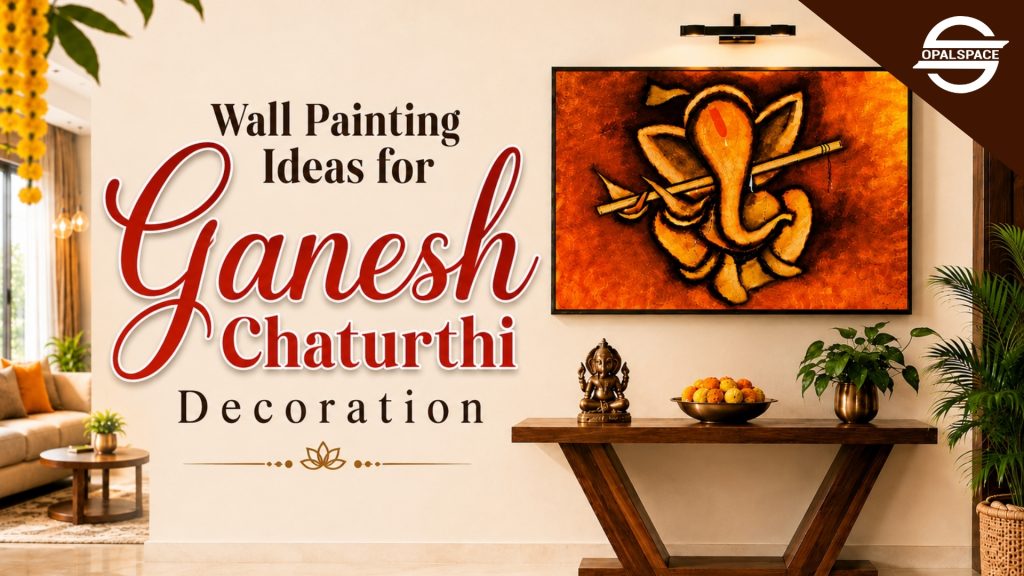
This guide covers Lord Ganesha wall painting ideas for Ganesh Chaturthi, from traditional and modern designs to glass and mural-style artwork. It walks through how many paintings a home actually needs and where each type fits best – pooja room, entrance, living room, or dining area. The piece closes with tips for matching the painting to your home decor and turning it into a lasting festive focal point.
Table of Contents
But while decorating, the walls are generally left plain. Once the Ganesh idol and mandap are set up, the wall behind them can still look empty. A Lord Ganesha wall painting can fill this space. In the pooja room, mandir, entrance, or living room, you may put the painting in any of those.
Also, during Ganesh Chaturthi, the painting may be used as an add-on element to the idol that will make the festival setting beautiful and, in the end, it will finish up as a great part of your everyday home decor. Plus, a pro tip is that you don’t have to take the painting off after the festival out of the blue, instead, it will still serve as a subtle festive accent in your home even after you clean up the rest of the festival decorations like flowers, torans, and diyas.
How Does a Ganesha Wall Painting Work for Ganesh Chaturthi?
- Saves Floor Space: It works well in apartments and smaller homes where every inch matters.
- Complements the Mandir: The painting can add a beautiful backdrop without taking attention away from the main idol.
- Lasts beyond the festival: Unlike flowers and torans, you do not need to remove the painting after Ganesh Chaturthi.
- Suits different interiors: You can choose traditional, modern, minimalist, or colourful designs to match your existing home decor.
- Adds a festive touch: A Ganesha painting can make the space feel special during the festival while looking natural throughout the year.
Different Types of Ganesha Wall Painting Ideas for Home
There are many ways to bring Lord Ganesha onto your wall. You can choose a detailed traditional painting, a simple modern design, or even a glass artwork. The right choice depends on your home’s style and the space where you want to place it.
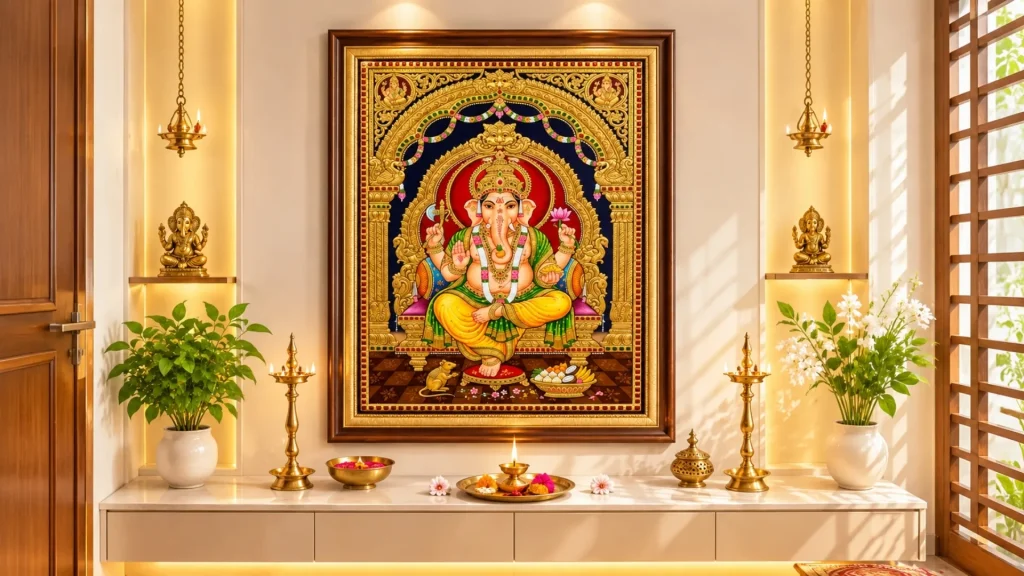
1. Traditional Ganesha Wall Painting
These use rich detail, ornamentation, and traditional postures. They work in pooja rooms, near the mandir, and in homes with traditional interiors. Where the artwork matches existing wood tones and brass accents.
2. Modern Ganesha Wall Painting Designs
Line art, abstract forms, and minimal compositions read well in living rooms, halls, and entryways. They give a festive marker without pulling focus from the rest of the room.
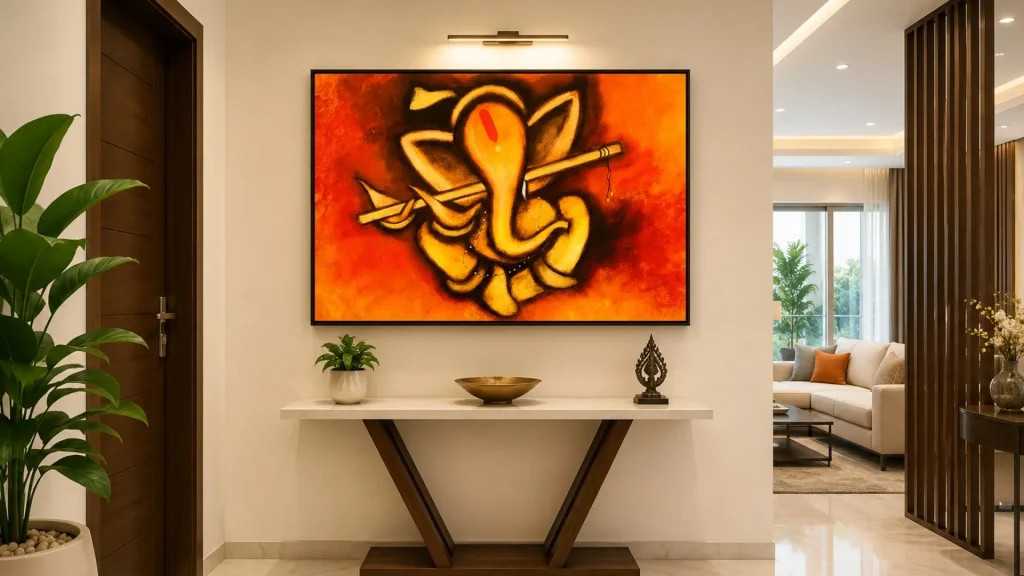
3. Glass Painting Designs of Lord Ganesha
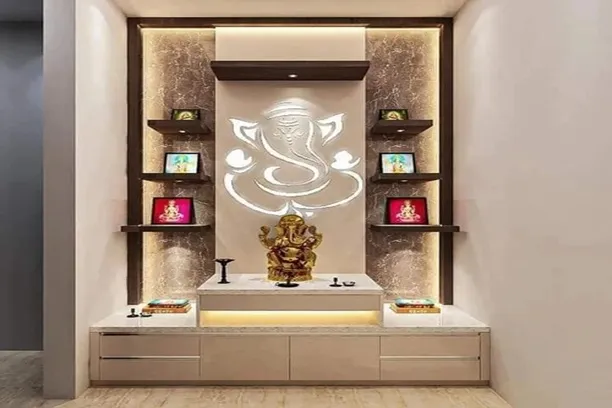
Glass paintings, backlit panels, and etched glass artwork give a room a decorative feature wall. Homeowners with an entrance or a console wall generally pick this option, since the light through the glass gives the wall painting depth other formats don’t.
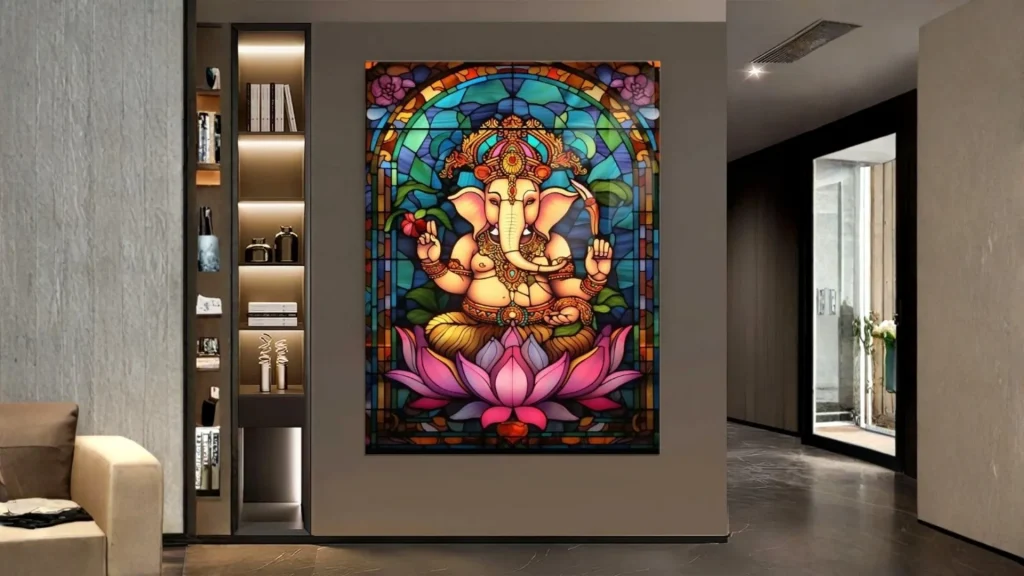
4. 3D and Mural-style Ganesha Wall Art
Textured panels and mural-style artwork turn a plain wall into a focal point. These work for homeowners who want the Ganesha wall painting to anchor the room, not sit beside other decor.
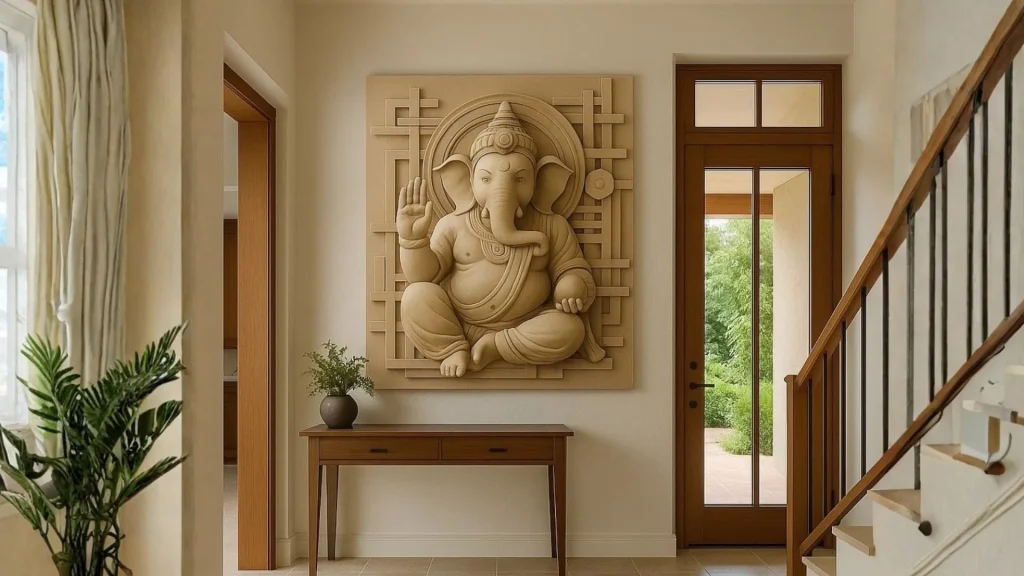
5. Minimalist Ganesha Wall Art
Simple outlines and silhouettes give a home a subtle Ganesha wall painting without heavy detail. This works well when the wall itself needs to stay understated.
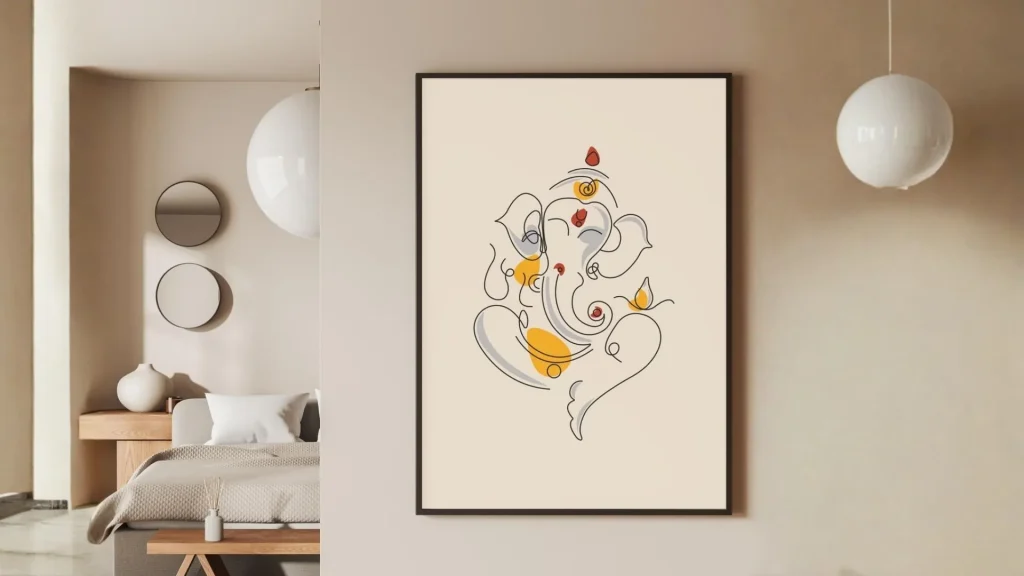
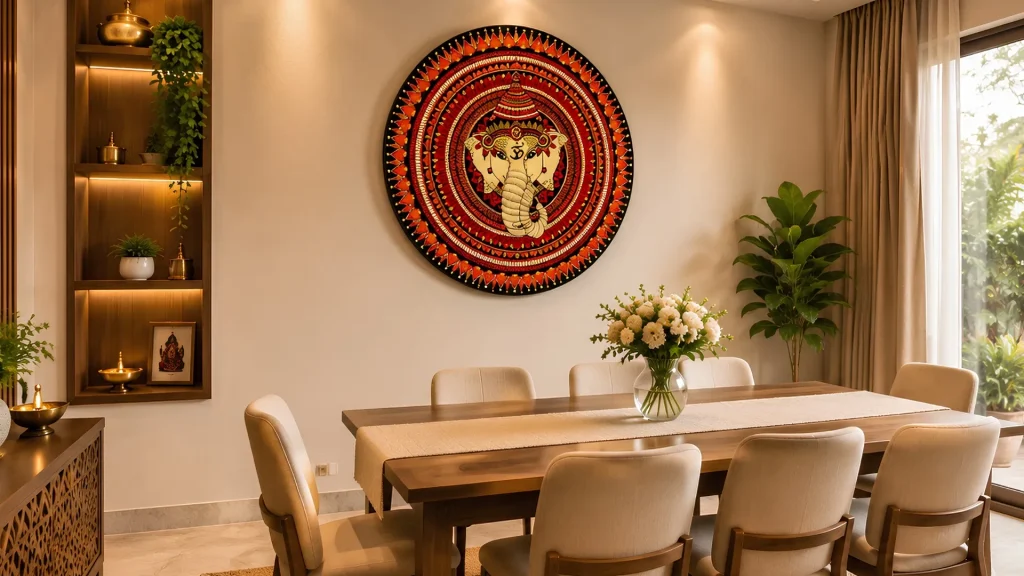
6. Ganesha Mandala Wall Paintings
Combining Lord Ganesha with mandala patterns gives one wall enough detail to stand on its own, without extra decor pieces around it.
Where Should You Place a Ganesha Wall Painting?
- Pooja room or mandir: Place the painting behind the mandir or on an adjacent wall as a backdrop. Traditional artwork fits this space better than abstract designs.
- Entrance: A small Ganesha wall painting near the entry foyer or console wall gives guests a welcoming first view. Minimal designs fit compact entrances best.
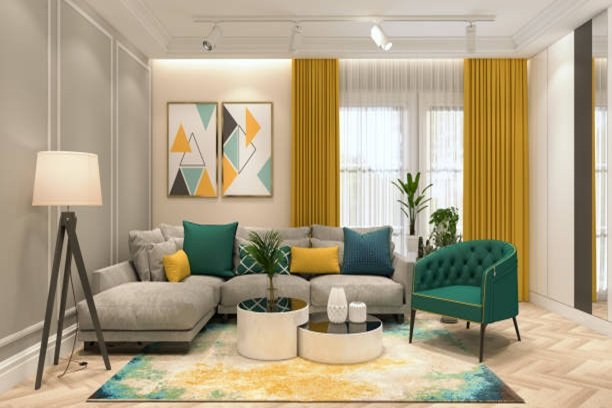
- Living room or hall: Large-format wall painting designs for the hall work behind the sofa, on the TV wall, or above a console. Give the painting enough clear wall around it so it doesn’t compete with furniture.
- Dining area: A smaller Ganesha painting fills an unused bare dining wall.
- Bedroom: Keep this decorative rather than a religious focal point. A small, minimal design works better here than a large statement piece.
Which Ganesha Wall Painting Works Best for Each Room?
| Space | Recommended Ganesh Wall Painting |
|---|---|
| Pooja Room | Traditional Ganesh Painting |
| Mandir | Detailed or classic-style artwork |
| Entrance | Minimalist Ganesh design |
| Living Room | Large statement painting |
| Hall | Mural or modern wall painting |
| Dining Area | Small Ganesh artwork |
| Modern Home | Abstract or line-art Ganesh |
| Luxury Interiors | Textured, glass or custom artwork |

How to Match Ganesha Wall Painting with Your Home Decor?
- Traditional interiors: detailed paintings, earthy tones, traditional artwork.
- Modern interiors: line art, abstract Ganesha, minimal designs.
- Luxury interiors: large-scale artwork, textured finishes, glass paintings, custom wall art.
- Small homes: smaller paintings against clean backgrounds, so the wall reads open rather than packed.
How Many Ganesha Wall Paintings Can You Have at Home?
- One main Painting: Works for most homes and gives the strongest focal point.
- Two Paintings: Work when placed in separate rooms, not on the same wall.
- Three or more: It goes with larger homes, where each painting serves a distinct room.
A home with a Ganesha wall painting on every wall loses the effect. One well-placed pair looks stronger than five competing ones. A decorative wall painting also serves a different purpose than the pooja or mandir space, so keep the two distinct.
How Do You Make Your Ganesha Wall Painting the Focal Point?
- Leave enough clear wall space around it
- Use focused lighting on the painting, not the full room
- Skip extra decor pieces near the same wall
- Match the frame to the room’s existing materials
- Pick a size that fits the wall, not the reverse
- Keep nearby furniture simple, so the painting draws the eye
How Can Opalspace Help You to Design Your Home Around Ganesh Chaturthi Decor?
A well-planned wall design looks even better with good lighting, proper mandir placement, and a well-designed entrance. When these pieces work together, festive decor reads as part of the home, not an addition to it.
Opalspace plans home interior design across Delhi NCR, from mandir units and entrance walls to full living room layouts. If your home needs a wall built for a painting like this, or a mandir space designed around one, Opalspace’s home interior design services can help you plan it.