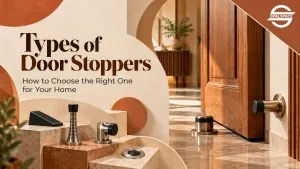
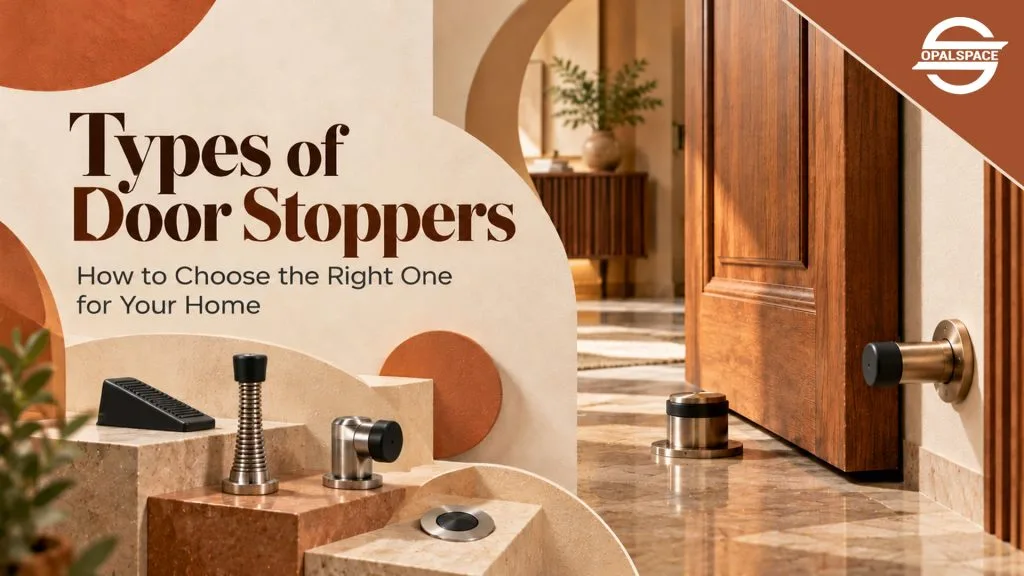
This blog explains the different types of door stoppers, from traditional designs to modern magnetic options, and their uses in Indian homes. It also shares tips to help you select the right door stopper based on your door type, flooring, and needs.
Table of Contents
Have you noticed this? Your bedroom door swings open, the handle hits the wall, and after a few months you see a black mark or chipped paint. That mark keeps getting bigger. A small door stopper can stop this from happening.
You must have seen those old spring types with a rubber tip near the floor, or just a small rubber wedge under the door. Now there are new ones, including magnetic ones and some that sit almost hidden in the floor.
They all work differently. Some stop the door from going too far, some hold the door open. So, before you buy, let’s understand what each type does.
What Is a Door Stopper and Why Do You Need One?
A door stopper is a small fitting that controls your door. It stops the door from banging into the wall, or it holds the door open when you need it. It is useful everywhere in your home, whether in the bedroom, bathroom, kitchen, or living room. For example, in a small room your door might open next to a wardrobe or bed. Without a stopper, it will keep hitting it.
Also, the wall behind your door handle takes a lot of beating. If the door opens fast, the handle can make a hole or dent in the wall. A stopper fixed at the right spot saves your wall. Some stoppers are made to just stop the bang, some are made to hold the door open. Both jobs are different, and not every stopper can do both.
What Are the Different Types of Door Stoppers?
There are different types of door stoppers. They look different, they fit differently, and they work differently. Some need screws, some you can place and use.
1. Floor-Mounted Door Stopper
Think of this as a small speed-breaker for your door. You fix it on the floor at the point where the door would otherwise hit the wall. The door hits this stopper first, so your wall stays safe. You get small round ones and slightly taller ones in metal and rubber. Best for bedrooms and living rooms. If you have marble or designer tiles, finalise its spot before you do the flooring.
2. Wall-Mounted Door Stopper
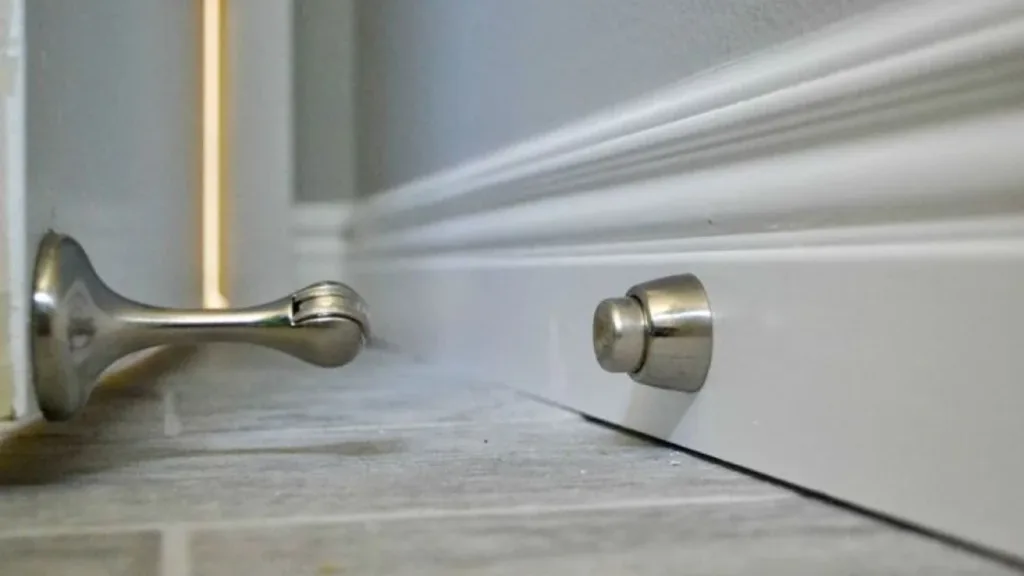
Don’t want to drill your floor? This one is for you. It goes directly on the wall behind the door, and the rubber tip absorbs the hit. It works great in the bathroom where the door almost touches the wall. This works great in bathrooms and bedrooms where the door almost touches the wall. The trick is placement. Make sure it meets the door before the door handle meets the wall, otherwise, the handle will still leave a mark.
3. Magnetic Door Stopper
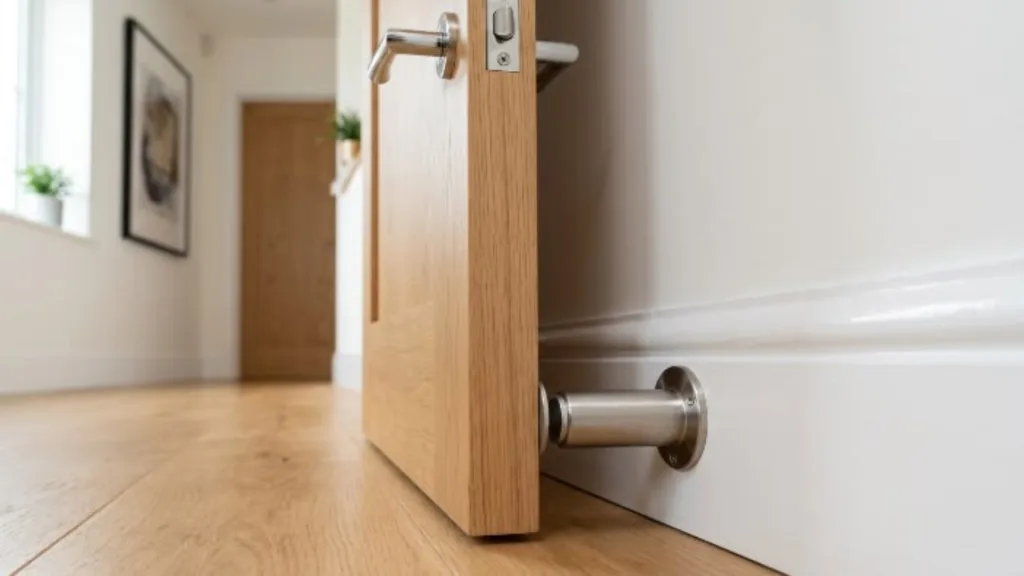
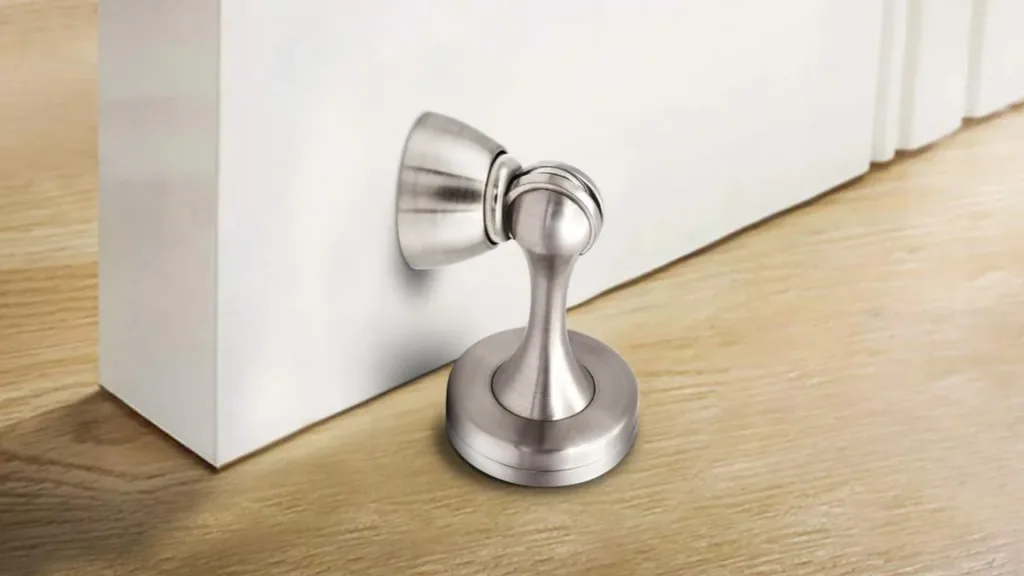
Magnetic door stoppers are good when you keep your door open. This has two parts with a magnet, one on the door, one on the floor or wall. When the door opens, the magnet locks it in place. Super useful for kitchens and busy rooms where you keep moving in and out. Comes in silver, black, brass finishes to match your handles. Just check if the magnet is strong enough for your door weight.
4. Spring Door Stopper
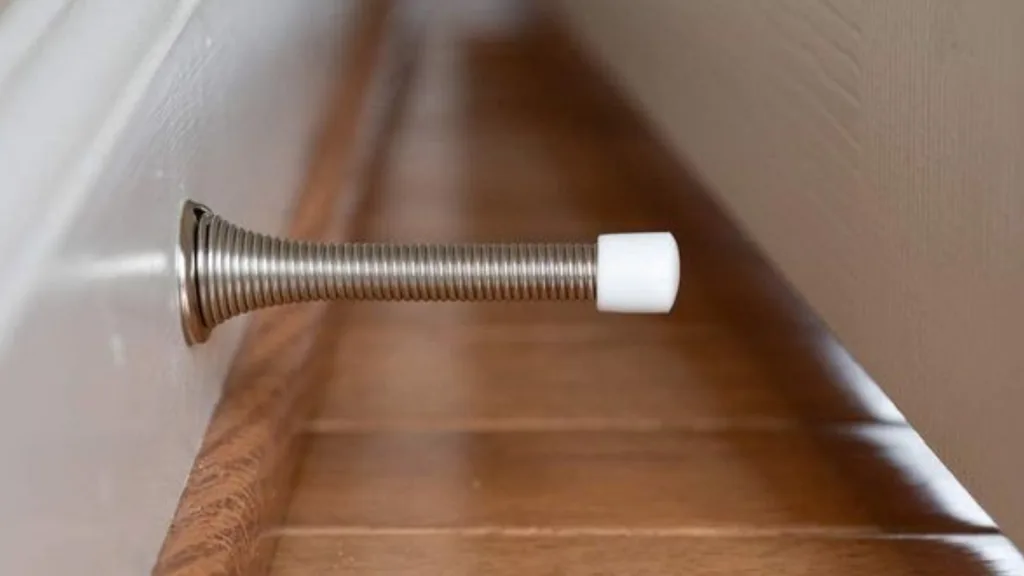
You must have seen this one in every old house. A long metal spring with a rubber cap on top, fixed to the wall or skirting. When the door hits it-boing-the spring bends and takes the shock. It’s cheap, easy to fit, and it works for light interior doors. But it has some downside, it gets noisy after some time and can bend out of shape, especially with heavy doors.
5. Wedge Door Stopper
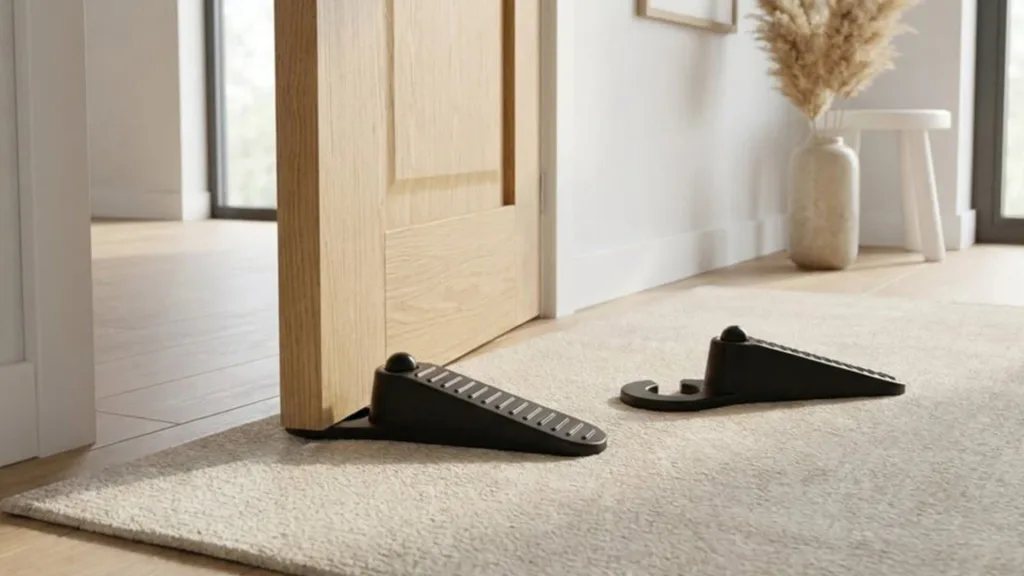
It’s a small wedge made of rubber, silicone or wood. You push it under the door and it grips both the floor and the door to hold it open. You can use it anywhere, carry it to any room, and store it in a drawer when not needed. Only two things to check, there should be enough gap under your door, and on very glossy tiles it might slip if the grip is not good.
6. Hinge-Pin Door Stopper
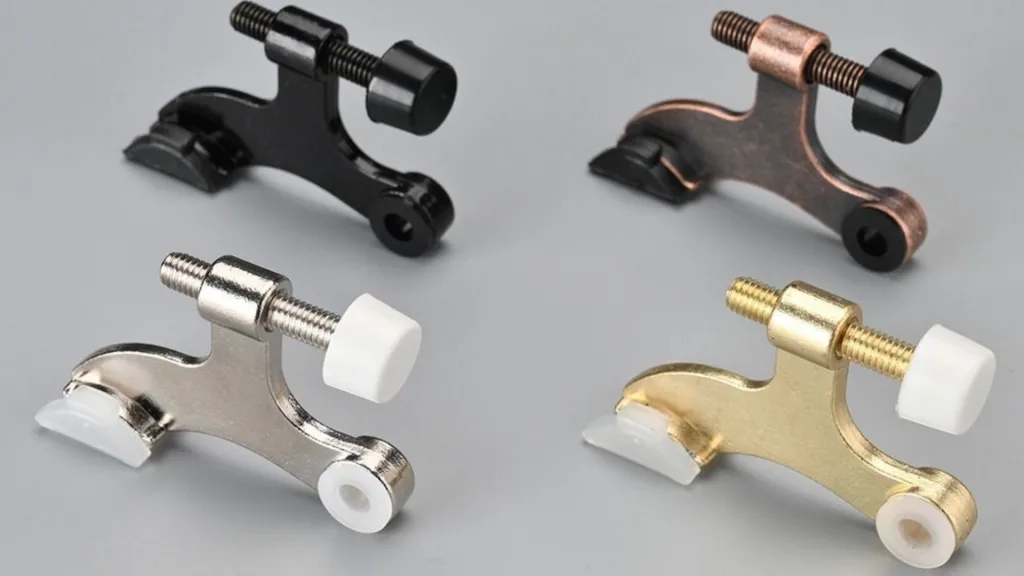
Where does it fit? Right on the door hinge. Unlike other stoppers, this one doesn’t need floor or wall space. It attaches to the hinge itself and controls how far your door can swing. Really helpful when you have no place to fix a stopper. But you have to be careful. It must match your hinge size and door weight, otherwise, it will put extra load on the hinge.
7. Concealed Door Stopper
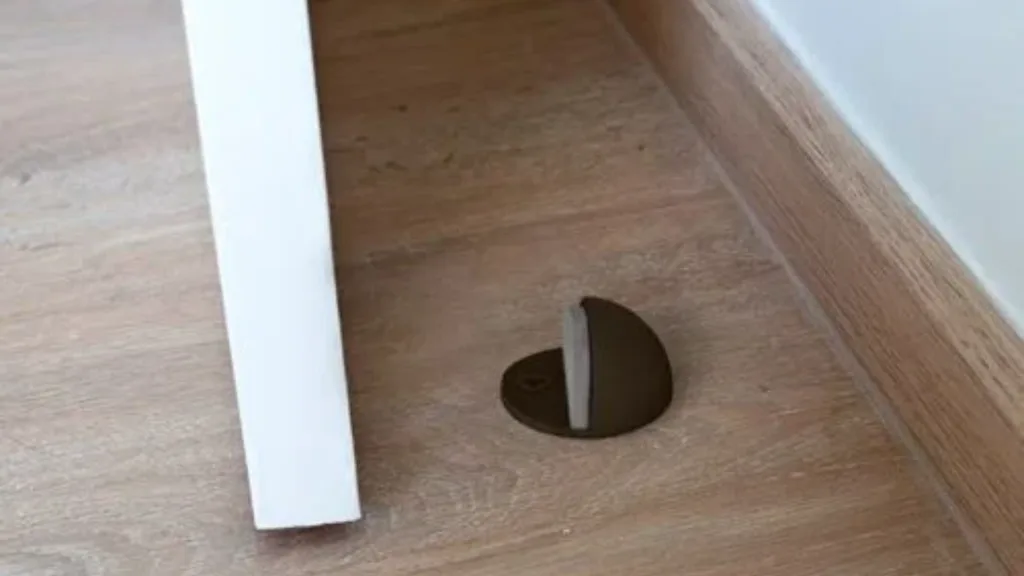
Want a clean look with nothing visible near the floor? Go for this. A concealed door stopper stays hidden after installation. Some go inside the floor, some are built into the door setup. From outside, you barely see anything, so your home looks neat. Plan it during your interior work and check if your floor has enough depth to hide it.
What Is the Difference Between Traditional and Modern Door Stopper?
But honestly, the difference is not always clear. A floor stopper can look traditional or modern. A magnetic one can also be fixed on the floor.
| Feature | Traditional Door Stoppers | Modern Door Stoppers |
|---|---|---|
| Common Examples | Spring stoppers, rubber wedges and basic metal stops | Magnetic holders, hidden stops and new metal designs |
| How They Work | Use springs, friction or direct contact | May use a magnet, hidden mechanism or contact |
| Appearance | Simple and visible | Stylish, with some designs almost hidden |
| Installation | Wedges need no fitting; spring and metal stoppers need screws | Depends on the model; hidden stoppers need planning |
| Maintenance | Springs can bend, and rubber can wear out | Magnets and moving parts need occasional cleaning |
| Cost | Generally cheap | Price depends on design, material and finish |
| Best Use | For simple daily use and temporary holding | When you want to hold a door open or prefer a clean look |
Which Door Stopper Works Best for Wooden, Glass and Heavy Doors?
Not all doors are the same. A light bedroom door and a heavy main door need different stoppers.
1. Wooden Door Stopper
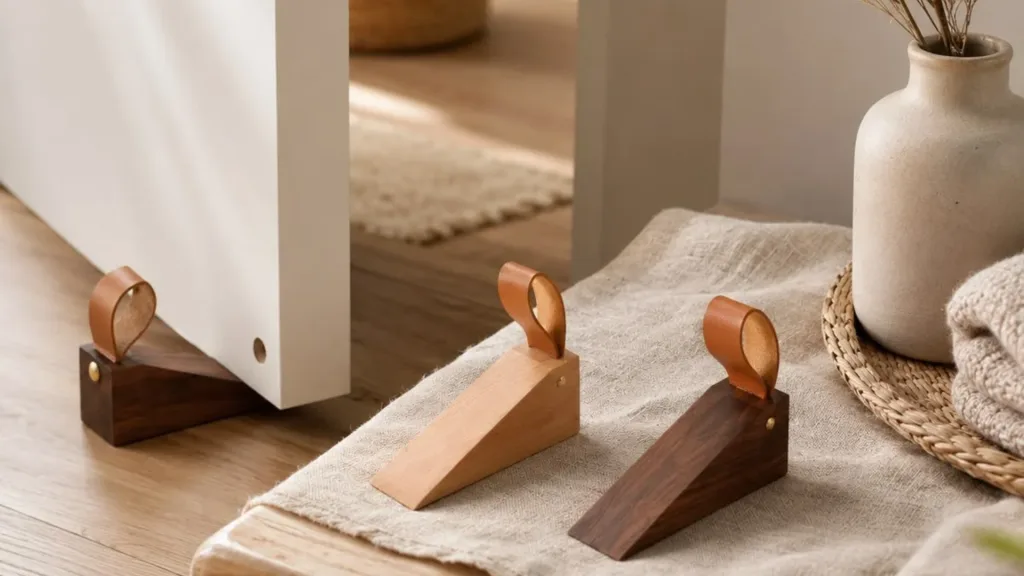
Wooden doors can take almost any type, whether it is wall-mounted, floor-mounted, or hinge-pin. Go for one with a rubber tip so it takes the hit softly. If you want to keep it open, take a magnetic one. Just check one thing, when the door opens, where does the handle land? The stopper should stop the door before the handle hits the wall.
2. Glass Door Stopper
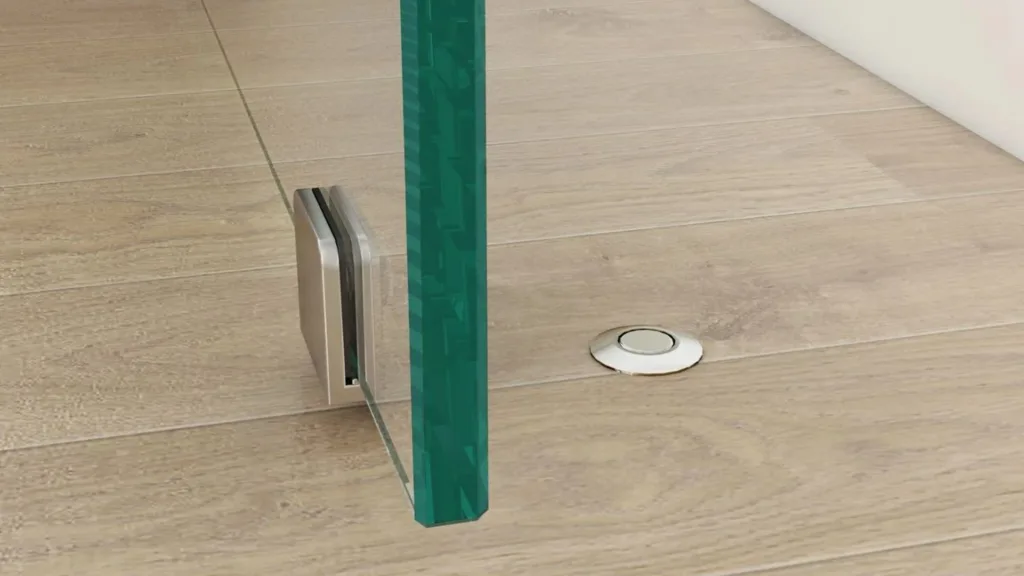
Be extra careful with glass doors. A hard hit near the edge can crack the glass. Don’t use just any metal stopper. Always use a stopper that is made for glass doors. Ask your installer or hardware shop which one will suit your door.
3. Heavy Door Stopper
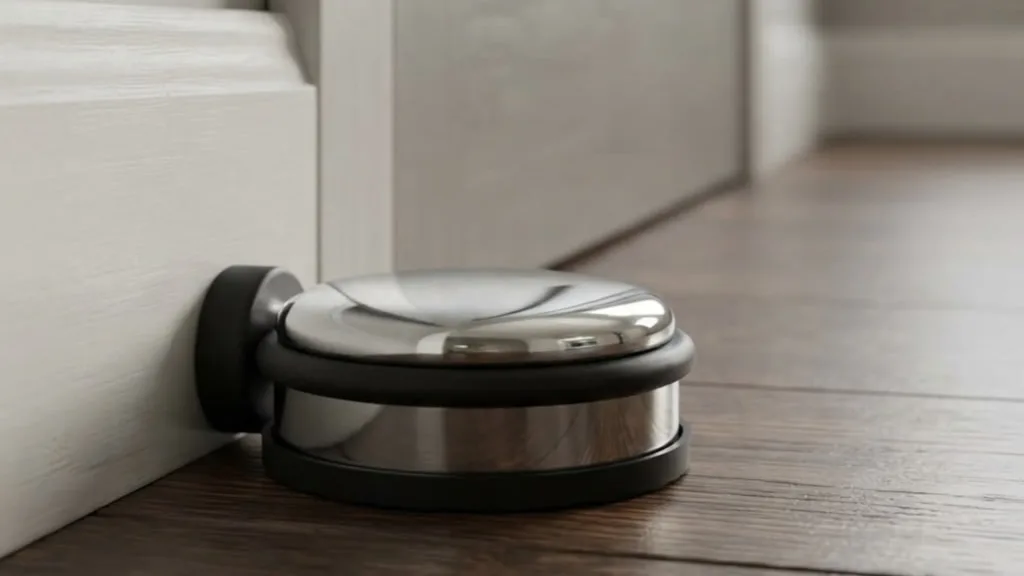
Heavy doors put a lot of force on the stopper, especially if they swing fast. A small spring stopper will not work here. Look for a stopper that clearly says it can take heavy doors. And check the surface also, because even a strong stopper will come out if your floor or wall is not strong enough.
How to Select a Door Stopper for Your Home?
Before you buy, just look at your door and the space around it. These five quick checks will help you decide.
- Check the Door’s Weight: A light bedroom door and a heavy main door need different stoppers. Don’t go by looks, check what the company says it can hold.
- Look at the Space behind the Door: If the door opens very close to the wall, a wall-mounted stopper is better. If there is a good gap under the door, a wedge can also work.
- Check the Floor and Wall: If you have marble or tiles, drilling needs care. Decide the position early, before finishing work. And always check for hidden wires before you drill.
- Match the Material and Finish: Rubber takes the impact better. Metal comes in different finishes. You can match it with your handle colour, but first make sure it does the job.
- Think about daily use : A door that opens many times a day needs a stronger stopper than one that opens twice. If you want to hold the door open, buy one that is made to hold, not just to stop the bang.
Plan Your Home Interiors with Opalspace
A door stopper is small, but its position matters a lot. A wrong position can spoil your wall paint, or you may have to drill your new flooring again. Opalspace helps homeowners in Noida, Greater Noida, Gurugram and Faridabad. We help you plan your home interiors, including doors, finishes and hardware details. If you are doing a new home or renovation, it’s better to discuss these small details with the team before work starts. Connect with Opalspace to discuss your requirements.