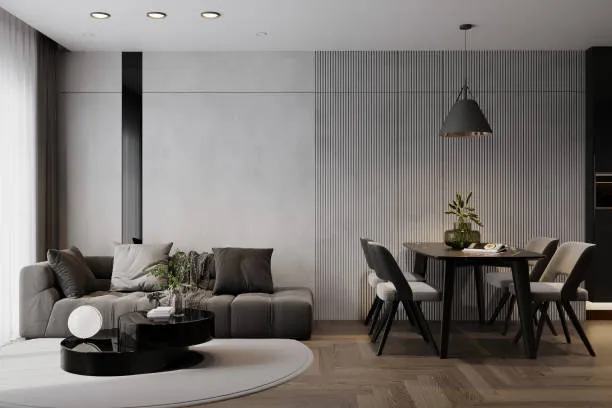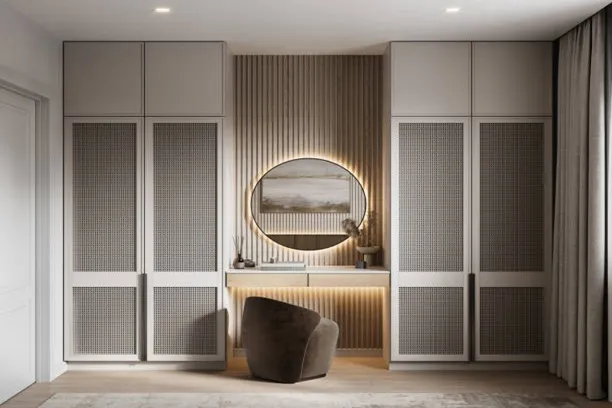
This guide focuses on structural materials for home interiors used to build furniture, wardrobes, kitchens, storage units, and other interior elements.
Table of Contents
You can pick the best laminate, layout, and colour palette. Yet one decision has a bigger impact on your interiors than most people realise. It is the material beneath the finish. Understanding the right interior design materials can significantly improve durability, maintenance, and long-term value.
Many homeowners spend hours on aesthetics. Very few spend the same time on plywood, HDHMR, MDF, or particle board. A few years later, sagging shelves, swollen cabinets, and damaged furniture became expensive problems. Different home interior materials perform differently depending on moisture exposure, furniture usage, and room conditions.
The truth is simple. Not every material works in every room. This interior material list covers the most commonly used boards and wood products found in modern homes.
Many homeowners spend hours on aesthetics. Very few spend the same time on plywood, HDHMR, MDF, or particle board. A few years later, sagging shelves, swollen cabinets, and damaged furniture became expensive problems. Different home interior materials perform differently depending on moisture exposure, furniture usage, and room conditions.
The truth is simple. Not every material works in every room. This interior material list covers the most commonly used boards and wood products found in modern homes.
Which Home Interior Material Offers the Best Value?
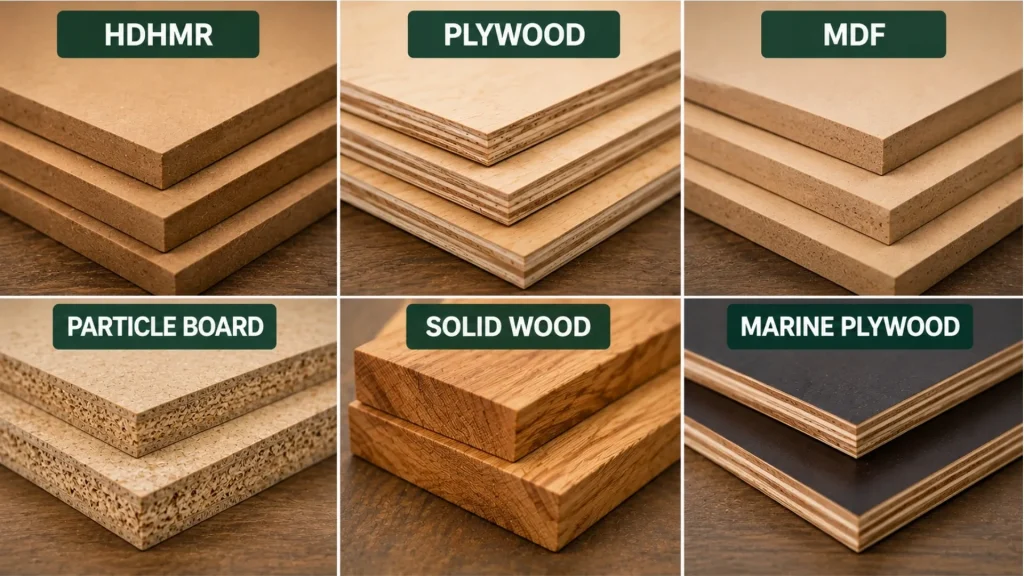
The right material depends on the room, how much moisture it faces, and how long you want the furniture to last. A material that works well in a bedroom can fail quickly in a kitchen. Here is a comparison of the most popular structural home interior materials to find the best option for durability, moisture resistance, appearance, and budget.
| Requirement | Recommended Material |
|---|---|
| Best Overall Performance | HDHMR |
| Best Balance of Cost and Durability | Plywood |
| Best for Decorative Furniture | MDF |
| Best Budget-Friendly Option | Particle Board |
| Best Premium Material | Solid Wood |
| Best for Kitchens | HDHMR or Marine Plywood |
| Best for Wardrobes | Plywood or HDHMR |
Why Choosing the Right Furniture Material Matters
A furniture unit is only as strong as the material inside it. Many people compare material prices and stop there. The smarter approach looks at lifespan, maintenance, and replacement costs. The right furniture material can increase durability, moisture resistance, maintenance requirements, and give a long-term value.
Durability Influences Long-Term Spending
A wardrobe that lasts fifteen years costs less in the long run than one that needs repairs after five years.
Strong furniture materials reduce:
Strong furniture materials reduce:
- Shelf bending
- Structural damage
- Frequent repairs
- Replacement expenses
Moisture Resistance Extends Lifespan
Indian homes face humidity, spills, and seasonal weather changes.
Kitchens, bathrooms, and utility areas need boards that can handle moisture exposure. Poor material selection in these spaces can lead to swelling and damage.
Material Quality Affects Maintenance
Some materials demand frequent attention. Others remain stable for years.
Good material selection reduces:
Good material selection reduces:
- Surface damage
- Edge chipping
- Structural weakening
- Maintenance costs
Home Interior Material List: Common Furniture Materials Used in Modern Homes
Before comparing materials, this material list will help to understand what each one brings to the table.
1. Plywood
Manufacturers produce plywood by pressing thin layers of wood veneer together.
Key strengths:
Key strengths:
- Strong structure
- Good screw-holding capacity
- Good moisture resistance
- Long lifespan
- Kitchen cabinets
- Wardrobes
- Beds
- Storage units
2. HDHMR
HDHMR stands for High-Density High-Moisture-Resistant board.
Key strengths:
Key strengths:
- High density
- Strong moisture resistance
- Smooth finish
- Excellent durability
- Kitchens
- Wardrobes
- Bathroom furniture
- Storage cabinets
3. MDF
MDF stands for Medium Density Fibreboard.
Key strengths:
Key strengths:
- Smooth surface
- Easy routing and carving
- Good paint finish
- Decorative shutters
- TV units
- Wall panels
- Display units
4. HDF
HDF stands for High-Density Fibreboard.
Key strengths:
Key strengths:
- Higher density than MDF
- Strong surface stability
- Smooth finish
- Decorative panels
- Furniture components
- Interior wall treatments
5. Particle Board
Manufacturers make particle boards using wood particles and adhesive resins.
Key strengths:
Key strengths:
- Low cost
- Lightweight construction
- Suitable for low-use furniture
- Budget furniture
- Guest room storage
- Temporary installations
6. Solid Wood
Solid wood comes directly from natural timber.
Key strengths:
Key strengths:
- Long lifespan
- Natural grain patterns
- Strong construction
- Premium furniture
- Dining tables
- Beds
- Statement pieces
7. Blockboard
The blockboard contains a core made of softwood strips.
Key strengths:
Key strengths:
- Good stability
- Strong screw-holding capacity
- Lightweight structure
- Doors
- Shelves
- Partitions
Comparing the Most Common Home Interior Materials
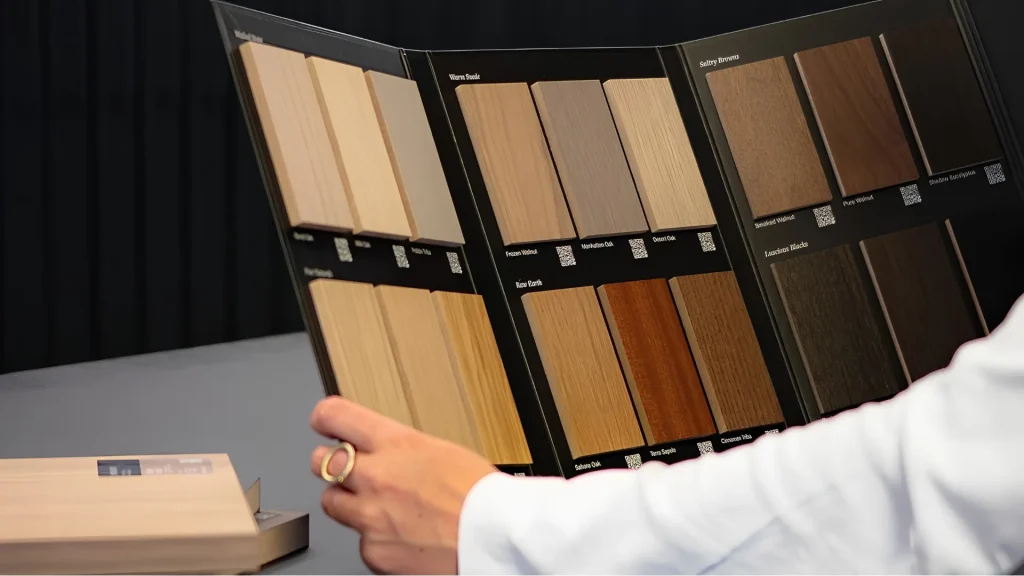
Here is how the four most common cabinetry materials compare on the things that actually make a difference.
Which Material Lasts the Longest?
HDHMR comes out on top because of its density. Plywood is a close second and is one of the most reliable materials for everyday furniture in Indian homes. MDF does fine in dry rooms, but starts losing strength once moisture reaches it on a regular basis. Particle board is the weakest of the four and is not a good choice for furniture that sees regular use.
Which Material Handles Water Best?
HDHMR is the strongest performer when conditions are humid or wet. Marine plywood also does well in kitchens and bathrooms. MDF and particle boards both deteriorate when water repeatedly reaches them. You will typically see swelling, bubbling at the surface, and eventual structural failure when these materials are placed in rooms they are not suited for.
Which Material Carries the Most Weight?
For wardrobes and heavy storage, HDHMR handles the most load without any problems. Plywood carries significant weight without bending and comes in as the second-best option. MDF is acceptable for lighter loads in dry rooms only. Particle board is the weakest of the four and should not be used for anything carrying serious weight over a long period.
Which Material Costs the Least?
Particle boards are the cheapest. MDF sits in the middle. Plywood and HDHMR cost more upfront but outlast the cheaper options significantly. When you factor in repairs and replacements over five to ten years, the price gap between cheap furniture materials and strong ones becomes much smaller than it seems on the day you are buying.
Advantages and Limitations of HDHMR, Plywood, MDF, and Particle Board
| Material | Biggest Advantage | Biggest Limitation |
|---|---|---|
| HDHMR | Very strong moisture resistance | Higher upfront cost |
| Plywood | Strong and long-lasting | Higher upfront cost |
| MDF | Smooth surface for decorative work | Poor moisture resistance |
| Particle Board | Very affordable | Short lifespan |
Best Home Interior Materials for Different Spaces
Different rooms face different levels of moisture, weight, and daily use, making material selection critical for long-term performance.
Best Material for Kitchen Cabinets
The kitchen experiences heat, steam, spills, and daily usage; that’s why material selection becomes critical for the kitchen interior.
| Recommended Material | Suitable For | Why It Works |
|---|---|---|
| HDHMR | Premium kitchens | HDHMR handles moisture effectively. Its dense structure helps maintain stability during long-term use. |
| Marine Plywood | Long-term durability | Plywood delivers strong structural support. Many designers continue to use marine plywood for kitchen carcasses. |
| MDF | Decorative elements only | Suitable for decorative applications only and should be kept away from high-moisture areas. |
Best Material for Wardrobes
Wardrobes carry heavy loads every day. Shelves, hanging sections, and drawers place constant pressure on the structure.
| Recommended Material | Why It Works |
|---|---|
| Plywood | Plywood handles weight effectively and remains one of the most practical materials for wardrobes. |
| HDHMR | HDHMR performs well in humid environments and is suitable for high-use wardrobes due to its durability and moisture resistance. |
| MDF (for Decorative Shutters) | Many homeowners choose MDF for routed designs, decorative patterns, and smooth painted finishes. |
Best Material for TV Units and Living Room Furniture
| Recommended Material | Why It Works |
|---|---|
| MDF | MDF allows detailed patterns, routed designs, and smooth painted surfaces, making it ideal for decorative TV units and living room furniture. |
| Plywood | Plywood works well for large TV units and storage-heavy furniture because of its strength and durability. |
| Premium Materials (Solid Wood) | Suitable for luxury furniture, high-use entertainment units, and large storage systems where appearance and longevity are priorities. |
Best Material for Bathroom Vanity Units
Bathrooms expose furniture to constant moisture.
| Recommended Materials | Materials to Avoid |
|---|---|
| HDHMR | Standard MDF |
| Marine Plywood | Particle Board |
Best Material for Study Tables, Beds and Storage Units
Different furniture pieces demand different levels of strength.
| Furniture Type | Recommended Materials | Why They Work |
|---|---|---|
| Study Tables | Plywood, HDHMR | These materials offer durability, stability, and the strength needed for everyday use. |
| Beds | Plywood, Solid Wood | These materials handle weight effectively and provide long-term structural support. |
| Storage Units | Plywood, HDHMR | Suitable for regular use and long-term storage requirements due to their durability and load-bearing capacity. |
| Guest Room or Temporary Storage Units | Particle Board | Can serve as a cost-conscious option for low-use furniture and temporary storage needs. |

Cost Comparison: Which Home Interior Material Offers the Best Value?
Looking beyond the initial price helps reveal which interior materials deliver the best long-term value through durability and lower maintenance costs.
The cheapest material does not always lead to the lowest lifetime expense.
Replacing damaged furniture costs more than investing in stronger materials during the first installation.
| Material | Approx Cost | Lifespan | Long-Term Value |
|---|---|---|---|
| Particle Board | ₹35-60/sq ft | 3-8 Years | Moderate |
| MDF | ₹60-120/sq ft | 7-12 Years | Good |
| Plywood | ₹90-250/sq ft | 12-18 Years | Excellent |
| HDHMR | ₹120-220/sq ft | 15-20+ Years | Excellent |
Common Material Selection Mistakes to Avoid
Many homeowners focus on cost alone, but avoiding a few common material selection mistakes can save money, repairs, and future replacements:
Note: Choosing among various home interior materials requires balancing durability, moisture resistance, appearance, and budget.
- Looking Only at Price
- Ignoring Moisture Exposure
- Confusing MDF and HDHMR
- Skipping Thickness Checks
- Paying Extra for Solid Wood Everywhere
Note: Choosing among various home interior materials requires balancing durability, moisture resistance, appearance, and budget.
Which Home Interior Material Should You Choose?
Good design starts with selecting the right structural home interior materials for each space. The right choice improves durability, reduces maintenance, and saves money over the long run. After working on residential projects across Delhi NCR, we have found HDHMR and plywood to be the most reliable options for high-use furniture applications.
Get Expert Guidance From Opalspace for Your Home Interiors
At Opalspace, we help homeowners choose the right materials and products for their requirements and budget. Also, we provide full-scale interior design services, which include modular kitchens, wardrobes, living spaces, bedrooms, and full home interiors in the Delhi NCR area. Good design starts with the right material choice, which can save you money in the long run.<
FAQs
1. Which interior material gives the best value for money?
HDHMR delivers strong durability, moisture resistance, and a long lifespan. Plywood is another excellent choice for homeowners looking for a balance between cost and durability.
2. Is HDHMR better than plywood?
HDHMR performs better in moisture-prone areas due to its high density and water resistance. Plywood remains a trusted option for wardrobes, beds, and storage furniture because of its strength and reliability.
3. Which material is best for kitchen cabinets?
HDHMR and marine plywood are among the best materials for kitchen cabinets. They handle moisture, heat, and daily use much better than MDF or particle board.
4. Is MDF suitable for wardrobes?
MDF works well for wardrobe shutters with painted or decorative finishes. For the internal structure and shelves, plywood or HDHMR delivers better durability.
5. Why is particle board cheaper than other materials?
Particle board is manufactured using wood particles and resin, which lowers production costs. It works well for budget furniture but has a shorter lifespan than plywood or HDHMR.
6. Which material is best for bathroom vanity units?
Bathroom vanity units require materials that can handle regular moisture exposure. HDHMR and marine plywood are preferred choices for these spaces.