If your bedroom feels tighter than it should, this blog breaks down the layout and design mistakes that could be eating up space and shows you how to fix them.
Table of Contents
You walk into your bedroom every day. The room has decent dimensions. The furniture fits. The storage looks sufficient. Yet something feels off. Many homeowners assume the room is too small. In reality, the problem lies in the layout.
Poor bedroom space planning can make a larger room feel restricted. Bedroom interior designers see this problem in many homes. The good news is that layout changes can solve a large part of it. Many homeowners blame room size first. In reality, furniture placement and storage planning cause the bigger problem.
In this blog, we break down the key reasons why a bedroom feels small and what you can do about it.
Poor bedroom space planning can make a larger room feel restricted. Bedroom interior designers see this problem in many homes. The good news is that layout changes can solve a large part of it. Many homeowners blame room size first. In reality, furniture placement and storage planning cause the bigger problem.
In this blog, we break down the key reasons why a bedroom feels small and what you can do about it.
Why Does Your Bedroom Feel Small?
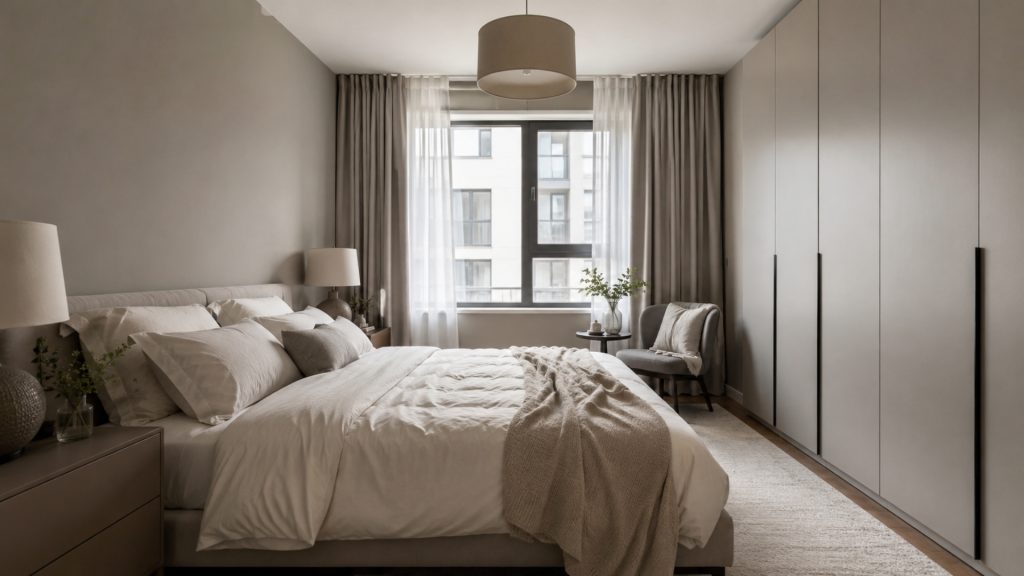
A bedroom seems smaller when furniture blocks movement. Storage takes up valuable floor space. Natural light can’t reach all areas, and the layout doesn’t fit daily routines.
Many homeowners search for ways to make a bedroom look bigger. Many people start with furniture shopping. The layout deserves attention first. Good space planning for bedrooms solves many space issues.
Many homeowners search for ways to make a bedroom look bigger. Many people start with furniture shopping. The layout deserves attention first. Good space planning for bedrooms solves many space issues.
What Are the Most Common Bedroom Design Mistakes That Make a Room Feel Smaller?
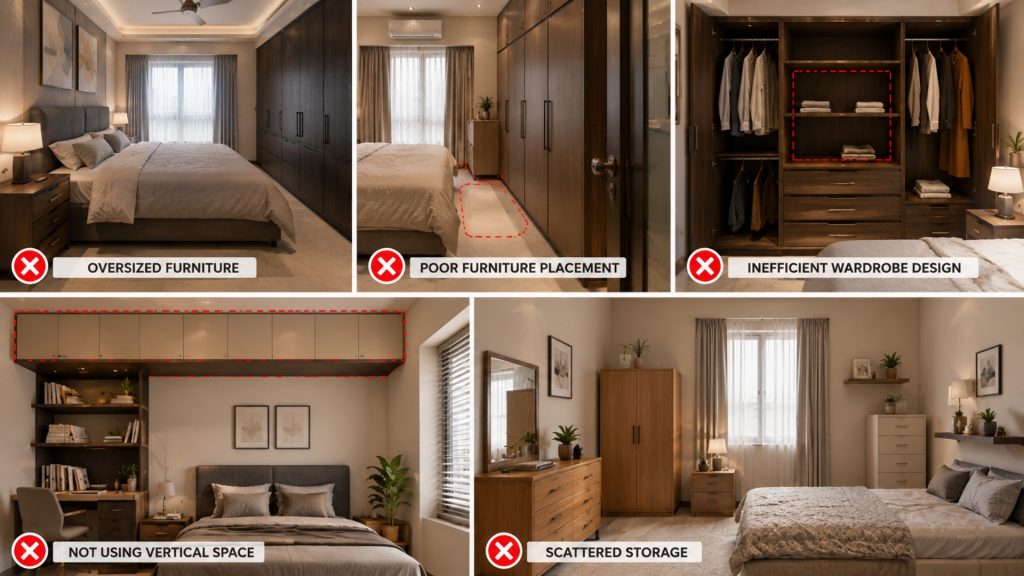
Several bedroom design mistakes can reduce usable space and restrict movement. Oversized furniture, poor furniture placement, inefficient wardrobe planning, and underused wall space are among the most common causes. These issues occupy valuable floor area, limit circulation, and reduce storage efficiency. Addressing these planning mistakes helps improve room organisation and supports better use of available space.
Oversized Furniture Makes Your Bedroom Feel Smaller
A bedroom should have enough open key furniture pieces. Many homeowners purchase based on showroom displays. Large furniture pieces quickly dominate the floor space.
Common Furniture Sizing Issues
A balanced bedroom furniture layout leaves enough room for movement. Every item should earn its place.
Key Takeaway: The room should fit the furniture. The furniture should not consume the room.
Common Furniture Sizing Issues
- King-size beds in compact bedrooms
- Deep wardrobes
- Oversized dressing units
- Bulky bedside tables
A balanced bedroom furniture layout leaves enough room for movement. Every item should earn its place.
Key Takeaway: The room should fit the furniture. The furniture should not consume the room.
Poor Furniture Placement
Furniture size is important. Placement matters as much. You may have the right furniture, but place it in the wrong location. When movement becomes difficult, the room immediately feels tighter.
Signs of Poor Placement
Clear walking paths make a bigger difference than most homeowners expect.
Signs of Poor Placement
- Tight gaps around the bed
- Wardrobe shutters are hitting furniture
- Restricted access to the window
Clear walking paths make a bigger difference than most homeowners expect.
Inefficient Wardrobe Design Can Waste Valuable Space
Wardrobes are essential. Poor wardrobe planning can consume a significant portion of the room. Many wardrobes become large because of inefficient internal storage rather than actual storage needs.
Common Wardrobe Problems
A well-designed wardrobe stores more items in less space. A custom wardrobe uses shelf space, drawers, and hanging sections more effectively. This reduces the extra storage units.
Common Wardrobe Problems
- Excessive wardrobe depth
- Unused shelf space
- Poor drawer organisation
- Hinged shutters in compact rooms
A well-designed wardrobe stores more items in less space. A custom wardrobe uses shelf space, drawers, and hanging sections more effectively. This reduces the extra storage units.
You’re Not Using Vertical Space Properly
Many homeowners focus entirely on floor area. The wall remains underutilised. Vertical storage helps free up floor space and improves bedroom storage planning.
Smart Ways to Use Vertical Space
Floor space runs out quickly. Wall space remains available in most bedrooms.
Key Takeaway: Vertical storage can transform bedroom storage planning.
Smart Ways to Use Vertical Space
- Floor-to-ceiling wardrobe design
- Tall storage units
- Overhead loft storage
- Wall-mounted shelving
Floor space runs out quickly. Wall space remains available in most bedrooms.
Key Takeaway: Vertical storage can transform bedroom storage planning.
Storage is Scattered Across the Room
Storage should solve problems. Many bedrooms accumulate extra storage units over time. The result is a room filled with unrelated furniture pieces. Integrated bedroom storage solutions reduce furniture count and free up movement space.
Common Examples
Integrated storage works far better than multiple independent units. A single well-designed wardrobe often replaces several smaller storage pieces.
Common Examples
- Standalone cabinets
- Additional drawer units
- Extra shelves
- Storage benches
Integrated storage works far better than multiple independent units. A single well-designed wardrobe often replaces several smaller storage pieces.
Which Bedroom Layout Mistakes Waste the Most Space?
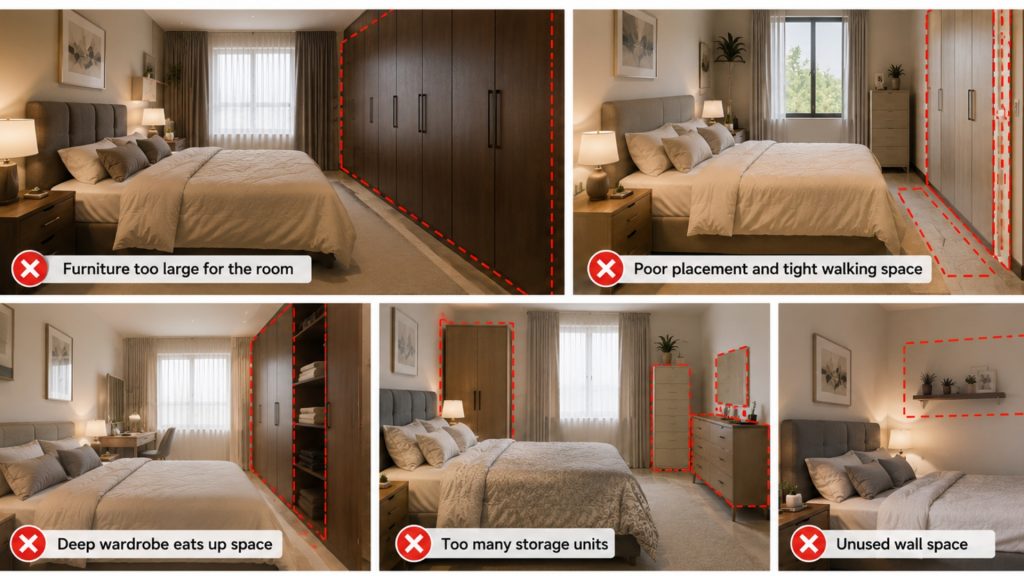
Poor bedroom layouts restrict movement, reduce storage efficiency, and make daily activities less convenient. In many cases, the issue is not room size but how sleeping, dressing, working, and storage areas are arranged.
The Bedroom Layout Was Never Planned Around Daily Life
A bedroom serves several purposes. People sleep, dress, work, read, and store personal belongings in the same space. Problems begin when these activities overlap. Many bedroom makeover ideas focus on decor. Room planning has a greater impact on daily use.
Every Bedroom Needs Functional Zones
A dedicated corner prevents furniture crowding elsewhere. Strong bedroom layout ideas separate activities clearly. This helps the room work better throughout the day.
Every Bedroom Needs Functional Zones
- Sleeping Zone
- The bed should remain the focal point
- Dressing Zone
- Wardrobes and mirrors should sit close together
- Work Zone
- Workstations need adequate lighting and access
- Reading Zone
A dedicated corner prevents furniture crowding elsewhere. Strong bedroom layout ideas separate activities clearly. This helps the room work better throughout the day.
The Wardrobe and Bed Are Competing for Space
The bed and wardrobe are the two largest elements in most bedrooms. Poor planning between these two components leads to congestion.
Areas That Need Clearance
A common mistake in a small bedroom is putting wardrobes too close to the bed. Every day tasks become inconvenient when clearance is ignored.
Areas That Need Clearance
- Space for wardrobe shutters
- Walking paths beside the bed
- Access to drawers
- Comfortably enter the room
A common mistake in a small bedroom is putting wardrobes too close to the bed. Every day tasks become inconvenient when clearance is ignored.
Design Elements That Make Bedrooms Look Smaller
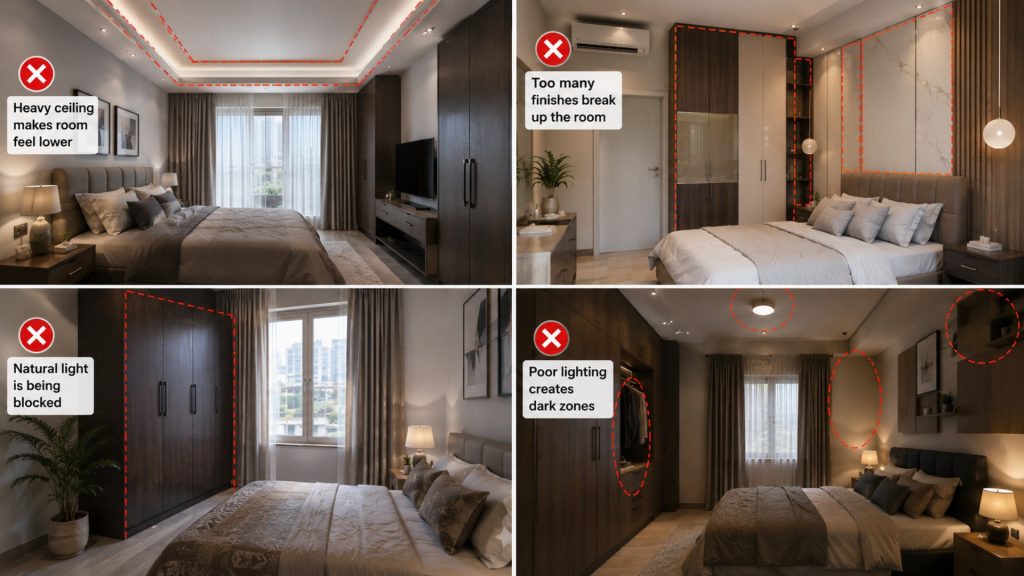
Some design choices reduce openness despite adequate room dimensions.
The Ceiling Design is Making the Room Feel Lower
The ceiling influences how spacious a room feels. Heavy ceiling treatments can reduce perceived height.
Ceiling Features That Reduce Openness
Simple ceiling treatments work better in compact bedrooms. When the ceiling remains visually lighter, the room feels more balanced.
Must Read: Bedroom Ceiling Light Design Trends
Ceiling Features That Reduce Openness
- Deep false ceiling drops
- Multiple ceiling layers
- Excess decoration detailing
- Large suspended elements
Simple ceiling treatments work better in compact bedrooms. When the ceiling remains visually lighter, the room feels more balanced.
Must Read: Bedroom Ceiling Light Design Trends
Too Many Finishes Are Breaking Up the Room
Every change in material divides the room into smaller sections. This includes wardrobes, wall treatments, partitions, and furniture finishes.
Common Examples
A consistent design language helps the room feel more connected. This is one of the most effective bedroom interior design tips for compact homes.
Common Examples
- Multiple wardrobe colours
- Different laminates on every surface
- Excess decorative panels
- Unnecessary partitions
A consistent design language helps the room feel more connected. This is one of the most effective bedroom interior design tips for compact homes.
Natural Light is Being Blocked
Natural light changes how a room is experienced. Furniture placement can restrict daylight significantly.
Common Causes
Light should reach as much of the room as possible. Check furniture placement before replacing lighting fixtures.
Common Causes
- Wardrobes placed beside windows
- Tall furniture blocking light paths
- Heavy window treatments
- Poor room orientation planning
Light should reach as much of the room as possible. Check furniture placement before replacing lighting fixtures.
Poor Lighting Placement Is Creating Dark Zones
Lighting affects how large a room feels.
Common Lighting Issues
Layered lighting helps distribute brightness across the room.
Common Lighting Issues
- Single ceiling fixture
- Dark wardrobe interiors
- Poor task lighting
Layered lighting helps distribute brightness across the room.
Wardrobe Planning Mistakes That Affect Space
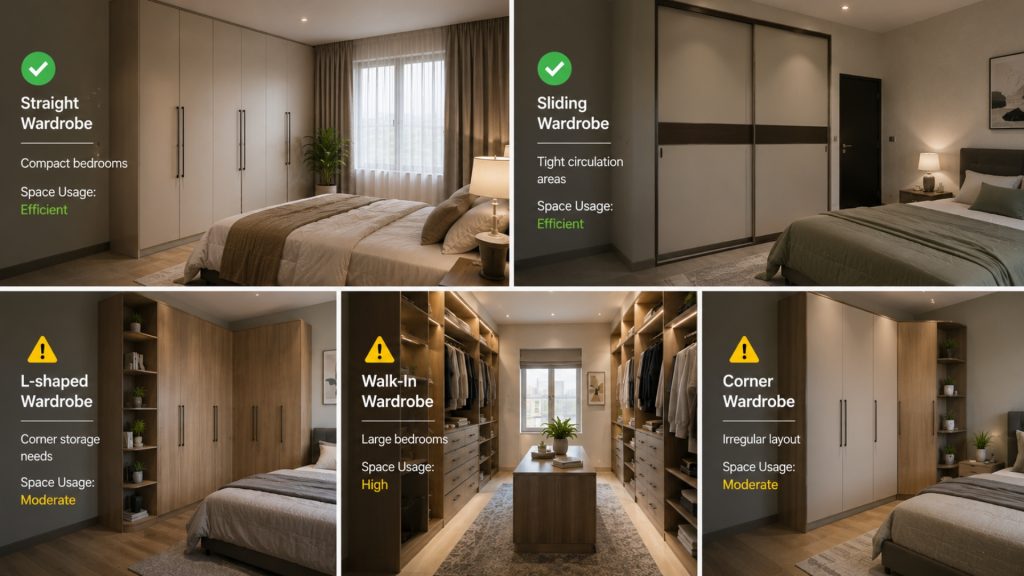
Wardrobe layouts influence storage capacity and movement space.
The Wrong Wardrobe Configuration is Creating Bulk
Wardrobe shape affects how much space remains usable. A modular wardrobe design helps organise storage according to room dimensions and daily requirements.
Comparing Popular Wardrobe Layouts
| Wardrobe | Best For | Space Usage |
|---|---|---|
| Straight Wardrobe | Compact bedrooms | Efficient |
| Sliding Wardrobe | Tight circulation areas | Efficient |
| L-shaped Wardrobe | Corner storage needs | Moderate |
| Walk-In Wardrobe | Large Bedrooms | High |
| Corner Wardrobe | Irregular layout | Moderate |
Space-Saving Bedroom Solutions
Small adjustments can recover space that already exists in the room.
Dead Corners Are Wasting Valuable Space
Unused corners push storage into active areas.
Areas Worth Exploring
Every square foot should have a purpose.
Areas Worth Exploring
- Window niches
- Corners beside wardrobes
- Empty wall sections
Every square foot should have a purpose.
The Room Has More Furniture Than It Needs
Many bedrooms contain furniture that rarely gets used.
Common Examples
Removing unnecessary furniture improves movement instantly.
Common Examples
- Extra chairs
- Large dressing units
- Additional storage cabinets
Removing unnecessary furniture improves movement instantly.

Opalspace Advice
The biggest improvements usually come from planning changes, not construction work. Furniture placement, wardrobe planning, storage organisation, and lighting distribution solve many bedroom space problems.
How Opalspace's Bedroom Interior Designers Can Help
Room size tells only part of the story. Layout decisions shape daily movement and space usage. Furniture placement, storage planning, circulation space, lighting, and layout decisions have a much bigger impact on how the room works every day. Small changes in the right places can make a noticeable difference.
At Opalspace, our bedroom interior designers focus on space planning for bedrooms, custom wardrobe design, and practical storage layouts. We also handle home interior design solutions and bedroom renovation services.
At Opalspace, our bedroom interior designers focus on space planning for bedrooms, custom wardrobe design, and practical storage layouts. We also handle home interior design solutions and bedroom renovation services.
FAQs
1. Why does my bedroom feel small even though it has enough space?
A bedroom can feel smaller when furniture blocks movement, storage occupies too much floor area, or natural light cannot spread across the room. In many cases, layout planning has a bigger impact than room size.
2. What is the most common small bedroom layout mistake?
Using oversized furniture is one of the biggest mistakes. A large bed, deep wardrobe, or bulky dressing unit can consume valuable space and restrict movement.
3. How much space should I leave around my bed?
Leave enough clearance to walk comfortably around accessible sides of the bed. This improves bedroom circulation and makes daily use more convenient.
4. Are sliding wardrobes better for small bedrooms?
Sliding wardrobes work well in compact rooms because they do not require extra space for shutter opening. They help improve movement around the bedroom.
5. Can a false ceiling make a bedroom feel smaller?
Yes. Deep ceiling drops, multiple layers, and heavy ceiling treatments can reduce perceived height and make the room feel more confined.
6. How can I increase storage without making my bedroom feel crowded?
Use vertical storage solutions such as floor-to-ceiling wardrobes, loft storage, and wall-mounted units. This keeps more floor space available for movement.
7. Does lighting affect how spacious a bedroom feels?
Yes. Poor lighting can leave dark areas across the room. A combination of ceiling lights, bedside lighting, and wardrobe lighting helps distribute brightness more evenly and improves the overall sense of space.